Trump Rejects UK Aircraft Carrier Support in Iran Conflict
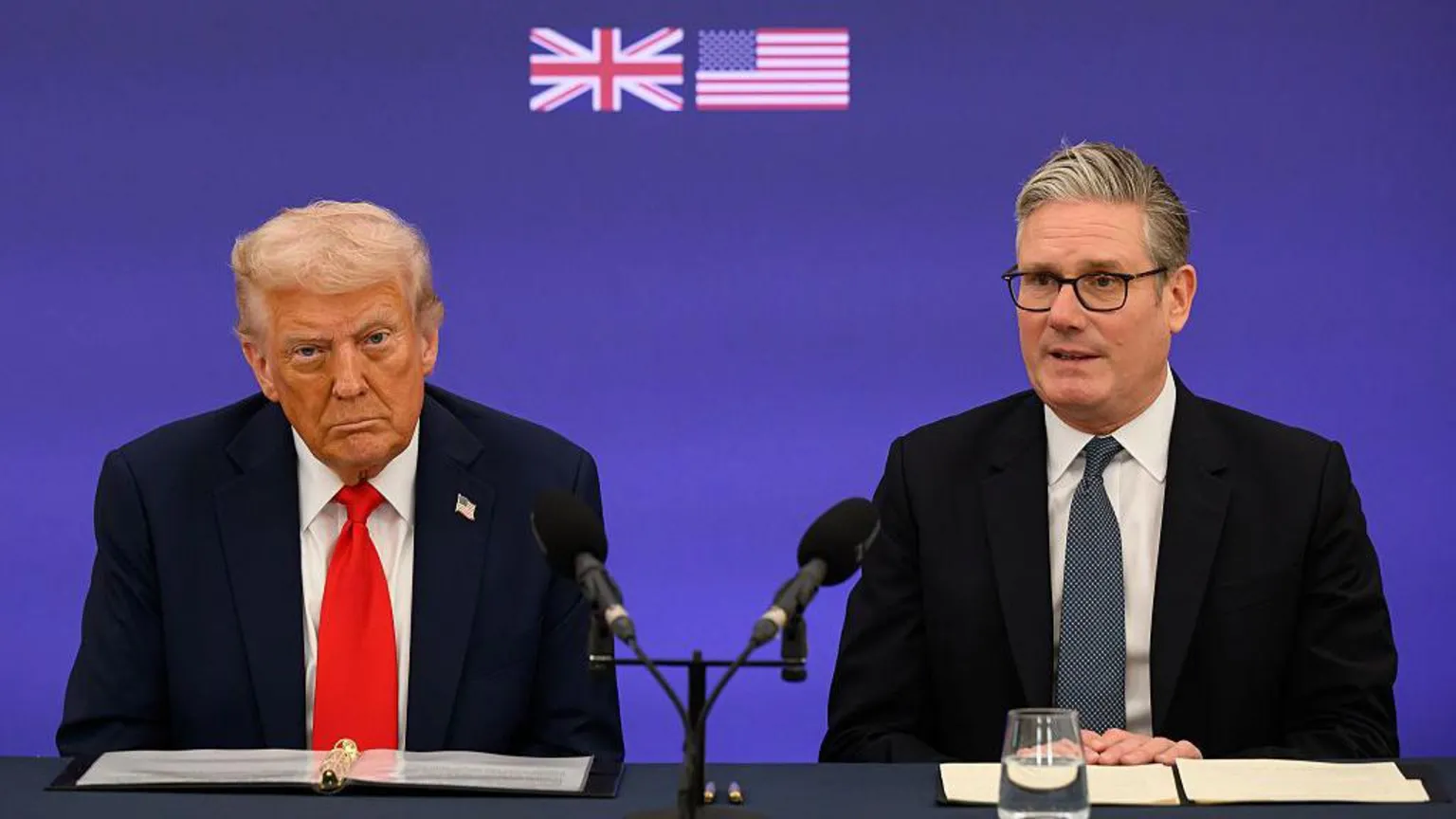
US President Donald Trump has informed the United Kingdom that he does not require its aircraft carriers in the ongoing conflict with Iran and criticized Prime Minister Sir Keir Starmer for attempting to "join wars after we've already won," amid continued US and Israeli strikes on Iran.
In a social media statement, Trump noted that the UK was "giving serious thought" to deploying two aircraft carriers to the Middle East but asserted that the US does not "need them." There has been no official response from Downing Street.
The UK Ministry of Defence (MoD) confirmed that one of the nation's two aircraft carriers has been placed on advanced readiness status.
Trump's remarks followed the arrival of US bomber jets in the UK as the US began utilizing British bases for "specific defensive operations."
"The United Kingdom, our once Great Ally, maybe the Greatest of them all, is finally giving serious thought to sending two aircraft carriers to the Middle East," Trump wrote on Truth Social on Saturday. "That's OK, Prime Minister Starmer, we don't need them any longer - But we will remember.
"We don't need people that join Wars after we've already won!"
Speaking aboard Air Force One in response to a question regarding the use of UK bases in the conflict, Trump referenced his Truth Social post, stating:
"We don't need them,"seemingly referring to the aircraft carriers. He added,
"It's not the right time. It would have been nice to have them two weeks ago."
The UK government has consistently maintained that it does not intend to participate in the broader offensive campaign in the Middle East.
The crew of HMS Prince of Wales, currently stationed in Portsmouth, have been instructed to prepare for deployment within five days.
This development has sparked speculation that the carrier might be sent to the Mediterranean to protect British interests amid the Middle East conflict; however, officials within Sir Keir's administration have downplayed this possibility.
The UK's other aircraft carrier, HMS Queen Elizabeth, remains out of service for the foreseeable future.
The UK has already announced plans to deploy a Royal Navy warship following drone attacks on the RAF base at Akrotiri in Cyprus.

HMS Dragon, equipped with air defense capabilities, is scheduled to be dispatched to the Mediterranean to enhance security around the base, though it will not depart until next week.
The exchange between Trump and Sir Keir originated after the UK initially declined to permit US use of British bases for the joint US-Israel offensive against Iran.
Subsequently, Sir Keir authorized "defensive" US strikes against Iranian missile sites from RAF Fairford in Gloucestershire and Diego Garcia in the Indian Ocean, emphasizing that the UK government "does not believe in regime change from the skies."
The UK Prime Minister explained that the decision followed a shift in circumstances last Sunday when Iran's "outrageous" response became "a threat to our people, our interests and our allies."
"President Trump has expressed his disagreement with our decision not to get involved in the initial strikes, but it is my duty to judge what is in Britain's national interest,"he told Members of Parliament.
Earlier this week in the Oval Office, Trump expressed dissatisfaction with the UK over its initial refusal to allow use of UK bases, which resulted in US aircraft undertaking "many extra hours" of flight to conduct strikes last weekend. He also remarked that Sir Keir is "no Winston Churchill."
Sir Keir has maintained that the "special relationship" between the US and UK remains intact while speaking to reporters on Thursday.
"Look, the special relationship is in operation right now,"he said.
"We're sharing intelligence on a 24/7 basis in the usual way. That is the special relationship."
On Friday, a US B-1 bomber was observed landing at RAF Fairford in Gloucestershire.
For several months, Sir Keir has cited his rapport with Trump as one of the key achievements of his premiership.
However, this is no longer the case. The recent exchanges highlight President Trump's open criticism of the Prime Minister, reflecting ongoing frustration over the UK's initial refusal to permit US use of British bases during the initial strikes against Iran.