
Trapping Initiative for Yellow-Legged Hornets in Wales
Traps are set to be deployed for yellow-legged hornets, an invasive species posing a threat to honey bees, following the discovery of the insect in Wales earlier this year.
A dead nest of the yellow-legged hornet, also known as the Asian hornet, was found near Wrexham in January, marking the first confirmed sighting in Wales.
The Welsh government has requested the National Bee Unit to install traps within a 5km (3.1 mile) radius around the Caergwrle area, where the nest was located.
Trapping operations are scheduled to begin in mid-April and continue until the end of June, according to the National Bee Unit, which oversees the government's Bee Health Programme in England and Wales.
The National Bee Unit also stated that if any yellow-legged hornet sightings are confirmed during this period, efforts will be made to locate and destroy nests.
"This is considered to be the most effective control mechanism against the yellow-legged hornet," the National Bee Unit said.
The approach taken will be "precautionary, proportionate, and led by the best available science and evidence," the Unit added.
The Welsh government has urged beekeepers and the public to use an identification guide to differentiate Asian hornets from similar native insects and to report any suspected sightings.
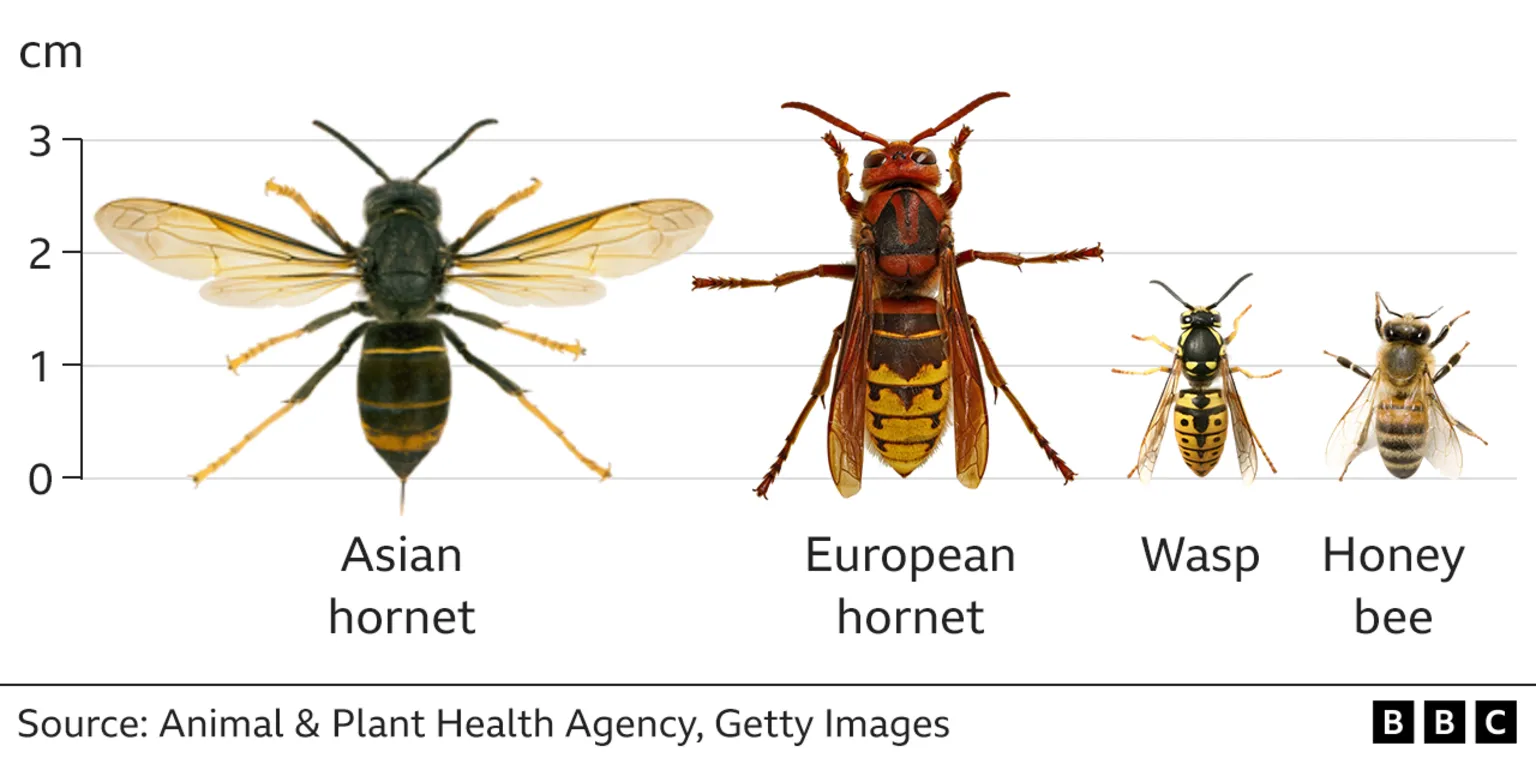
What Are Asian Hornets?
Yellow-legged hornets are an invasive, non-native species first detected in France in 2004.
Since then, sightings have been reported in numerous European countries and parts of the UK.
Asian hornets were first observed in England in 2016, with ongoing annual efforts to "find and destroy nests," according to the Welsh government.
These hornets are active from February to November and are most commonly seen from July onwards.
While generally not aggressive, caution is advised to avoid approaching or disturbing their nests.


