Survivors Criticize Cut-Off Date in Redress Scheme Bill
A Stormont bill intended to establish a redress scheme for victims of mother-and-baby homes has faced criticism from survivors due to the inclusion of a "cut-off date" for compensation eligibility.
Under the proposed legislation, only families of victims who died after 29 September 2011 will qualify for redress payments.
An amendment proposed to remove this cut-off date was not selected for debate during the bill's most recent stage in the Northern Ireland Assembly.
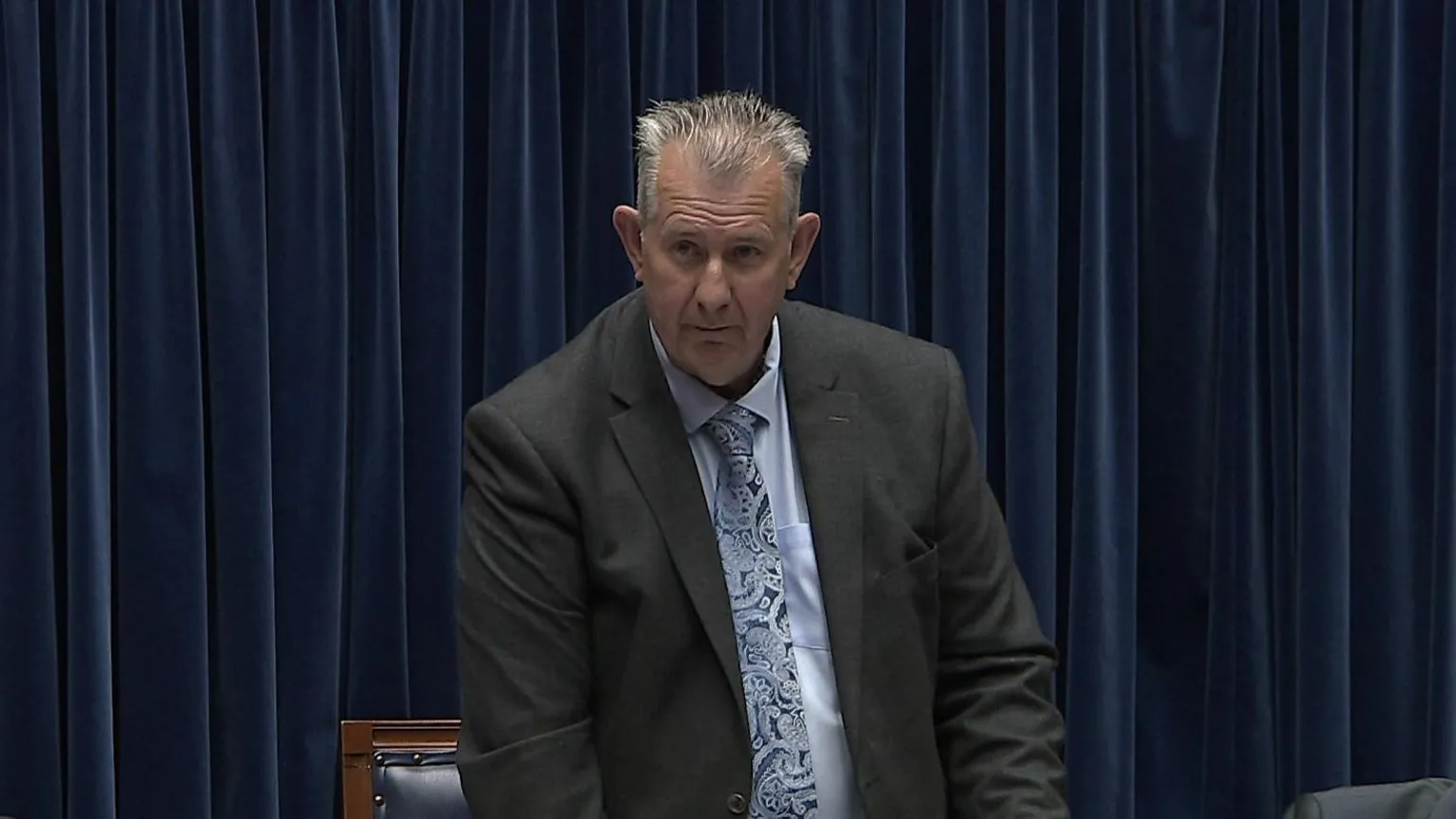
Several Stormont parties described the exclusion of the amendment as "devastating" for campaigners. However, Assembly Speaker Edwin Poots stated that "decisions are taken with the best advice."
The bill aims to establish an inquiry into mother-and-baby homes, Magdalene Laundries, and workhouses, alongside an associated redress scheme.
More than 10,000 pregnant women and girls passed through these institutions, which were predominantly run by religious orders from the 1920s until the 1990s.
Mechelle Dillon, whose mother Brenda was placed in a home and died in 2003, described the ruling out of the amendment as "gut-wrenching."
"Those that died before that date were failed in life and now they are being failed in death,"
"It's really heartbreaking that those who have passed away have been forgotten."
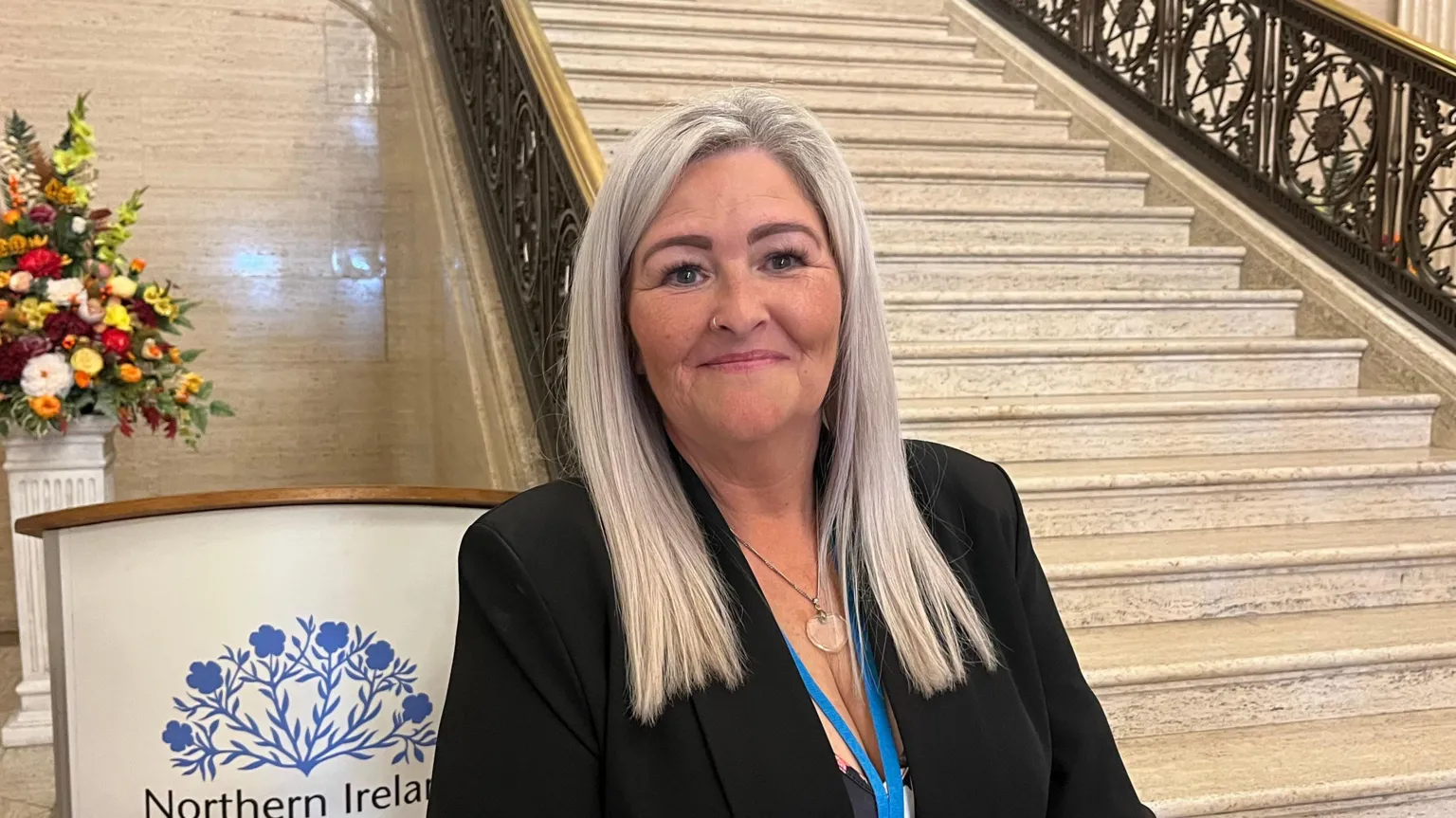
Roisin and Lisa Morris expressed their devastation that their mother Madeline was excluded from the scheme.
Lisa Morris stated the decision "doesn't make any sense" and called it "so unfair on all those mothers."
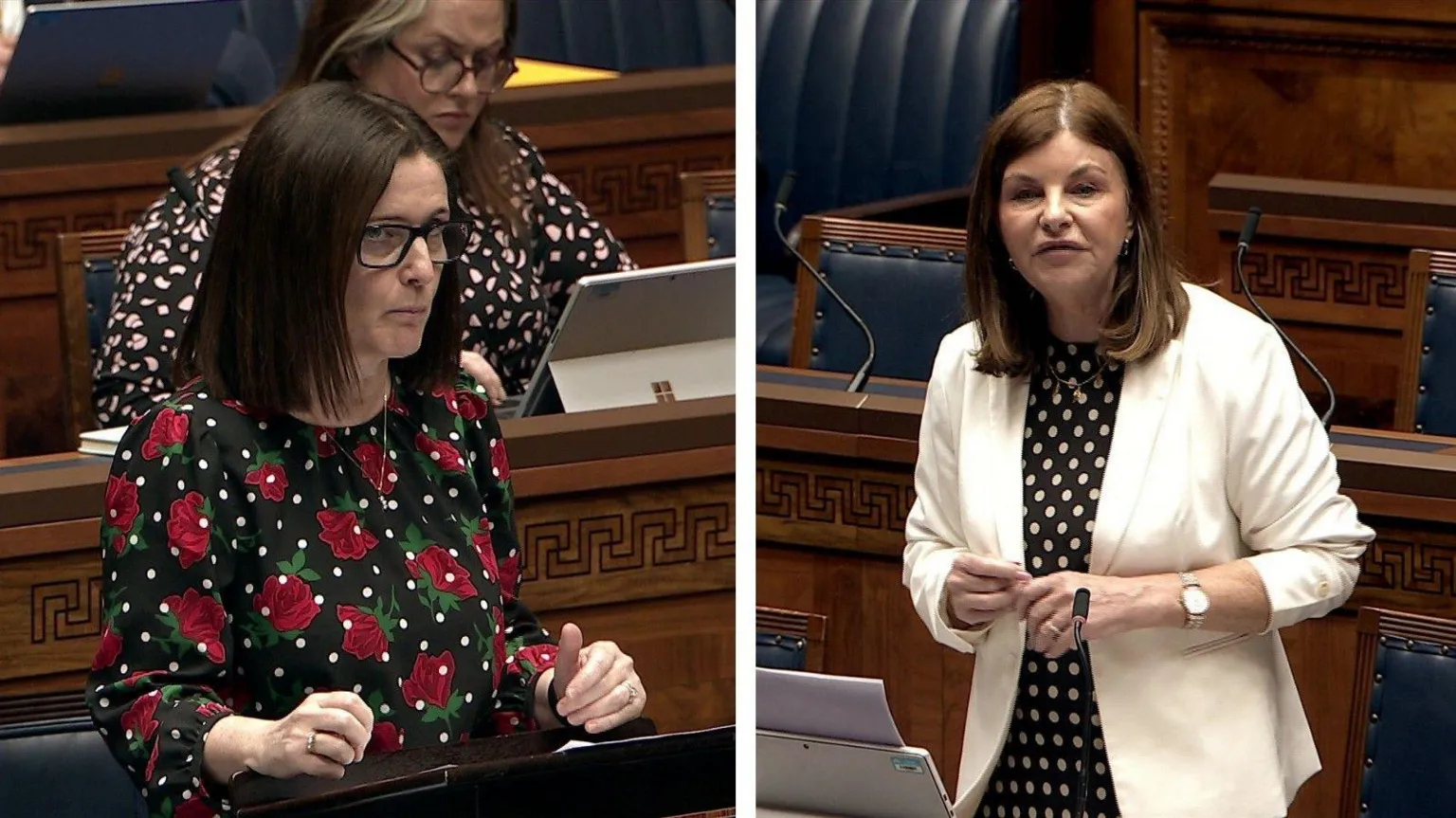
Alliance Party MLA Paula Bradshaw said she was "absolutely devastated for the victims and survivors" that the amendment was not selected for debate.
Bradshaw, who chairs the Executive Office committee, noted that the cut-off date "has caused so much pain and so much hurt."
She called for "transparency" from the speaker's office, emphasizing that the issue was "very much damaging for the credibility of this assembly."
Bradshaw mentioned that the committee had heard concerns about funding constraints and difficulties in locating records as possible reasons for imposing a cut-off date.
"There may be some logistical stuff, but as far as I'm concerned if we're going to have an acknowledgement redress scheme, we have to acknowledge all the mothers and their children,"
Earlier, Assembly Speaker Edwin Poots intervened when SDLP MLA Sinéad McLaughlin attempted to raise the issue.
"Those decisions are taken with the best advice,"
Poots said in response.
"You know nothing about what goes on in the background, and it is not in order for you to challenge that."
McLaughlin argued that "survivors who suffered the same trauma should not be treated differently simply because they died before an arbitrary date."
She added that many had expressed "profound disappointment and upset" that the removal of the cut-off date would not be debated.
DUP MLA Phillip Brett described any attempt to undermine the speaker's decisions as "repugnant."
"He receives procedural advice and he takes a decision based upon that,"
Brett told MLAs.
He also stated that his party colleague's record on supporting victims and survivors was "second to none."
Adele Johnston, who was compelled to give up her son after entering the Marianvale mother-and-baby home in Newry, called the outcome "absolutely disgusting."
"I would like Mr Poots to come and speak to us and tell us what his rationale is,"
she said.
What were mother-and-baby homes?
Mother-and-baby homes were a network of institutions across the island of Ireland that housed unmarried women and their babies during a period when pregnancy outside marriage was stigmatized.
In Northern Ireland, there were more than a dozen such homes.
Three of these were Catholic-run workhouses known as Magdalene Laundries, where women were often required to perform exhausting, unpaid labor.
Research indicates that a third of those admitted were under 19 years old, with the youngest admitted child being 12 years old.
Many women and girls were separated from their children through placement in children's homes, fostering (boarding out), or adoption.
The issue of cross-border movement of women and children in and out of these institutions was also significant.
The last such institution in Northern Ireland closed in 1990.
What is in the bill?
The executive bill, introduced by the first and deputy first ministers, will establish a statutory public inquiry and a statutory redress scheme.
This follows a consultation launched in 2024 on proposals to establish an inquiry into mother-and-baby homes.
The estimated cost of the scheme is £80 million, including nearly £60 million in initial redress payments to cover approximately 6,600 claims.
Each eligible individual would receive a payment of £10,000, and a £2,000 payment would be made to each eligible family member on behalf of a loved one who died since 29 September 2011.
A further Individually Assessed Payment (IAP) to address specific harm suffered by individuals will follow the public inquiry.
'Rigorous but cautious approach'
An Assembly spokesperson stated that the speaker approaches the legislative process "extremely seriously" with a "rigorous but cautious approach."
They noted that Poots has a "long history of being supportive of efforts to address the abuse which occurred in religious and state institutions in the past."
"Under assembly standing orders, the speaker's procedural decisions are final and it is out of order to challenge them. Therefore, parliamentary convention is that the speaker does not give reasons for his procedural decisions," the spokesperson added.
"However, he recognises that this inevitably means that members, and those potentially involved with legislation, may be disappointed from time to time in different decisions."