Inside the Reality of Prison Violence
If you want to kill someone in prison, it's not difficult,a prisoner messages me from his cell.
He has been convicted of serious violence and is serving a lengthy sentence inside one of England's largest Victorian prisons.
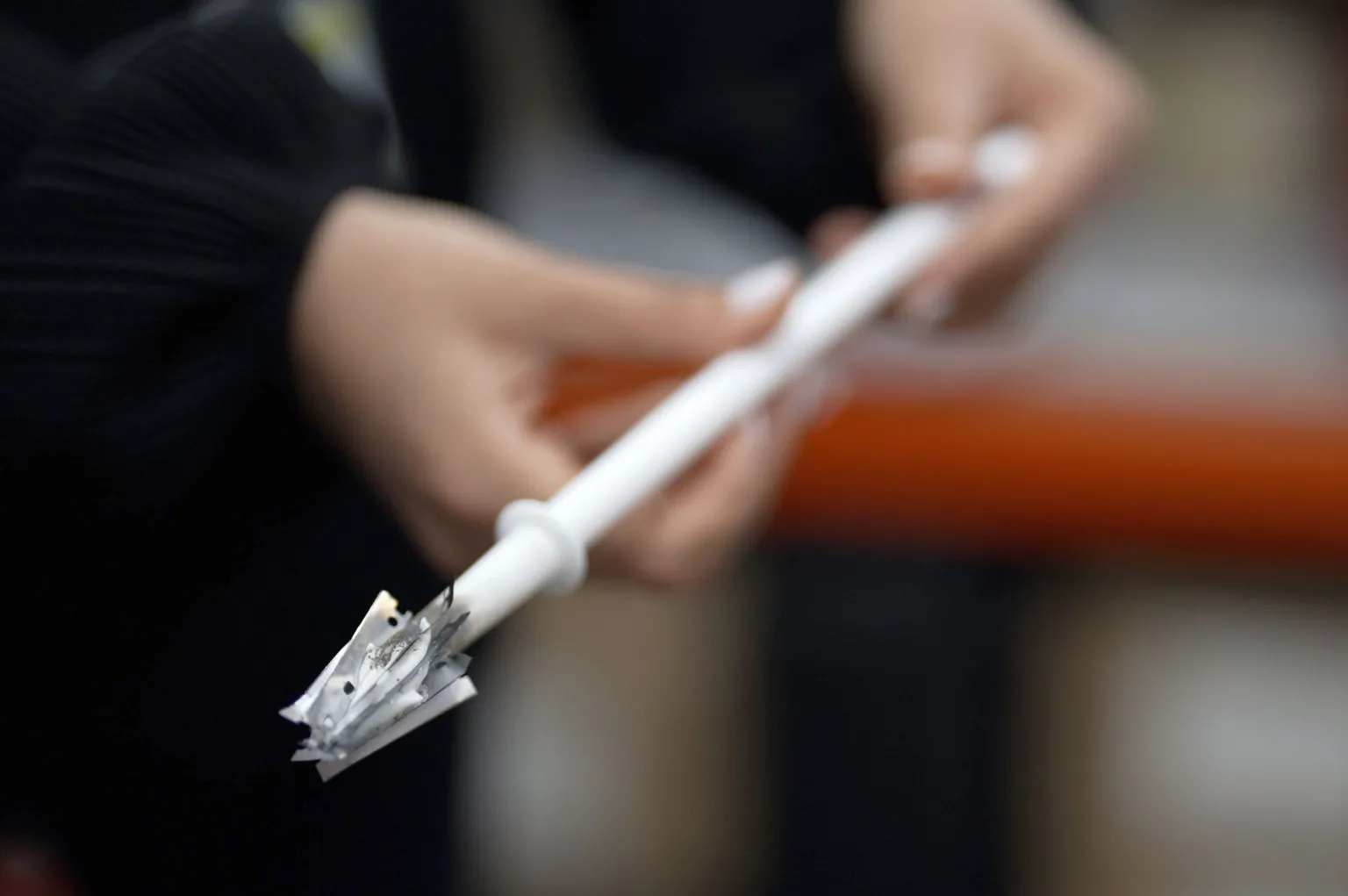
People in here are innovative - they have time to think about how to kill and damage,he says in a stream of messages.
You'd be surprised what they can do with razor blades and a toothbrush. The look of it [the weapon] is enough for you to panic.
Possession or use of a mobile phone in prison is a criminal offence in the UK, but like many inmates, this prisoner has smuggled one in.
The man, who insists he is remorseful and wants a fresh start once released, reached out following news of Ian Huntley's death, which reverberated through Britain's prisons and wider society.
Huntley, the former school caretaker convicted of murdering 10-year-old girls Holly Wells and Jessica Chapman in 2002, died last month after sustaining serious head injuries in an attack at HMP Frankland in County Durham. A fellow inmate has been charged with murder and is due to appear in court on 3 June.
This incident is the latest fatal attack in prison, occurring not long after convicted child sex offender and former LostProphets singer Ian Watkins died following an assault at HMP Wakefield, West Yorkshire, in October 2025. Watkins was serving a 29-year sentence for offences including the attempted rape of a baby.
A man has pleaded not guilty to Watkins' murder and is scheduled for trial.
Violence on the Rise
Ministry of Justice (MoJ) data indicate there were 3,544 serious assaults in prisons across England and Wales in the 12 months to September 2025, representing an 8% increase from the previous year.
In the year ending December 2025, seven prisoners were murdered, compared to six the year before.
Prisoner-on-prisoner assaults have reached their highest level since 2020, though rates were higher prior to the Covid-19 pandemic.
Another inmate, messaging illegally from within an English prison, describes how killings inside prisons are often part of a complex hierarchy and settling of scores. Some prisoners are directed to commit violence for status or to obtain drugs.
There are crims who have targets on their back - like anyone who did things to children - they're the worst.
Being in here can make you worse and angry and you might want to take that anger out on someone. And then you're told to do it. You have to ask whether things will ever change, will the fear ever stop?
The monster Huntley is dead, but now what?
His remarks suggest little has changed since a two-day BBC visit to HMP Pentonville in London in 2024.
Amid the constant piercing alarms and cell door banging, offenders described how makeshift weapons are fashioned to carry out violent acts to gain approval from powerful gang leaders. Following orders to harm other inmates can secure protection from influential prisoners feared for their authority.
This raises concerns that a culture of intimidation and coercion among prisoners, compelling vulnerable inmates to inflict harm on others, has become normalized, complicating efforts for reform.
Challenges for Lifers
Complicating the issue, some prisoners serving long sentences feel they have little to lose by committing further serious offences.
Prisoners on life sentences know they are unlikely to be released for a significant period, indeed they often have very little to come out to,explains criminal barrister Kama Melly KC.
These are men who have already demonstrated their violent tendencies. Even a further life sentence and significant restrictions on life in prison will not prevent such murders in prisons taking place.
As of December 2025, there were 7,570 unreleased life sentence prisoners in England and Wales, the highest number in decades aside from 2011-2012.
Inmates who kill or seriously injure others may be subjected to additional restrictions, such as placement in close supervision centres, segregated from the general population.
However, the incentive to behave is minimal for some lifers. Tom Wheatley, president of the Prison Governors' Association, recalls a prisoner boasting that if he killed Wheatley,
there was nothing we could do to him.
He was already in a close supervision centre,Wheatley adds,
in isolation from other prisoners, and was serving a whole life term.
This disregard for consequences, combined with the pursuit of status among inmates, means those committing murders behind bars may ignore the fact that they themselves are incarcerated for serious crimes.
Prison Officers Face Rising Threats
Prison officers, tasked with preventing such attacks, are increasingly targeted themselves.
Last year, assaults on staff in adult prisons in England and Wales reached their highest level in a decade, according to MoJ statistics.
Steve Gillan, general secretary of the Prison Officers' Association, states that the sentence itself is the punishment, not violence or murder.
Prison officer numbers and security unfortunately have been depleted over the years due to cutbacks, and violence is totally out of control,he says.
Prisoners who are serving these sentences do so for a reason, and in the absence of the death penalty - which is an entirely different argument - it demonstrates how dangerous our prisons have become.
At the end of last year, prison officer numbers were down by nearly 1,000 compared to the previous year. The government acknowledges ongoing challenges in recruitment and retention but notes that annual pay has been increased to £37,000, with resignations at their lowest in four years.
Another contributing factor is prison overcrowding. In autumn 2024, prisons in England were fewer than 100 spaces away from full capacity.
A government report published last year established a direct link between overcrowding and violence, finding that crowded conditions increased the likelihood of an offender being involved in a violent incident by 19% over one year.
When violent incidents occur, the backlog of 80,000 cases awaiting trial in crown courts across England and Wales means it can take many months for inmates who harm others to be convicted.
Law enforcement agencies can prioritize prison murder cases for prosecution, especially if there is significant public interest.
In response to this article, an MoJ spokesperson told the BBC:
To protect the public prisons must always be a place of control and punishment which is why this government took immediate action to reverse years of chaos and reduce the amount of violence behind bars.
Victims’ Families Demand Justice
Ultimately, these violent attacks are not what victims or their families desire.
Nour Norris lost her sister Khaola and niece Raneem when Janbaz Tarin, Raneem's ex-partner, fatally stabbed them in 2018.
She insists that Tarin should serve his full sentence, which is life with a minimum term of 32 years, for murder.
Someone killed in prison is escaping their sentence. They should suffer with their own thoughts about what they did,Norris says.
The prison has a duty of care to make sure they serve that sentence and are punished properly according to the law - or it sends out a really bad message that the justice system is not in control.