

Starmer Commits to Legislation Against Iran’s Revolutionary Guards
Keir Starmer has pledged to proscribe Iran’s Revolutionary Guards by introducing legislation in the upcoming parliamentary session in July.
During a visit to Kenton United Synagogue in north-west London on Thursday, the prime minister emphasized his commitment to making Britain a place where the Jewish community feels secure.
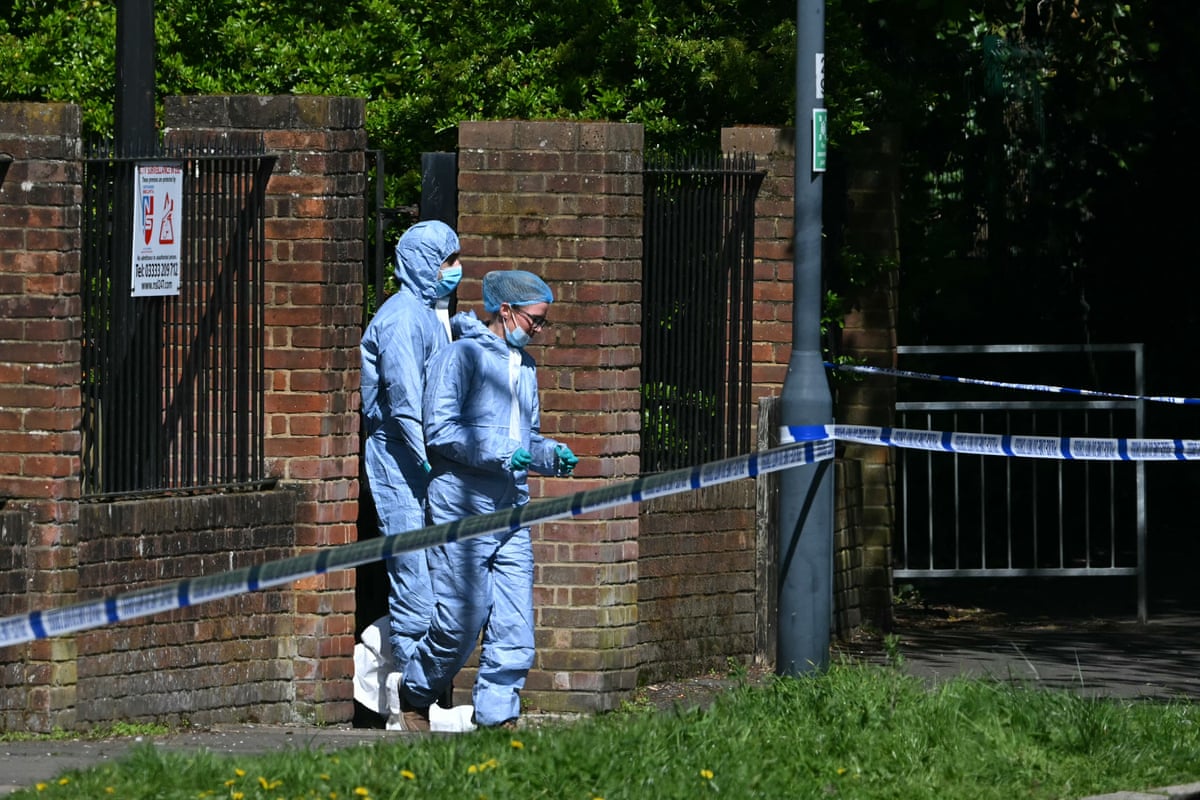
The synagogue in Harrow was targeted in an arson attack on Saturday night, resulting in minor smoke damage but no injuries, according to the Community Security Trust, which monitors antisemitism. A 17-year-old boy, whose identity is protected due to his age, appeared at Westminster magistrates court on Tuesday charged with arson not endangering life.
Concerns Over Iranian Proxy Activity and Legislative Plans
In a statement, Starmer expressed deep concern about the increasing use of proxy agents by the Iranian regime. He confirmed that legislation enabling the proscription of the Islamic Revolutionary Guard Corps (IRGC), a commitment made by Labour while in opposition, would be introduced at the start of the parliamentary session in July.
When questioned about the possibility of proscribing the group, he stated:
"In relation to malign state actors more generally, proscription, we do need legislation in order to take necessary measures, and that is legislation that we’re bringing forward as soon as we can. We go into a new session in a few weeks’ time, and we’ll bring that legislation forward."
An Iran-linked group, Harakat Ashab al-Yamin al-Islamia, has claimed responsibility for the Kenton attack.
Addressing Jewish Community Safety and Emigration Concerns
Responding to recent data indicating an increase in British Jews emigrating to Israel, Starmer remarked:
"I want to make Britain a country where our Jewish community feels safe, as they have done for a very long time, and into the future. I’m determined to do that. That means making clear that we stand alongside our Jewish community."
He further emphasized the importance of collective responsibility in combating antisemitism, stating:
"I want the whole country to see the fight against antisemitism as a fight for all of us, it’s a fight for Britain, a fight for the Britain we love."
Government Plans and International Context
understands that the government intends to introduce legislation granting proscription-like powers to address "state-sponsored" groups such as the IRGC in the forthcoming king’s speech.
The European Union designated the IRGC as a terrorist organization in January, resolving years of internal disagreement in response to the regime’s harsh suppression of protesters. At the time, Kaja Kallas, the EU’s foreign policy chief, stated that the paramilitary organization’s involvement in quelling demonstrations necessitated action, adding:
"Repression cannot go unanswered."
Phil Rosenberg, president of the Board of Deputies of British Jews, welcomed the decision to proscribe the IRGC, noting:
"This is something the Board of Deputies and communal partners have long called for, and these calls have intensified over recent weeks."
UK Sanctions and Community Security Concerns
In 2023, the UK replaced the IRGC designation with a new sanctions regime allowing ministers to sanction individuals for activities within the UK, not solely abroad.
Community leaders have expressed concerns about rising antisemitism and its impact on Jewish families, including fears over children displaying religious symbols publicly following attacks on Jewish sites. Recently, two synagogues in London and a building used by the charity Jewish Futures were targeted, and four Jewish community ambulances were set on fire in north London during the early hours of 23 March.
Antisemitic incidents in the UK have risen significantly since the 7 October attacks and subsequent events, according to research by the Community Security Trust, which provides security and support to Jewish communities. The Trust recorded 3,700 incidents in 2025.


