

SNP Leader Rules Out Negotiations with Reform UK
John Swinney, leader of the Scottish National Party (SNP), has dismissed the possibility of engaging in talks with Reform UK as the SNP aims to form the next government following the recent Holyrood election.
Although the SNP secured a fifth consecutive victory in the Holyrood election, the party fell seven seats short of an outright majority. This shortfall means the SNP must seek support from other parties to reinstate Swinney as First Minister and to pass legislation.
The election results placed Labour and Reform UK in a joint second position with 17 seats each, followed by the Scottish Greens with 15 seats, the Conservatives with 12, and the Liberal Democrats with 10 seats.
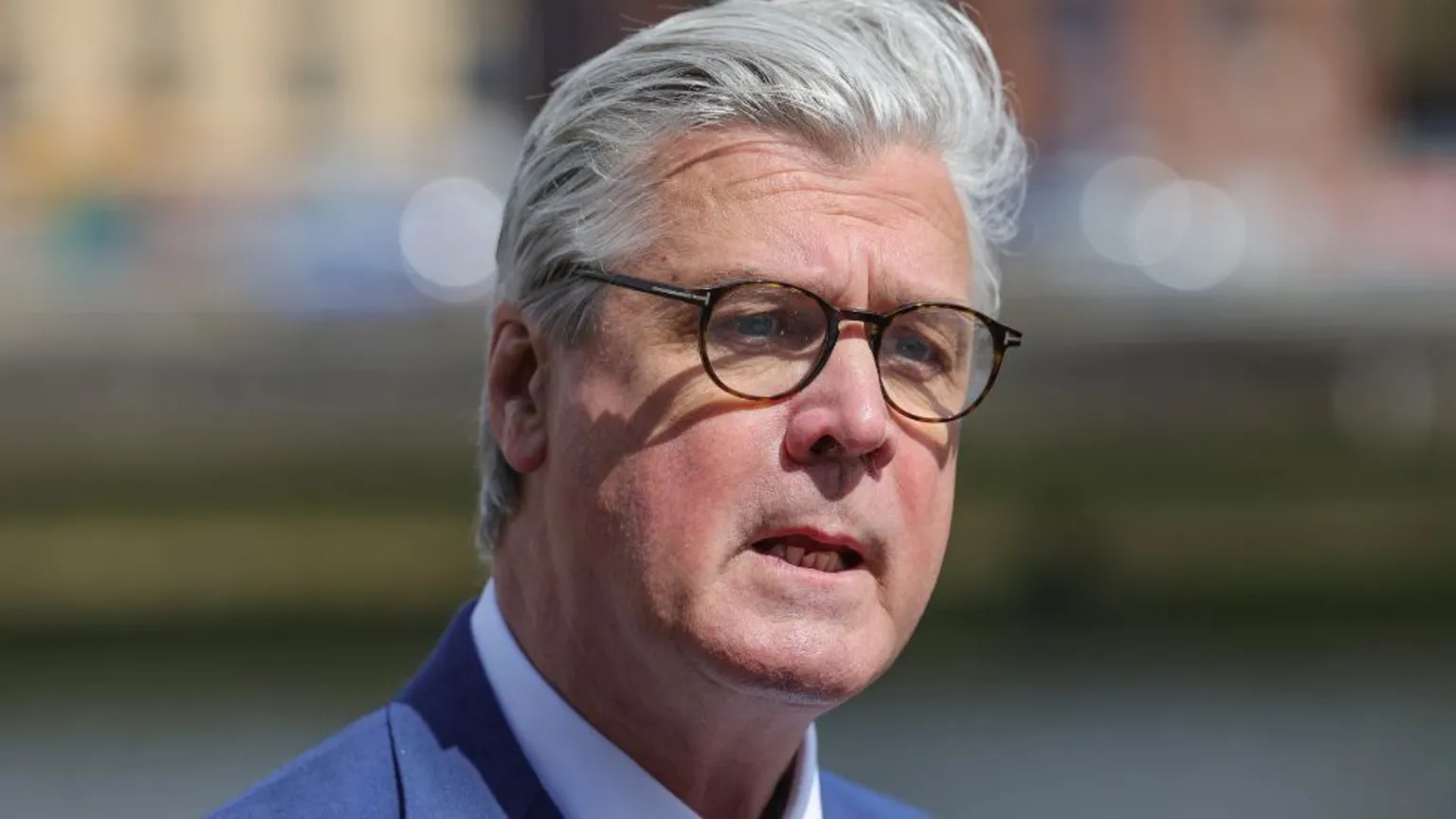
Malcolm Offord, Reform UK's leader in Scotland, criticized Swinney, describing him as "arrogant, petty and deeply undemocratic."
Swinney addressed a news conference in Edinburgh, emphasizing that the SNP was the leading party by a "country mile" and would form the next government.
He announced that leaders of all other Holyrood parties would be invited individually for talks starting next week, with the exception of Reform UK.
Swinney highlighted previous successful budget negotiations with the Greens and Liberal Democrats earlier in the year and noted constructive cooperation with the Conservatives and Labour on various issues.
However, he explicitly stated that Malcolm Offord would not be invited to participate in talks.
The SNP leader pointed to Reform UK's electoral success in England, where it secured over 1,400 councillors, and in Wales, where it is the second largest party behind Plaid Cymru in the Senedd, as evidence of the urgent need for Scottish independence.
He warned that Nigel Farage was "galloping" towards Downing Street, a development Swinney described as "catastrophic."
"It is vital that we unite in Scotland to ensure our parliament is fully Farage-proofed.
That means having the power before 2029 to decide our own constitutional future without Farage being able to block us."
Swinney added that following Plaid Cymru's success, Scotland, Wales, and Northern Ireland all have first ministers "committed to fundamental constitutional change."
Independence Ambitions
John Swinney expressed his hope to secure an SNP majority capable of breaking the constitutional "logjam" and enabling a second independence referendum.
Such a referendum would require approval from the UK government, which has consistently rejected the proposal.
Nonetheless, Swinney asserted that Holyrood holds a mandate for such a vote, noting that the combined number of pro-independence MSPs from the SNP and Greens is higher than ever before.
He maintained that the goal of holding a referendum in 2028 is achievable.
"There has now been a pro-independence majority for four elections in a row but this mandate has been ignored by both Labour and Tory prime ministers year after year,"
Swinney stated.
Despite the SNP's comfortable election win, their constituency vote share declined by nearly 10% compared to the 2021 Holyrood election, and their regional vote share decreased by over 13%.
The combined pro-independence vote share for the SNP and Greens was just above 40% across both constituencies and regions.
Malcolm Offord dismissed independence as a "dead duck," adding,
"It's not going to happen."
He accused Swinney of engaging in "exactly the kind of out-of-touch establishment politics people are sick of."
"The SNP can lock the doors of St Andrew's House if they like but they cannot shut down the growing demand for real change in Scotland."
Scottish Conservative leader Russell Findlay accused Swinney of "shamelessly attempting to move the goalposts" on independence.
Findlay asserted,
"He is brazenly peddling a massive lie by claiming that he has the support and the mandate for another divisive referendum."
He told BBC Scotland News that despite the Conservatives' worst-ever performance in a Holyrood election, his party remains the only "strong, credible voice of opposition" in the Scottish Parliament.
Scottish Greens co-leader Ross Greer stated there was no necessity for Reform UK to be included in cross-party talks in the new Scottish Parliament.
Greer affirmed that the Greens would continue to "work constructively" with a new SNP government and identified addressing the cost of living as a priority.
Scottish Liberal Democrat leader Alex Cole-Hamilton noted that his party had prevented the SNP from achieving a majority, suggesting that the prospect of another independence referendum should be "put in the deep freeze for at least the next five years."
Cole-Hamilton expressed hope that the minority parliament would work constructively to reach consensus.
Unlike other parties, Scottish Labour did not hold a media event on Saturday.


