

Final Day of Campaigning in Scottish Parliament Election
Voters who have not yet submitted their postal ballots face a decisive moment in the Scottish Parliament election. Wednesday marks the final opportunity for politicians to convince the electorate of their suitability for office.
On Thursday, the focus shifts to ensuring that known supporters actually participate in voting. This task may prove challenging amid widespread public feelings of anger, frustration, and disillusionment with the political system.
Politicians face significant challenges at Holyrood, Westminster, and international levels. Conflicts in the Middle East and Ukraine contribute to rising prices domestically. Additionally, the lingering effects of the pandemic, Brexit, and the 2008 financial crisis continue to impact society.
Public concern about migration has emerged as a more prominent issue in this election compared to previous ones.
It is important to acknowledge that Holyrood cannot resolve all these complex issues, as many fall under the jurisdiction of Westminster or international organizations. However, the next Scottish government can still effect meaningful change.
Holyrood holds responsibility for overseeing health and social care, education, and law and order. The Edinburgh administration also wields significant tax and welfare powers.
This campaign has not been characterized by grand policy proposals but has seen both conflict and consensus on various issues.
Nearly all politicians agree on the need to reduce NHS waiting times and eliminate the morning rush for GP appointments. However, details on how to achieve and maintain these improvements remain unclear.
There is broad agreement on enhancing childcare access, though parties differ on the methods to accomplish this goal.
Introducing a ban on mobile phone use in classrooms is expected to find majority support in the next parliament.

Key Dividing Lines in the Election
Significant differences exist regarding taxation and welfare spending, with parties spanning a spectrum of opinions.
Energy policy also divides parties, with some advocating for increased oil and gas extraction and new nuclear power, while others oppose these measures.
The longstanding constitutional issue remains a central fault line in Scottish politics.
Opinion polls indicate the country remains evenly split on independence, although it is not a top priority for most voters at present.
The Scottish National Party (SNP) has actively sought to elevate the independence debate, recognizing that support for independence exceeds support for the party itself. They aim to secure an outright majority of Holyrood seats, arguing this mandate should compel Westminster to permit another referendum, as was the case in 2014.
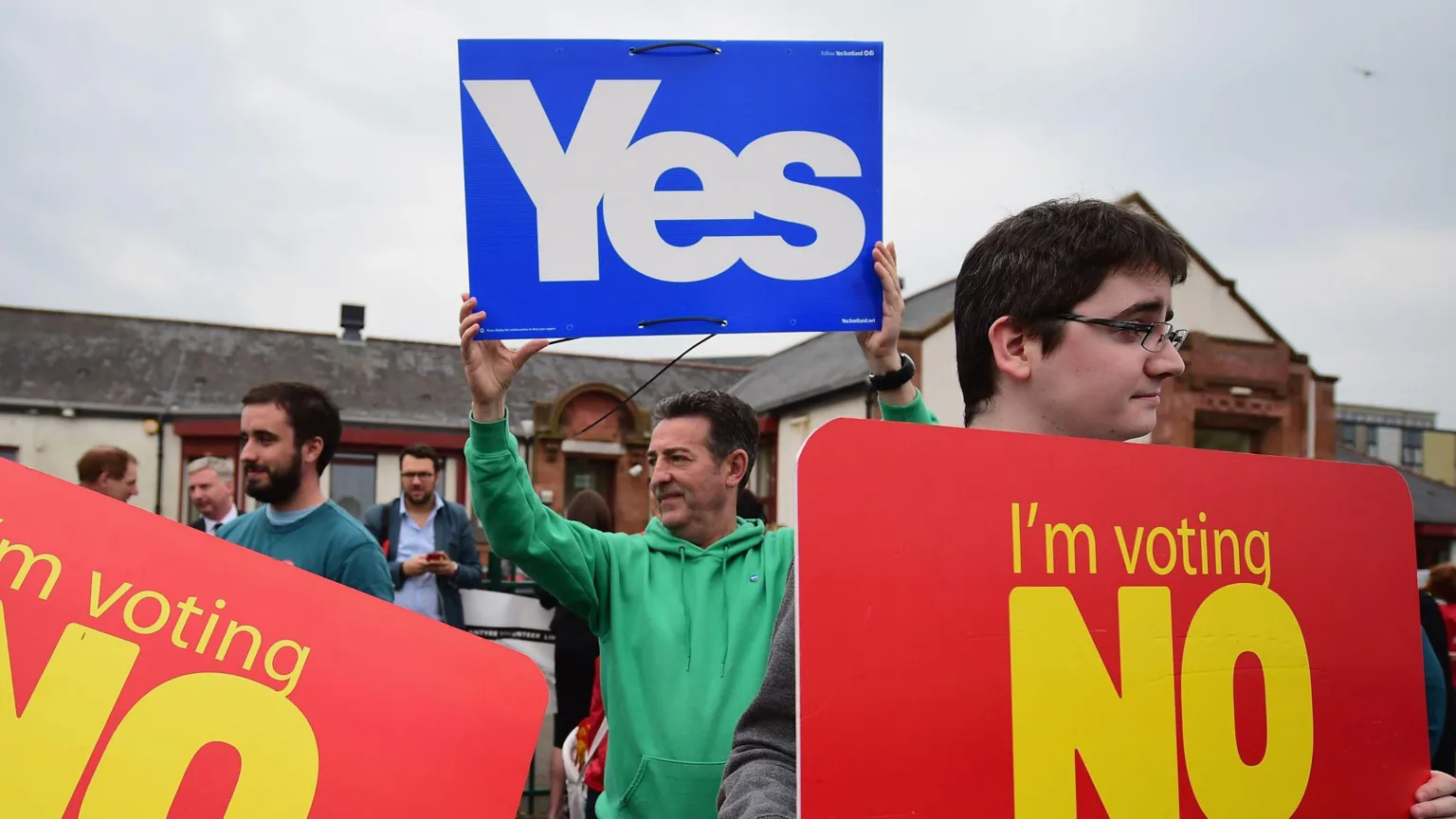
The SNP has been reticent about their plans should the UK government continue to oppose a referendum.
The Conservative Party is taking this potential outcome seriously, encouraging unionist voters to support them—a tactic that has proven effective in previous elections.
Labour, meanwhile, dismisses the prospect of an SNP majority as a nationalist fantasy, seeking to focus voter attention on leadership of the devolved government—whether it should be them or the SNP.
Reform UK and the Liberal Democrats oppose holding another referendum in this election, while the Scottish Greens continue to support independence.
Current polling trends suggest the SNP is positioned to win the most seats, with Labour and Reform UK competing for second place.
If Reform UK divides the pro-union vote, it could provide the SNP with a significant advantage.
This scenario might enable John Swinney to remain as First Minister with fewer votes and a smaller share of the vote than the SNP has previously achieved.
Labour leader Anas Sarwar contends that polls underestimate their support in key constituencies and that their canvassing data indicates a potentially different election outcome.
Across parties, there is resistance to post-election cooperation with Reform UK, led by Malcolm Offord.
Conservative leader Russell Findlay has been cautious about publicly discussing potential coalition arrangements.
Under certain conditions, the Liberal Democrats, led by Alex Cole-Hamilton, or the Greens, co-led by Ross Greer and Gillian Mackay, could hold the balance of power.
Given the unpredictable nature of politics in 2026, it is prudent to prepare for multiple possible post-election scenarios rather than assume a definitive Holyrood result.
Polling stations will be open nationwide from 07:00 to 22:00 on Thursday, with many voters having already cast their ballots by post.


