

Free Sign Language Classes for Deaf Children in Northern Ireland
Northern Ireland is set to become the first region in the UK to offer free sign language classes to all deaf children and their families, following the passage of a new sign language law on Tuesday.
The Sign Language Bill (Northern Ireland) 2025 mandates the Department for Communities to provide free sign language classes for deaf individuals under the age of 25, as well as their close families, s, and carers.
Anthony Sinclair, who is profoundly deaf, expressed relief after a prolonged campaign by advocates like himself to secure the legislation.
"We're starting to see systemic change where we're seen as equal and we really do look forward to feeling that respect for our language, our culture and our values."
The legislation will grant official and equal recognition to British Sign Language (BSL) and Irish Sign Language (ISL) as languages of Northern Ireland, while promoting their use and understanding.
Introduced in the Northern Ireland Assembly by Communities Minister Gordon Lyons in February last year, the bill was a commitment Lyons made shortly after assuming office.
Anthony, a sports coach based in Belfast, and his wife Kristina, a registered language interpreter, have raised their three children using sign language.
"Our language at home is sign language. When I'm not here they talk to each other in English, but they naturally switch to sign language when I come home," said Anthony.
At age 11, Anthony’s family relocated to England because the Northern Ireland education system at the time did not offer GCSEs for deaf students.
"It was hard leaving home and the life I had to move to a school environment, but there was no choice as far as we could see, but it was difficult," he said.
"Other children have the opportunities, everything they need is here and it should be the same for deaf children."
Anthony returned to Northern Ireland as an adult and met Kristina, who had been working as an interpreter for 18 years. She also provided interpretation at Stormont during executive press conferences throughout the Covid pandemic to support the deaf community.
Kristina described the new legislation as a "brilliant first step" toward expanding opportunities for the deaf community.
"As good as a course is, when you learn a living language with people who use it and own it, creating those opportunities will make a massive difference for improving the quality of interpreters here too," she said.
Anthony expressed his relief that the laws are imminent after years of campaigning by the deaf community for such an act at Stormont.
"A shift needs to happen where people see it as a visual language and not just a tool so wouldn't it be wonderful to see people learning sign language for the sake of a new skill, learning about culture and history.
"It's such a positive time for us as we walk into the future."
What else will the bill do?
The legislation requires public bodies to legally "take reasonable steps to ensure that the sorts of information and services provided by it are as accessible to individuals in the deaf community as to those individuals who are not in the deaf community."
The Department for Communities estimates that at least 5,000 people in Northern Ireland use either BSL or ISL as their preferred communication method.
The bill anticipates the introduction of services such as more translators and interpreters, with an expected annual cost of approximately £3 million.
Currently, there are about 44 registered sign language interpreters in Northern Ireland.
Communities Minister Gordon Lyons stated:
"This landmark new law will send a clear signal that Deaf people and sign language users are valued members of our society.
"I join with the Deaf and deafblind signing community in celebrating this milestone.
"For all of us, this is a day that truly merits being described as historic.
"It has been a privilege for me to lead on this ground-breaking work for the Executive, working in lock-step with the community."
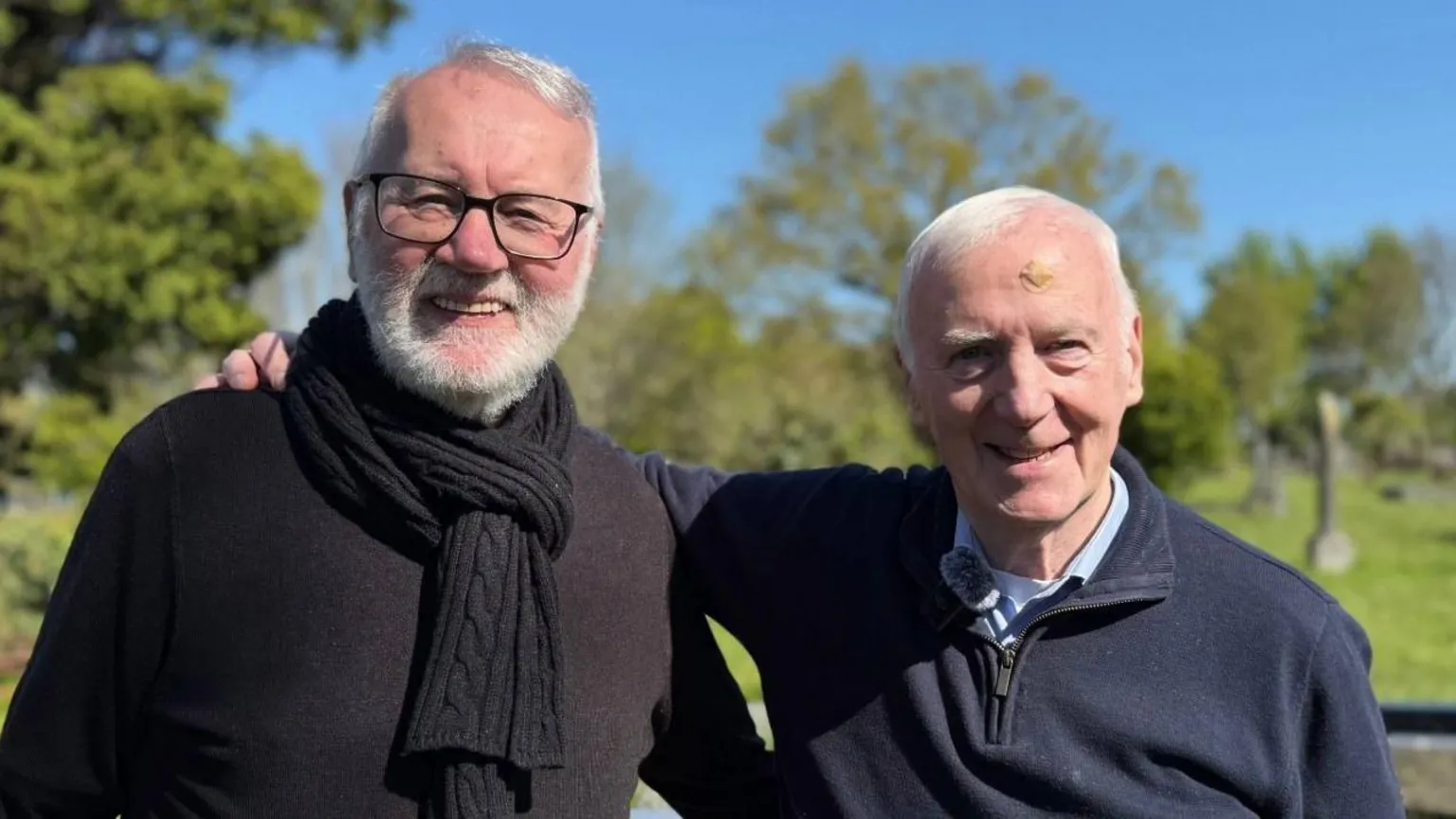
Lifelong friends John Carberry and Brian Symington have dedicated the past 40 years to promoting sign language in Northern Ireland.
John, who has been deaf since childhood, learned both ISL and BSL growing up.
"For so long, the lives of deaf people and their language have been overlooked. Now our language is being lifted up. We are thankful to our government for their support," John said.
"Sign language changed my life. It made me who I am today and gave me my place in the deaf community and wider society."
Brian added:
"It's been a struggle for deaf people over many years, but to have sign language recognised is a huge step forward. There is an opportunity here to go further than other parts of the UK."
What are the laws in the rest of the UK?
The British Sign Language Act received Royal Assent in April 2022, granting legal recognition of British Sign Language as a language in England, Scotland, and Wales. However, it does not automatically provide free, universally accessible language classes for all families.
The act also imposes a duty on the government to report on progress toward greater promotion and use of sign language in government communication with the public.
Plans for a sign language bill in Northern Ireland had been under consideration for several years but were delayed due to multiple collapses of power-sharing arrangements.
The Republic of Ireland passed legislation in 2017 recognizing Irish Sign Language, its use in legal proceedings, and the provision of interpretation into sign language by public bodies.


