

Heatwave Conditions Confirmed in Northern Ireland
Heatwave conditions have officially been met in Northern Ireland following three consecutive days of temperatures exceeding 25C in County Tyrone. According to the Met Office, this heat threshold must be recorded for at least three consecutive days at the same weather station.
Castlederg recorded temperatures of 25.7C at lunchtime on Tuesday afternoon, after reaching 25.1C on Monday and 26.4C on Sunday. Similar or possibly higher temperatures are expected in the coming days. This station also holds Northern Ireland's highest temperature record of 31.3C, which was set in July 2021.
This dog ensured it had appropriate eye protection on a sunny day in Minerstown, County Down.
The beach at Portballintrae, County Antrim, was busy with sunseekers.

Hot conditions, particularly inland, are forecast to continue before temperatures cool by a few degrees towards the weekend. Despite this slight cooling, temperatures are expected to remain above average for most areas. Coastal regions will experience cooler conditions at times due to sea breezes.
Heatwave and Warnings in the Republic of Ireland
In the Republic of Ireland, a heat warning has been issued across most of the country, affecting 20 counties until Friday morning. Additionally, a heat advisory is in place across every county until Saturday.

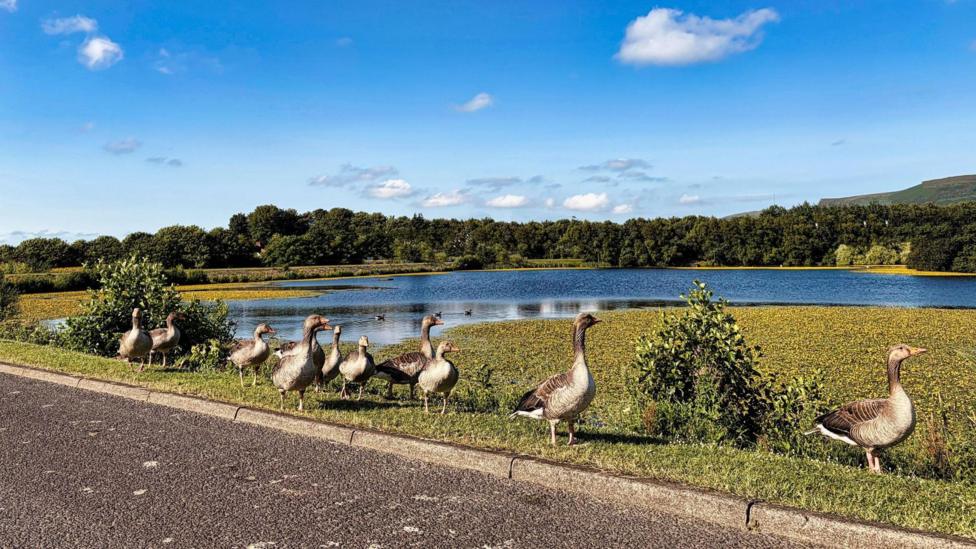
A gaggle of geese soaked up the sun in Belfast.
The heatwave has been ongoing in the Republic of Ireland since 9 July and is expected to continue into next week, especially in the midlands and southern regions. Temperatures have approached 30C in several locations over the past week.
The highest temperature on record in the Republic of Ireland is 33.3C, recorded in June 1887.
Irish weather service Met Éireann has issued warnings regarding temperatures above 27C, highlighting potential water safety issues due to increased use of lakes, beaches, and waterways. Other potential impacts include uncomfortable sleeping conditions, heat stress, forest fires, and drought.
Furthermore, a hosepipe ban and water conservation order will come into effect in six counties in the Republic starting Thursday, lasting for six weeks.
Climate Change Context
The current conditions experienced in the UK this summer align with warnings from climate scientists that human-induced climate change will result in more frequent and intense heatwaves, as well as potential summer droughts.
Met Office projections indicate that hot spells will become more frequent in the future, particularly over the south-east of the UK.


