
Settlement for Abuse Victim at Kincora Boys Home
Richard Kerr, a victim of sexual abuse at the infamous Kincora Boys Home, is set to receive a £100,000 settlement, as announced in the High Court on Tuesday.
The resolution of Kerr's civil case also included expressions of "deep regret" from police and two Stormont departments regarding the exploitation he endured during his childhood.
Kerr, aged 64, brought the lawsuit over allegations that he was trafficked and abused while residing at the Kincora Boys Home in east Belfast and other institutions throughout the 1960s and 1970s.
A paedophile ring reportedly subjected him to years of rape and molestation in a campaign that was allegedly concealed by the British state.
Damages were sought against the Department of Health (DoH), the Department of Justice (DoJ), the Police Service of Northern Ireland (PSNI), and the secretary of state for the Home Department.
The legal claims included assault and battery, misfeasance in public office, breach of statutory duty, and negligence.
On Tuesday in court, Kerr's counsel, Monye Anyadike-Danes KC, confirmed the matter has been resolved.
The defendants, while denying liability, agreed to pay Kerr £100,000 plus costs as a final settlement of all claims.
The abuse is said to have taken place at the Kincora Boys Home in east Belfast during the 1960s and 1970s.
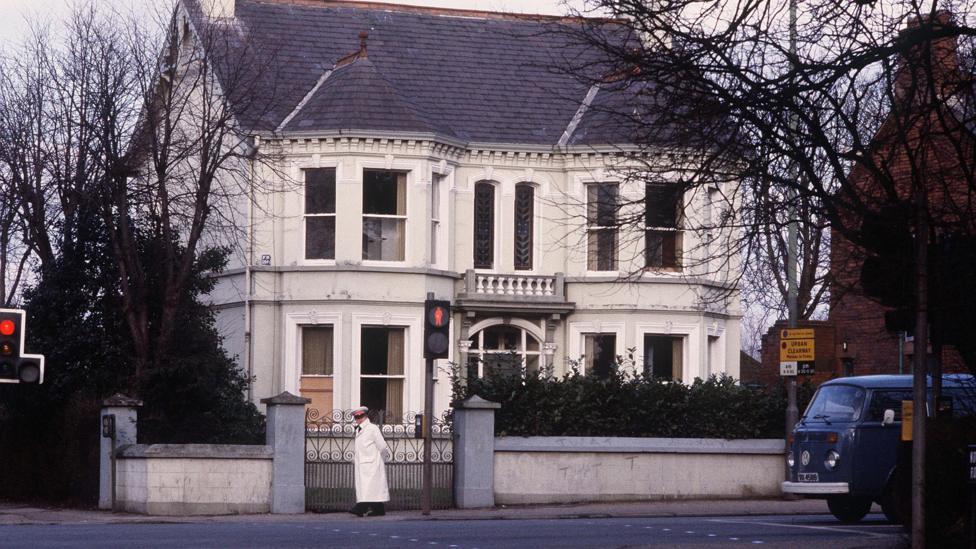
Official Acknowledgment and Regret
An agreed statement read on behalf of the PSNI, DoH, and DoJ acknowledged that the Historical Institutional Abuse (HIA) Inquiry previously found Kerr was sexually exploited and abused as a boy and young man, with no doubt about the serious adverse impact on his life.
"While these defendants do not accept liability, the plaintiff should not have been subjected to any abuse whatsoever, and it is a matter of deep regret to these defendants that he was," the statement added.
Kerr, who currently resides in Dallas, Texas, spent over two years at the now-demolished Kincora home.
He also pursued legal action concerning earlier treatment in care at Williamson House in north Belfast and a subsequent period at a borstal in County Down.
During his childhood, Kerr was allegedly given alcohol and sexually assaulted by multiple men on numerous occasions.
Court documents detail claims of being taken to hotels in Belfast, Portrush, and Bangor where he was abused.
According to his case, he was also attacked while working at horse stables near Larne.
Another alleged incident involved molestation by a former soldier after being sent to his home in west Belfast.
He further claimed he was put on ferries to England, where men picked him up and took him to locations in Manchester and London.
Allegations of Cover-Up and Investigative Failures
The lawsuit alleged that previous investigations failed to uncover the full extent of abuse at Kincora, including the suspected knowledge and involvement of British state agents.
His legal team also claimed that the Royal Ulster Constabulary did not adequately investigate the events at the home.
Kerr's solicitor, Kevin Winters, commended his client’s bravery in pursuing the case despite the "profound and lasting harm" he suffered during childhood.
Winters noted that Kerr has lived with the consequences of significant oversight, safeguarding, and investigative shortcomings identified by the HIA Inquiry.
"Despite decades of public discussion concerning Kincora and related institutions, Richard has never before received a personal apology acknowledging the abuse he suffered and its devastating impact upon him.
Today's settlement cannot undo the past, but it brings a measure of closure and recognition that has been long overdue."


