Identity Theft and Online Deception Affect Sasha-Jay Davies
Images of Sasha-Jay Davies have been stolen from her social media accounts and used to deceive others through catfishing.
When someone looks at Sasha-Jay Davies in a shop, she feels extremely anxious, fearing that people recognize her face and are about to approach her.
For nearly four years, she has been falsely accused by strangers of attracting men, arranging meetings, and then not showing up.
This situation arises because images of Sasha-Jay have been taken from her social media profiles and used by another individual to build relationships with men and women.
South Wales Police are currently investigating the matter.
Online safety lawyer Yair Cohen explains that individuals who engage in catfishing often have low self-esteem and that stealing someone else's identity to deceive others into relationships gives them a sense of "power."
Fear of Going Out
"Boys have approached me accusing me of sending messages to attract them and making plans to meet—conversations I have never had," said 19-year-old Sasha-Jay.
"I used to go out frequently, but now I rarely do because I fear which man will approach me next.
"It is very difficult, and I would not wish this on my worst enemy."
So far, the men who have approached her have been polite, but she worries about what could happen, adding,
"It's frightening to be challenged for something you did not do and to realize someone is using your face to deceive others."
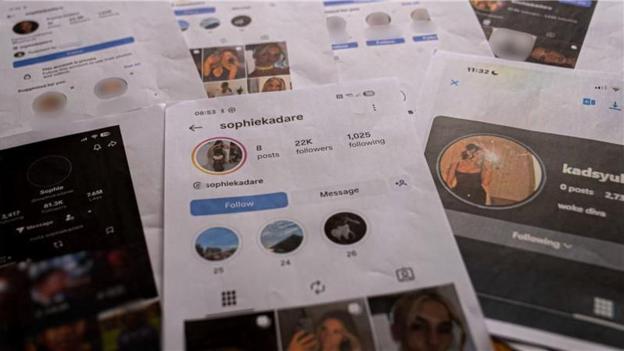
Approximately 81,000 people follow the fake TikTok account.
About 20 boys and several girls from Aberdare have contacted Sasha-Jay on social media claiming to know her.
However, images are not the only thing the fraudsters have taken.
Cruel messages related to her late father, including a fake pancreatic cancer certificate, have been posted, along with reposted racist and offensive messages that have caused her considerable distress.
Photos of other women with similar body types to Sasha-Jay have also been posted, attracting many strange comments from men and making her feel "very uncomfortable."
"It's hard to understand something so malicious," she said. "They know everything about me."
Thousands of parents urged not to give smartphones to children under 14
More girls than boys face social media problems
Is banning social media for children a good idea?
Sasha-Jay first became aware of a fake account in 2022, when she was 16 and had just started college after leaving school.
She realized someone was using her pictures on TikTok.
Because the fake profile was public and posted daily content, the number of followers increased.
Sasha-Jay reported the profile to the police but was told there was little that could be done.
"I thought, 'Oh well, hopefully they will get bored and do it to someone else,'" she said.
However, soon the images began appearing on daily apps, and fake accounts using pictures of her friends were created to "make everything look more credible."
Despite making her own accounts private 18 months ago, Sasha-Jay said those who stole her identity continued to use old pictures and some new ones edited with artificial intelligence (AI).
Insight into Conversations Using Sasha-Jay’s Images
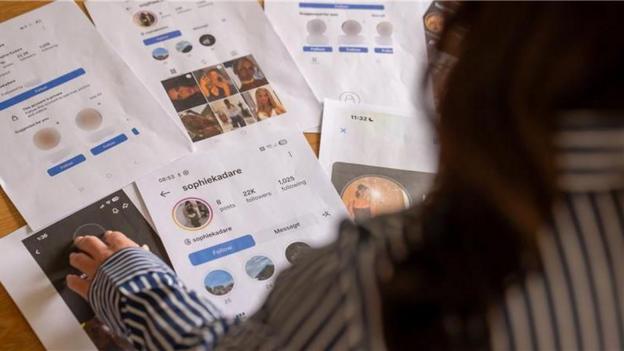
Images of Sasha-Jay were used on accounts under the name Sophie Kadare, and one person deceived was Mark (not his real name), 22, from Essex.
In December, Mark began messaging "Sophie" on Instagram after seeing her videos on TikTok.

TikTok and Instagram have since deleted the fake accounts.
"She said she supported Liverpool, so I thought I would follow her," said Mark.
For about a month, they exchanged messages and talked about football, daily activities, and travel.
Then one day while scrolling on TikTok, Mark came across a video on the real Sasha-Jay’s account about her partner.
"I was shocked at first," he said. "I had never experienced anything like that before."
Mark warned Sasha-Jay, but when he confronted "Sophie," she blocked him.
"I thought she was sending messages to get attention," he said. "Maybe she’s a girl who doesn’t get much attention from boys—I have no idea."
Due to insufficient action by some social media platforms and the police, Sasha-Jay says she has had to investigate the matter herself.

Sasha-Jay questions whether someone she knows is behind the entire situation.
Before the accounts were deleted, she tried to report them to social media platforms, but the fake person blocked her friends and family to prevent them from reporting.
The fact that the fake accounts had 81,000 followers on TikTok and 22,000 on Instagram made the situation more difficult.
"Because the fake account has more followers than I do, it looks like a real person’s account," she said.
Initially, the police told her nothing could be done, but after Sasha-Jay recently posted about her experiences on Facebook, she was given an incident number, and an investigation is now underway.
She feels scared, anxious, and embarrassed, she said.
"At first, it didn’t really affect me, but it’s much bigger now. This account has taken over my whole life," Sasha-Jay added.
"Everyone thinks I am the Sophie here—I can’t be myself."
Catfishing and the Law
According to Hayley Laskey from the Internet Safety Centre, impersonation and catfishing are significant problems.
About 5% of cases reported to the centre’s helpline in 2024 and 2025 involved fake accounts.
Ms. Laskey explained that catfishing is not always illegal in the UK, but related behavior can break laws such as the Fraud Act 2006—for example, if someone uses a fake identity to obtain money or gifts, or causes damage to someone’s reputation or financial loss.
Similarly, impersonating someone online can be illegal if it causes harm or financial loss.
Under the Online Safety Act 2023, platforms must act if impersonation leads to illegal content such as threats or fraud.
Ms. Laskey advises reporting to digital platforms first and waiting about 48 hours before escalating complaints to the centre’s helpline.
She emphasized that prevention and education are key—including limiting personal information online, using strong passwords and two-factor authentication, and being cautious before sending money or personal images.
South Wales Police Investigate Sasha-Jay’s Case
Local police said,
"South Wales Police are investigating an identity theft case in the Aberpennar area.
"The victim is being kept updated during the investigation."
TikTok declined to comment on the specific case but states in its guidelines that it prohibits impersonation and spam accounts, as well as content that infringes on intellectual property rights.
Since the BBC contacted TikTok and Instagram, the fake accounts have been deleted.
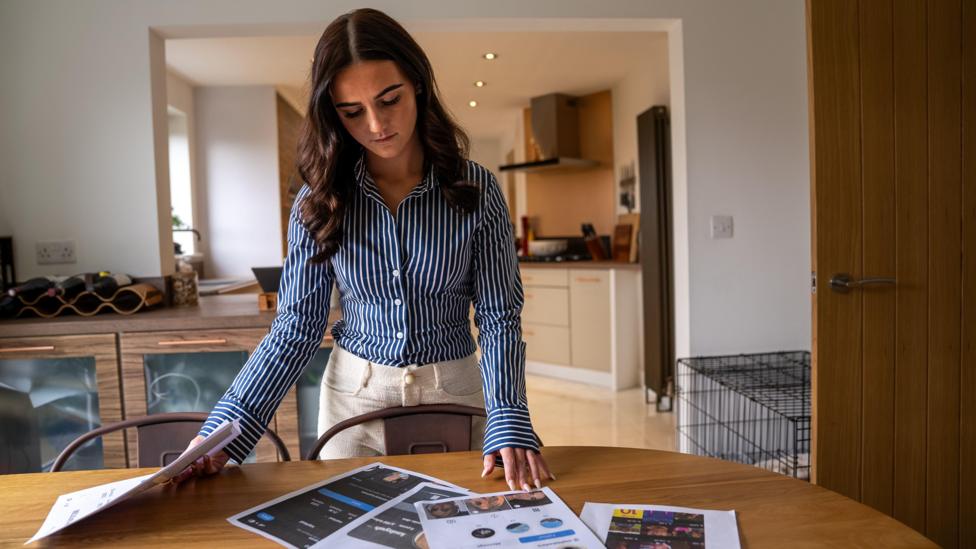
Meanwhile, Sasha-Jay is sharing her story in hopes of finding answers.
She also wants people to be more cautious when online.
"I always thought, 'Oh, this will never happen to me,' and now it has," she said.
A spokesperson from the UK Government’s Department for Science, Innovation and Technology said all social media providers must protect users.
"Impersonation or catfishing is a terrible form of abuse that can have serious consequences for victims both online and offline," the spokesperson said.
"Under the Online Safety Act, every service, including social media platforms, must protect users from illegal content and criminal behavior, including fraudulent communication crimes."
More girls than boys face social media issues
Parents urged not to give smartphones to children under 14
Debate on banning social media for children