

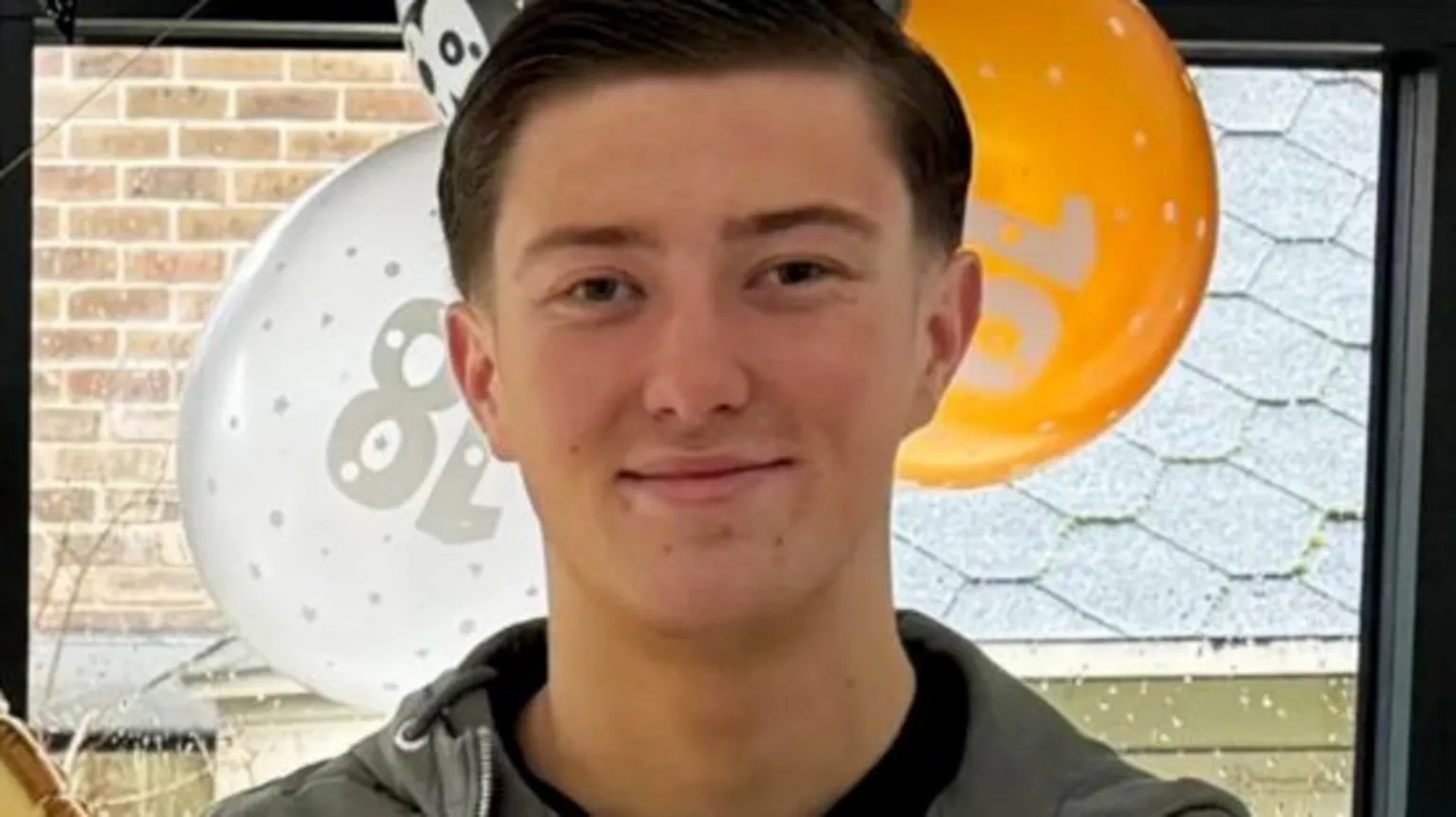
Bodycam Footage Reveals Final Moments of Henry Nowak
Sir Keir Starmer described the bodycam video showing 18-year-old Henry Nowak's last moments as "harrowing." The Prime Minister reportedly watched the footage multiple times and told broadcasters he "felt sick" viewing it.
The footage has generated widespread outrage regarding the teenager's death.
Political Reactions and Claims of Two-Tier Policing
The incident has led the Conservatives and Reform UK to assert that the UK experiences "two-tier policing," where individuals are treated differently based on their skin colour. Downing Street has rejected these claims of discrimination.
The video depicts officers accepting the account of Henry Nowak's murderer, Vickrum Digwa, who falsely told them that Nowak had racially abused him.
Nowak is shown handcuffed and arrested, initially without receiving medical assistance, despite informing police that he had been stabbed and was struggling to breathe.
Conservative Leader's Criticism of Police Training
Conservative leader Kemi Badenoch described the footage as "absolutely appalling." She acknowledged that due to the severity of Nowak's injuries, police might not have been able to save his life but criticized the officers' conduct, stating,
"what I see now is...police who don't know how to do the right thing anymore."
Badenoch attributed this to police training, commenting,
"I do not want police looking at the colour of your skin when they're deciding how to treat you...I think they are, because that's what they're being taught."
She further blamed "all of this nonsense that came in after the Black Lives Movement" for influencing police behavior.
Reform UK's Nigel Farage Responds
Nigel Farage of Reform UK claimed on social media that the footage revealed a "two-tier Britain...where the rights of white people matter less than ethnic minorities." He called for a response of "pure cold rage," emphasizing that people had "had enough of anti-white prejudice" and asserting that "white lives matter just about as much as black lives."

Badenoch criticized Farage's approach, stating that while she desired change, "we don't need rage, which is what Nigel Farage is pushing." Sir Keir Starmer also condemned Farage's reaction as "completely wrong to use this to try and create division," adding that the teenager's family "don't want this whipped up."
Home Secretary Addresses the Commons
With tensions rising, Home Secretary Shabana Mahmood made a statement in the House of Commons. She described the video as "heartbreaking" and acknowledged it was "without question, a disturbing and tragic thing to see." Mahmood noted that people were "rightly asking questions about how the situation was handled."
She emphasized that the appropriate course of action was to allow the Independent Office for Police Complaints (IOPC) to investigate the incident.
"There have been accusations, I know of two-tier policing, that one community has been prioritised over another,"
Mahmood said, but added that the IOPC would determine "the facts with regard to this specific case." She explained that the watchdog would assess whether individual officers committed misconduct and identify "any wider lessons."
Addressing Reform UK's claims that minority communities receive preferential treatment, Mahmood stated,
"I don't think this is a moment to pit white Britons against non-white Britons,"
and urged rejection of any "political grandstanding."
The Home Secretary also warned of a "dangerous undercurrent" linked to criticism of the police, noting that "threats against police officers" had already occurred following the case. She reported that a police officer unrelated to the incident had been forced to relocate and cautioned that "misinformation and inflammatory commentary is making a dreadful situation even worse."
Attorney General Reviews Sentencing
Meanwhile, the Attorney General's office is reviewing the case after receiving "multiple requests" to consider whether the sentence given to Vickrum Digwa was too lenient. Digwa received a life sentence with a minimum term of 21 years.
Under the Unduly Lenient Sentence scheme, the Attorney General has 28 days to decide whether to ask the Court of Appeal to review the sentence. The court may increase the term if it finds a serious error by the trial judge and believes public confidence would be undermined if the sentence remained unchanged.


