Contrasting Experiences of the Heatwave
While some individuals found this week’s heatwave manageable, many residents in economically disadvantaged areas faced significant health risks due to excessively hot living conditions.
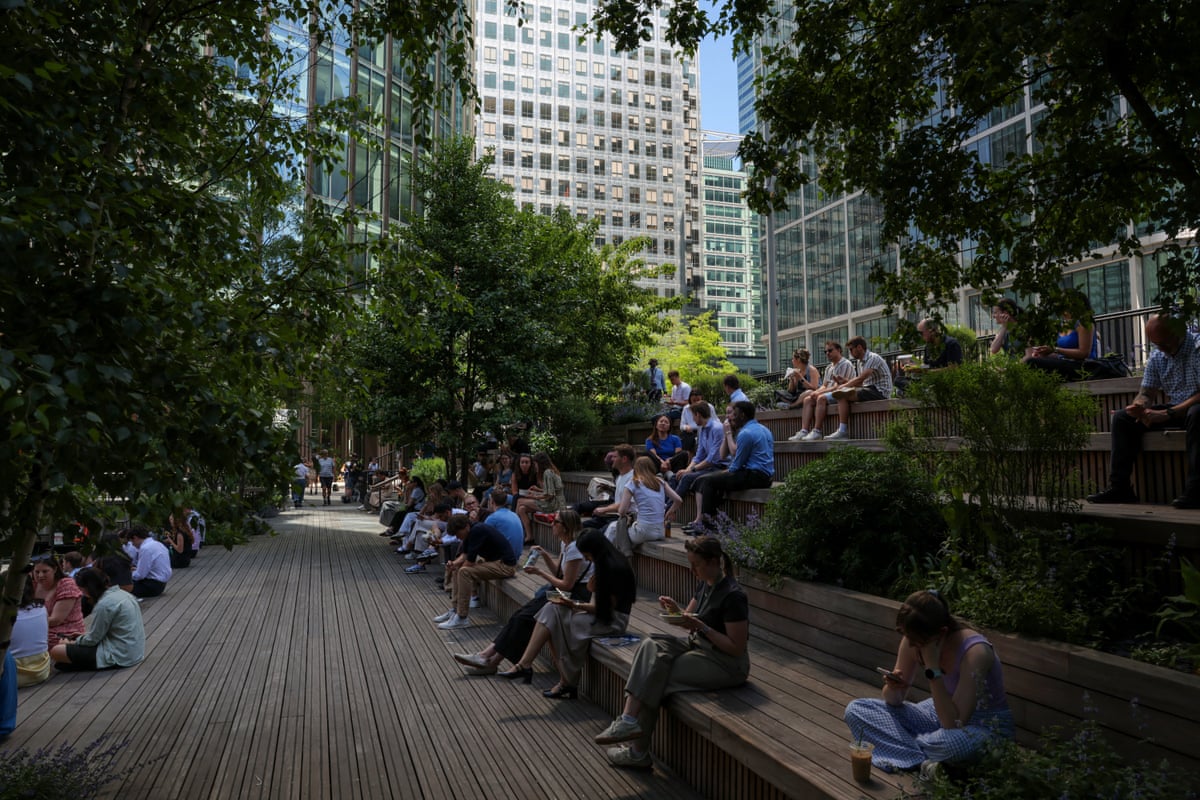
Twenty-seven-year-old banker Aykhan experienced the heatwave comfortably, moving between his air-conditioned flat, the air-conditioned Elizabeth line, and his air-conditioned office. During a lunch break in the shopping centre beneath the gleaming One Canada Square skyscraper in Canary Wharf, he expressed satisfaction with his new flat’s cooling system.
“It’s a new flat, the air-con is great, my bedroom is cool.”
He reported no personal discomfort from the heatwave but noted increased office attendance attributed to the availability of air conditioning.
“I think my colleagues have. We have higher attendance in the office this week because it has AC.”
In contrast, 26-year-old Asiyha, residing in Whitechapel—one of the UK’s most deprived areas—faced a different reality. Sitting under a tree in Weavers Fields, she attempted to soothe her infant child, who was struggling with the heat.
“It is way too hot in my flat, that is why we are sitting outside,”she explained.
“I live right nearby. My baby is struggling. We are in a very hot flat and we cannot sleep at night.”
England recorded some of its hottest days, with London temperatures reaching 35°C. The region experienced consecutive “tropical nights,” where temperatures did not fall below 20°C, complicating sleep for those without air conditioning. Many homes, particularly in poorer areas and not designed for extreme heat, became uncomfortably hot.
Health risks increase when indoor temperatures exceed 25°C, especially for older populations. A recent study by the thinktank Resolution Foundation found that nearly half (48%) of the poorest fifth of English households live in homes prone to overheating, compared to 17% among the wealthiest fifth.
The Canary Wharf area, with its steel skyscrapers, was vibrant under bright sunshine on Thursday lunchtime. The underground shopping centre, air-conditioned and bustling with suited workers, provided respite from the heat.
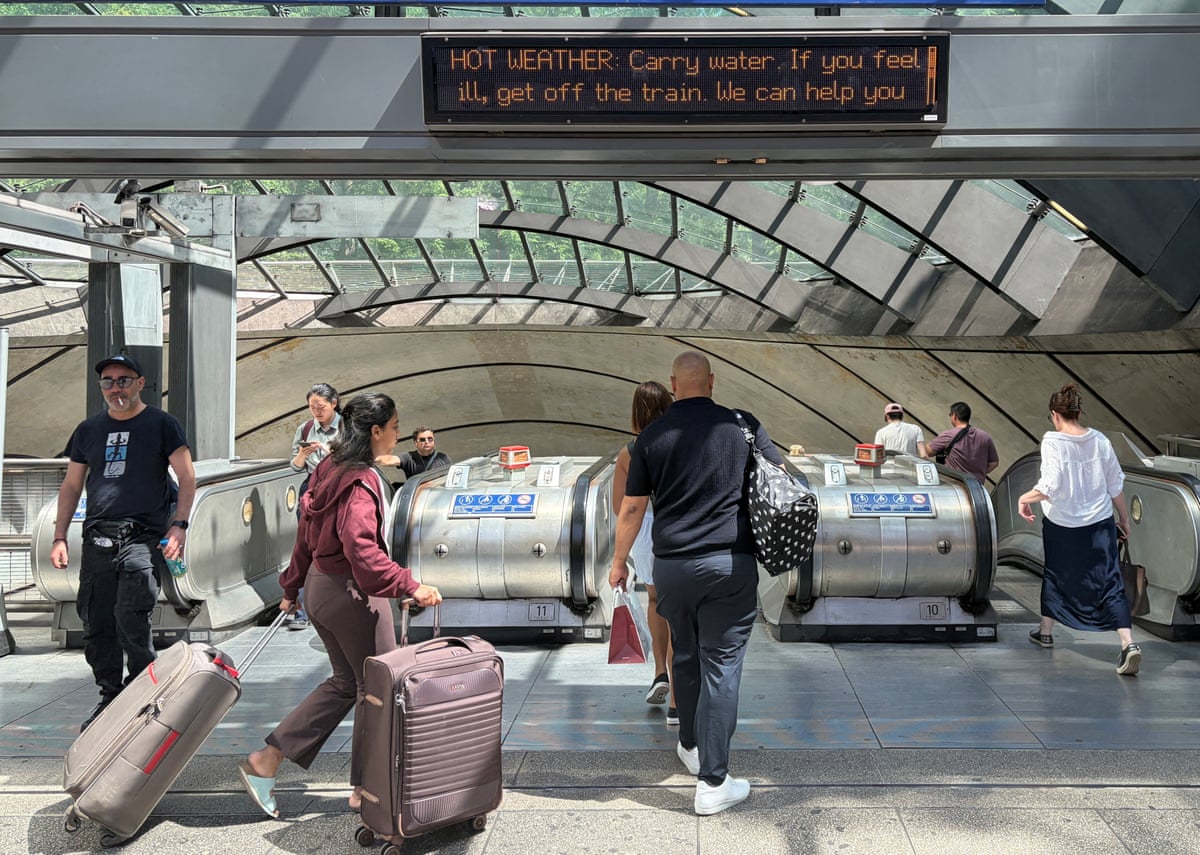
Will, 37, employed by one of the UK’s largest banks, was waiting for a sandwich. He noted relaxed dress codes and described his living conditions.
“Dress codes have relaxed in recent years, so I am wearing a linen shirt and no jacket,”he said.
“I don’t have air-con, but I live in an Edwardian house in north-west London which has shutters on the windows and very high ceilings, so it does stay cool. We also have a garden.”
At the Boisdale restaurant, with blood-red upholstery, 21-year-old Delano served lunch while managing with an Argos fan at home.
“The AC here is good though. Honestly, it’s the commute which is the worst – the Elizabeth line is air-conditioned but if you have to get the bus, it’s unbearable.”
The restaurant offered frozen cocktails to help patrons cope with the heat, which were popular among office workers.
A group of eight men in their early 20s enjoyed beers in a hot, artificially turfed square outside the shopping centre.
“We can’t afford AC yet,”one remarked,
“that’s why we work in finance, so one day we can afford it!”Most had invested in Dyson fans, which retail between £300 and £600.
One young man shared his method for sleeping during the heatwave.
“I drink four pints in the evening, that knocks me out!”
Fans, air-conditioning units, and other seasonal cooling products have increased in price during the heatwave, further limiting access for lower-income individuals. An industry expert reported a 17% price increase for air-conditioning units since April. The Dyson Cool Tower fan rose from £249.99 to £299 during the same period.
Toni, 35, working in technology, enjoyed her lunch break with a glass of rosé, appreciating the coolness of her new-build flat in Woolwich.
“It’s a new-build in Woolwich, it’s very cool. I love this heat to be honest, I wish it was like this all the time.”
This sentiment contrasted with those in Whitechapel, where many lack air-conditioned homes or workplaces.
Shereen, a 21-year-old student, sought relief inside the Budgens supermarket near the station.
“I’m in here for the air-con,”she said, laughing when asked if she had air conditioning at home.
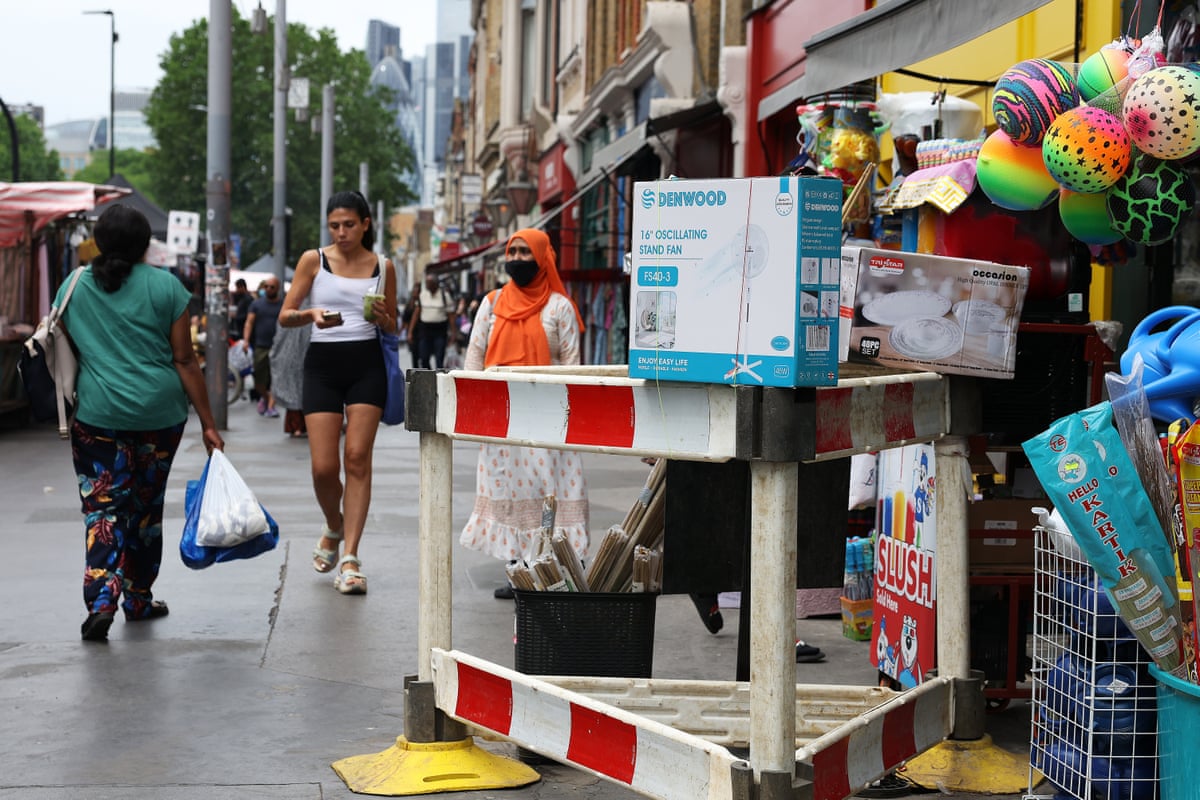
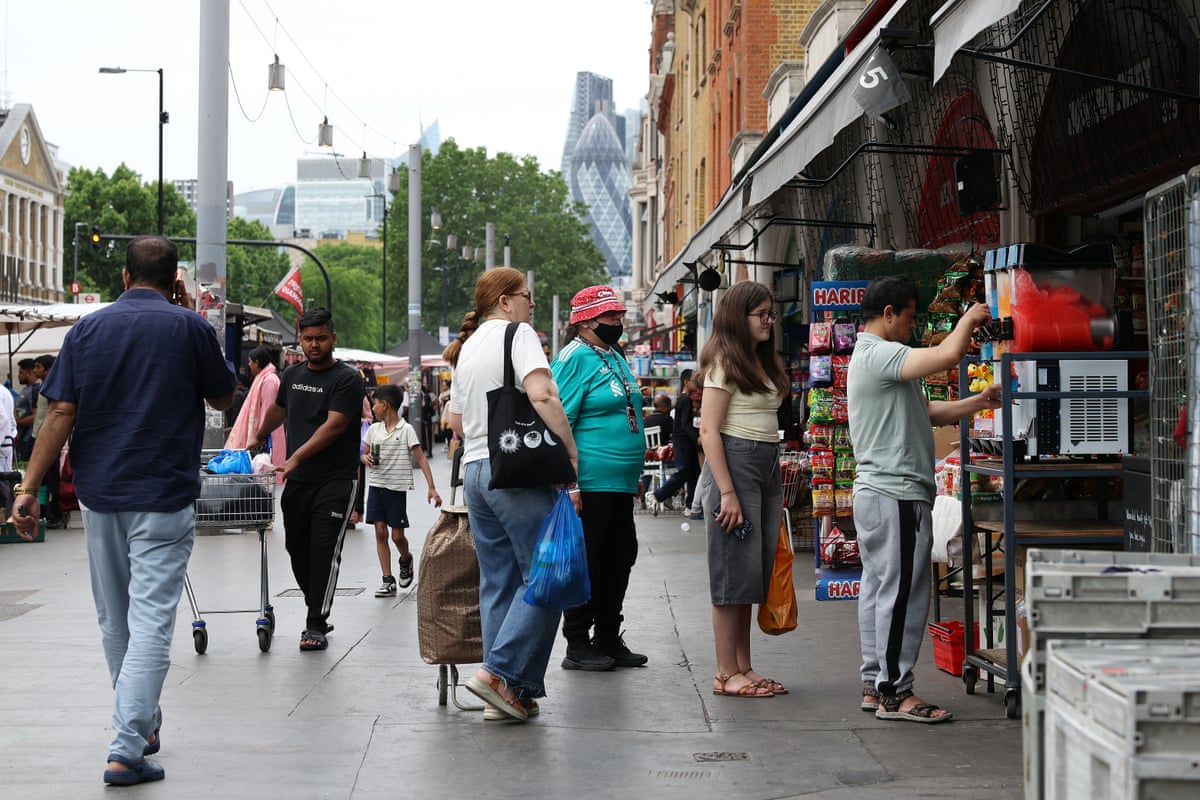
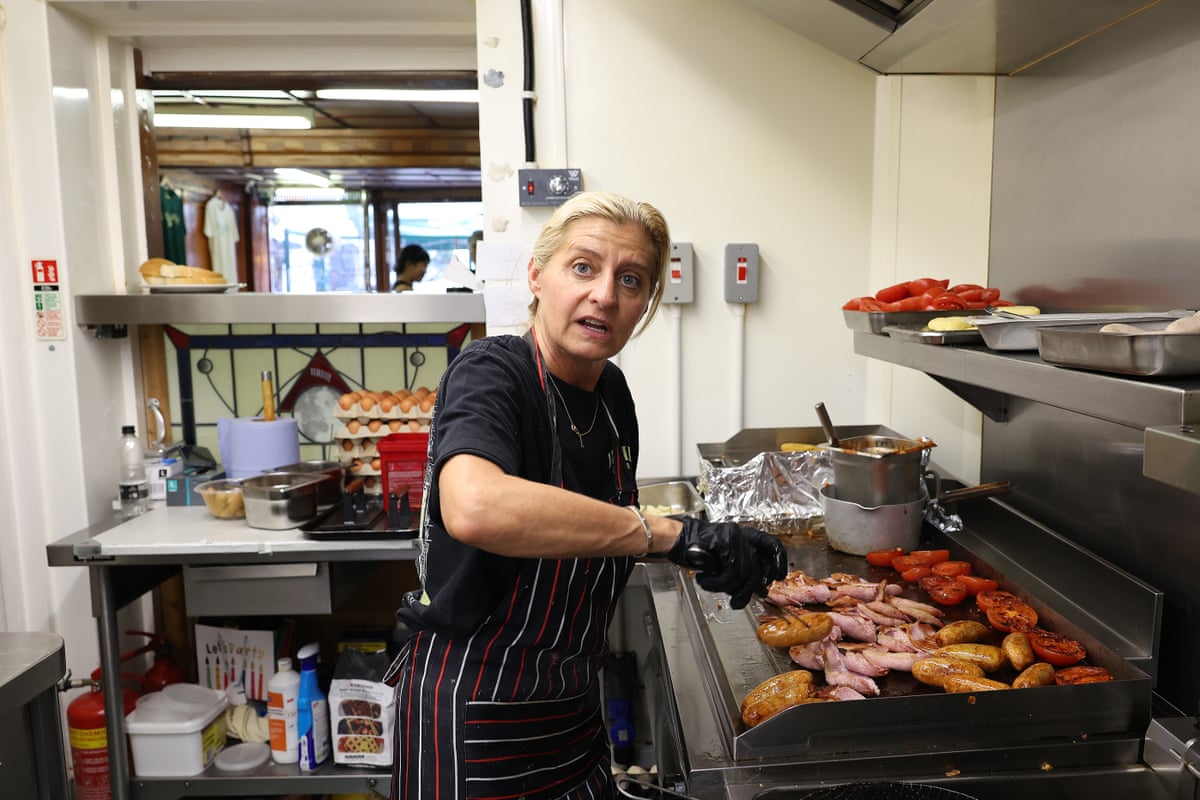
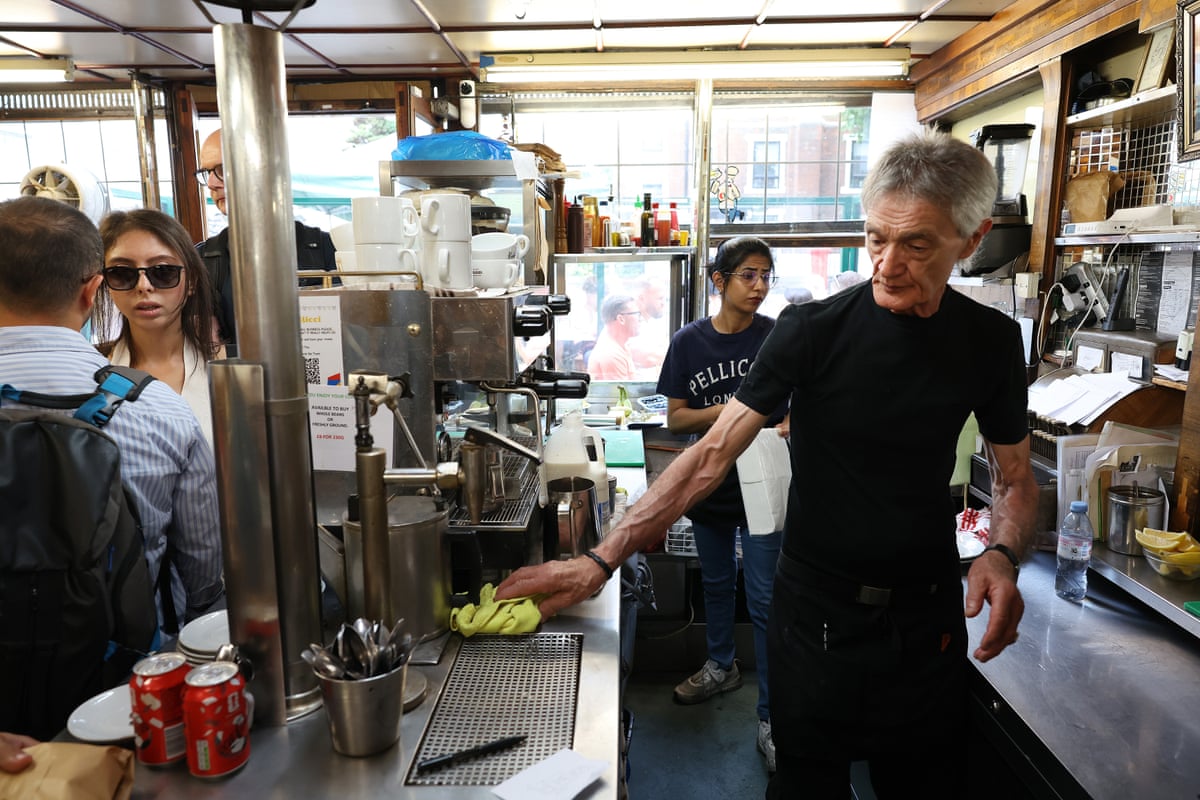
Unlike the upscale venues of Canary Wharf, traditional workers’ cafes in Bethnal Green do not have air conditioning. E Pellicci, a 126-year-old family-owned café, managed with a simple white fan positioned in the doorway.
Anna Pellicci, the café manager, explained the challenges of installing air conditioning due to the building’s Grade II-listed status.
“We have applied multiple times to install air-conditioning,”she said.
“But we are Grade II-listed, so we aren’t allowed.”She mitigated the heat by relocating some tables outdoors to reduce crowding.
“We have all been finding it really hot.”
Amy, a waitress at the café, noted the workplace was more comfortable despite the espresso machine’s steam and customer warmth.
“My flat is boiling, it’s on the first floor and it is so humid. I have been finding it hard to sleep.”
Several individuals mentioned the discomfort of traveling on the No 8 bus, a more affordable but less cooled alternative to the Elizabeth line. Passengers were visibly affected by the heat, with children crying onboard.
In the Cranbrook Estate in Tower Hamlets, beneath imposing concrete tower blocks, a rare green space offers relief. The Cranbrook community food garden, founded by Laura Buckley, serves as a cool oasis.
Buckley, smoking and conversing with a friend, described the garden’s role during the heatwave.
“We have been sitting out here pretty much every day during the heatwave,”she said.
“The plants keep it nice and cool.”
Wildlife also benefits from the garden, which provides water for birds and bees, and serves as a habitat for various species.
“We’ve put out water for the birds and the bees, and there’s a fox which loves drinking from our pond. We have all kinds of nesting birds here, and the beetles nest in our log pile,”Buckley explained.
“It’s been really hard work keeping all the plants alive in the heat.”
With her long hair and colorful attire, Buckley appeared almost like a fairytale figure as she sat beneath vines and near a nest of baby wrens.
“We built every little inch of this place. It’s open to everyone and is a garden for the people who live in the estate who are banned from putting pot plants on their balconies.”
The garden’s vegetation significantly lowers temperatures compared to surrounding streets.
“This place provides respite and joy for so many people,”Buckley concluded.