

Former British Soldier Sentenced in Russian Prison Colony
A former British soldier, Hayden Davies, has been sentenced to 15 years in a maximum-security Russian prison colony and has expressed to the BBC that he feels abandoned by the UK government.
Davies was captured by Russian forces in Ukraine more than 18 months ago after volunteering to join the Ukrainian army's foreign legion. He was convicted of mercenaryism, defined as participating in a military conflict for material reward as a "private soldier."
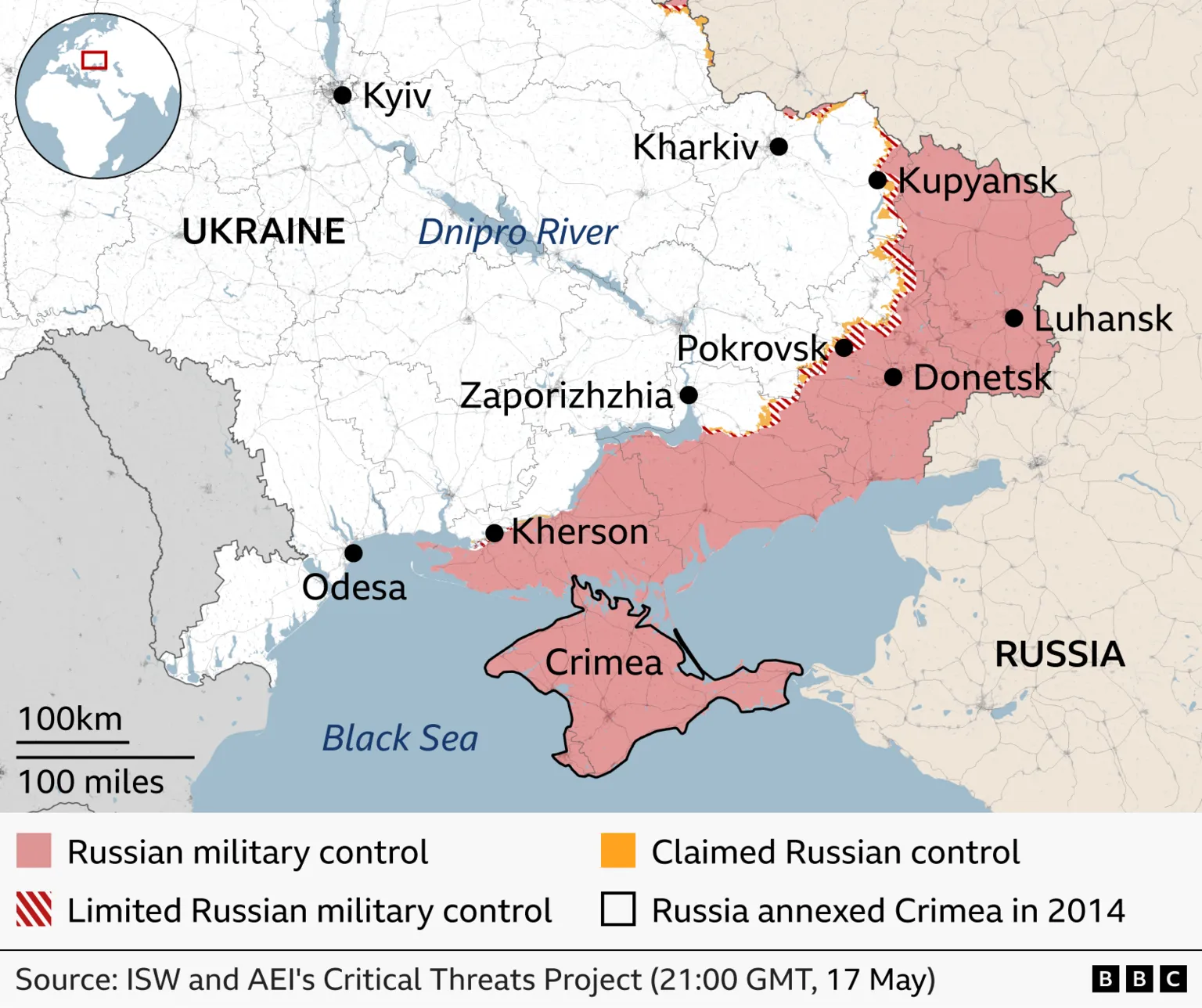
In December of the previous year, a court in Donetsk, a city in Ukraine occupied and controlled by Russia, sentenced Davies to 13 years in prison. The UK government does not recognize the legitimacy of this court or Russia's occupation of Donetsk. Recently, a Moscow judge extended Davies' sentence by two additional years, citing that the original term was too lenient.
A spokesperson from the UK Foreign, Commonwealth & Development Office (FCDO) stated to the BBC:
"We remain in close contact with Hayden Davies' family and are providing consular support. We strongly condemn the sentencing of Mr Davies in a Russian-controlled court on false charges of mercenaryism."
Details from Letters Written by Davies
The following paragraphs contain details some readers may find upsetting.
In letters sent from within the detention facility, Davies recounts being captured by Russian forces after sustaining serious injuries on the front line. He wrote,
"My radio broke, my partner was killed and I couldn't escape. I had to make a decision: lie there and die, or take action. I crawled 150 metres [500 feet] to reach an area I knew. It took a whole day."
Davies described the pain from his injuries as unbearable, with bones protruding from his leg. He continued,
"I reached a ruined house with a basement and decided to stay there. Luckily, there was lots of tinned food."
The former soldier treated his wounds as best as possible by pushing the bone back inside his leg. He added,
"I've never experienced such terrible pain in my life. I made a splint and crutches out of wood."
Davies remained in the basement for two months until Russian soldiers discovered him.
He reported being held in solitary confinement for a full year before being placed in a cell with other prisoners. The 33-year-old expressed feelings of loneliness and lack of contact with British government representatives, stating,
"I served my country for 12 years in the [British] Army, and now, when I need help and medical treatment, no-one wants to know. This is a disgrace!"
Access and Treatment of Prisoners
British officials are frequently denied access to detainees in Russia and are unable to travel to occupied Ukrainian territories.
All correspondence with Russian prisoners is monitored and often censored by Russian authorities. Davies has authorized the publication of his letters. His family declined to comment when approached by the BBC.
Human rights organizations and international bodies have accused Russia of systematically denying prisoners of war (POWs) and other detainees adequate medical treatment, allegations which Moscow denies. The International Committee of the Red Cross (ICRC) reports it does not have full access to POWs in Russia and Russian-controlled areas, a requirement under the Geneva Convention.
A source close to Davies revealed that the soldier sustained a serious leg injury and is "getting no help at all." The source also noted that British government representatives have not contacted Davies' legal team, who are based in Russia.
In a letter to the BBC in March, Davies mentioned receiving only one letter from his sister. The BBC understands he has since received correspondence from another relative.
Conditions and Support in Prison
Anastasia Shevchenko, a respected political activist based in Lithuania who assists POWs in Russian captivity, stated,
"The attitude towards him in the prison is bad because he's British, [Russia says] he's a mercenary."
Russian authorities maintain that prisoners are treated in accordance with legal and international standards and reject allegations of mistreatment.
Shevchenko informed the BBC that she notified British authorities of Davies' capture last year after communicating with Ukrainian POWs held in the same prison who connected her with Davies.
She reported informing the British Embassies in Ukraine and Lithuania about Davies' imprisonment, saying,
"They thanked me, and that's it…From Kyiv, I got the message that we wish him to be brave, and we think about him, and...that's all."
Shevchenko expressed concern over the lack of immediate assistance for POWs, stating,
"For me, this is very strange because [POWs] are starving in prison, they need help immediately. I sent [Davies] money so he could buy some food there… the food they are given is not enough. Every month they need food, clothes and medication."
The FCDO did not respond to specific inquiries regarding Shevchenko's claims.
Shevchenko also noted that other countries provide more comprehensive support to their imprisoned nationals, adding,
"[The British] can do everything possible to swap Hayden and give him the support in prison so that he could feel like people around are thinking about him. This is the most important [thing] in captivity, not to be forgotten."
A source within the Ukrainian government familiar with the situation told the BBC they are unaware of any "active work" by UK authorities to assist imprisoned citizens.
Context of British Nationals Captured in Ukraine
Another ex-soldier, Shaun Pinner, who was captured in eastern Ukraine in 2022, was sentenced to death by a Russia-controlled court. He spent five months in Russian captivity alongside four other British men before being released in a prisoner swap.
Pinner praised the UK government for maintaining contact with his family, stating,
"The UK government was exceptionally good at keeping in contact with my family,"
but clarified that the government did not facilitate his exchange, which was brokered by the Saudi government.
He acknowledged the difficulties the government faces in prisoner exchanges, saying,
"The best outcome is if it goes through Ukraine. I can understand there's a lot of frustration over lack of access but if Russia doesn't let diplomats in to see POWs, there's not a lot you can do."
Official UK Government Position
The FCDO told the BBC,
"Under international law, Prisoners of War cannot be prosecuted for participating in hostilities. We demand that Russia respect these obligations, including those under the Geneva Conventions, and stop using Prisoners of War for political and propaganda purposes."
In its travel advice for Ukraine, the FCDO warns,
"If you travel to Ukraine to fight…your activities may amount to offences under UK legislation. You could be prosecuted on your return to the UK."
The advisory also notes,
"British nationals fighting in Ukraine have been killed or captured…The British Government's ability to support you in these circumstances is very limited."


