

Tenant Concerned Over Proposed Location of Disabled Toilet
A disabled tenant of a council house who requires a downstairs toilet has expressed dismay over the council's plan to construct the facility within her living room, the area where she takes her meals.
Sandra Robinson, aged 60, suffers from multiple health conditions that have limited her mobility, necessitating the installation of a cloakroom with a disabled toilet on the ground floor.
However, Swansea Council has stated that the cloakroom must be located in her living room, which currently accommodates her dining table and chairs, citing the use of internal space as an "established approach".
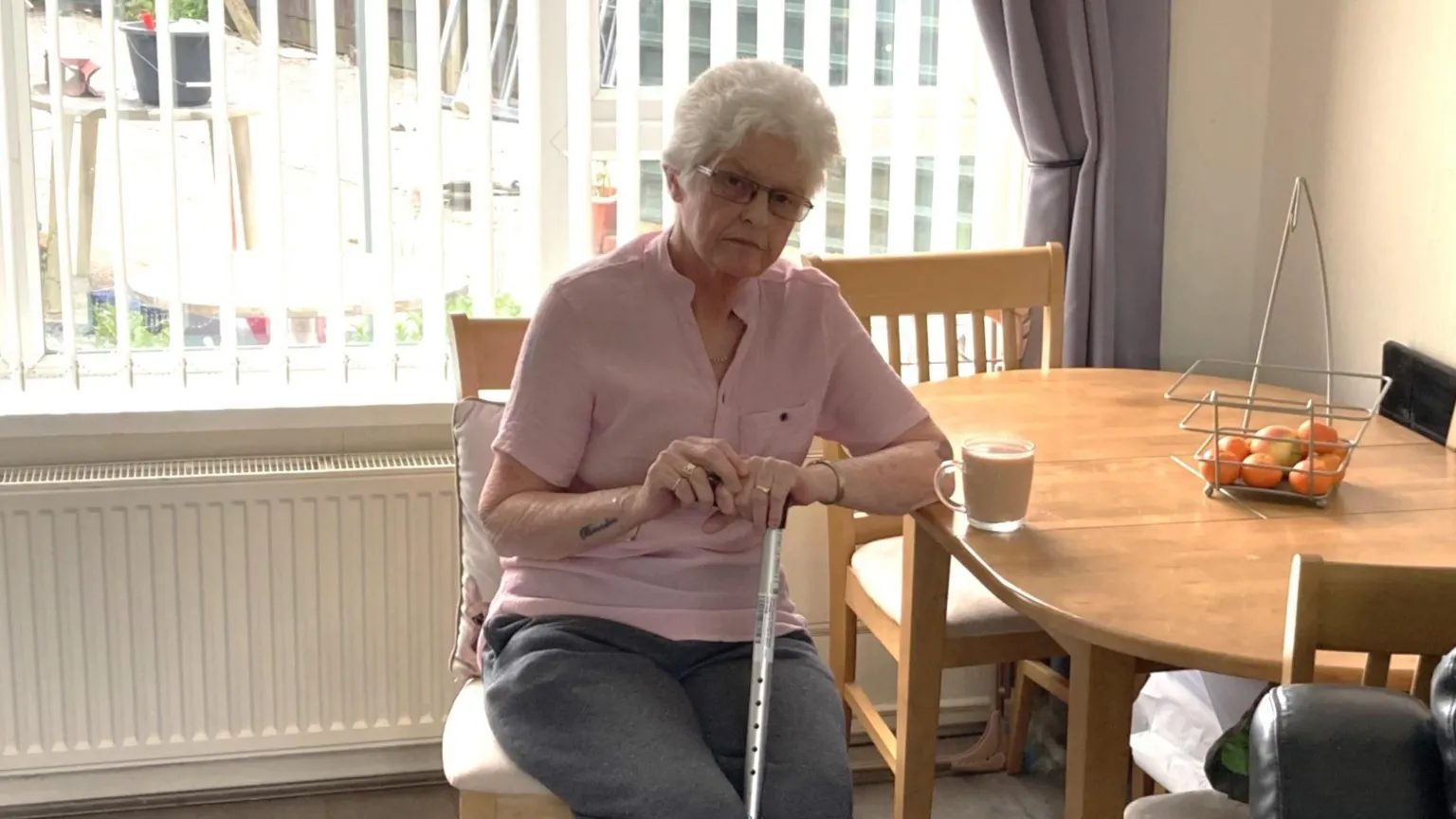
Robinson, who has been renting the three-bedroom house in Penllergaer for 29 years, remarked on the plan:
"I don't fancy eating by a toilet or people listening to me on the toilet."
The grandmother of five further commented:
"It's not dignified. It feels degrading."
Council's Position on Adaptation and Space Utilization
A spokesperson for Swansea Council indicated that there is sufficient space within the property to accommodate the cloakroom and that building extensions is considered a "last resort".
Robinson informed the Local Democracy Reporting Service that she will have to rearrange her belongings to optimize the reduced space in the open-plan living room.
She explained:
"I want to be able to sit at my table. There's isn't space in the kitchen for it.
What am I going to do when people are here and I want to go to the toilet?"
Robinson had hoped the downstairs cloakroom could be constructed on the side of her semi-detached house beyond the kitchen, which is separated by a lobby, although this would require the removal of two sheds.
Assessment and Adaptation Process
Following an occupational therapist and surveyor's visit, the council advised Robinson that her home "benefits from a relatively large open-plan ground floor area."
The council spokesperson elaborated:
"Whenever the council is looking to complete adaptation works at an existing council property we first assess whether the required adaptation can be accommodated within the existing home.
The current proposal is therefore to construct a small ground-floor cloakroom within the existing living-dining area.
This is an established and commonly used approach for delivering disabled facilities grant adaptations where sufficient internal space exists.
Only where this is not feasible will an extension be considered as a last resort."


