

Sir Keir Starmer Announces Resignation
For months, weeks, and sometimes days, the decline of Sir Keir Starmer's government has been meticulously documented.
Yet, on Monday morning, standing once more in Downing Street to witness a prime minister publicly acknowledge the end of their tenure was striking.
This was not a resignation prompted by scandal, as was the case with Boris Johnson, nor by economic disaster, as experienced by Liz Truss.
However, similarities exist between the downfalls of Johnson, Truss, and Starmer: all three lost the ability to govern effectively. Once a prime minister loses that capacity, their position becomes untenable.
Each of these leaders lost authority because their own Members of Parliament (MPs) lost confidence in them.
Remarkably, all three delivered resignation speeches at Downing Street within four years of each other.
Factors Behind Short-Lived Premierships
There is much speculation about why the last five UK prime ministers have had brief tenures. Some point to a stagnant economic environment dating back nearly two decades to the financial crisis. Others cite the relentless influence of social media.
The factors influencing many Labour MPs' views on Sir Keir were numerous, gradually accumulating before culminating rapidly.
Labour secured a majority exceeding 170 seats in July 2024 under Sir Keir's leadership.
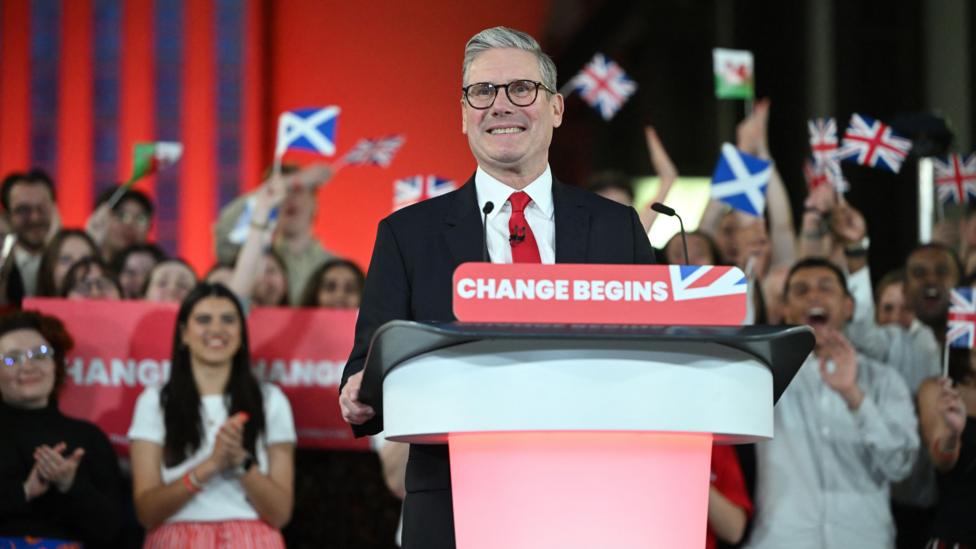
Shortly after Labour's election victory two years ago, the government announced the cancellation of the winter fuel payment for many pensioners, a decision later reversed. This was among several policy U-turns.
Additionally, controversy arose over certain benefits, referred to by some as "passes for glasses."
Within weeks of Labour assuming office, internal conflicts at Downing Street surfaced publicly when a briefing war aimed at ousting Sir Keir's first chief of staff, Sue Gray, was revealed.
All these events unfolded within the initial three months of the government.
Key Moments Undermining Authority
Just over a year ago, a pivotal moment occurred: the prime minister's humiliating retreat from planned changes to the benefits system.
This event marked a turning point when Labour MPs collectively realized they could challenge the government, resulting in a significant loss of authority for Downing Street.
Subsequently, the ongoing embarrassment surrounding the appointment of Lord Peter Mandelson as ambassador to Washington further eroded confidence.
Lord Mandelson was dismissed in September, but the controversy persisted for months, overshadowing the prime minister's remaining time in office.
Amid these challenges, Morgan McSweeney, who had been a close aide to Sir Keir throughout his political leadership, resigned, as did Tim Allan, another No 10 director of communications.
Growing Discontent Within Labour
Underlying these developments was increasing dissatisfaction among Labour MPs regarding their leader, initially expressed privately and later publicly. Many MPs had harbored private concerns for an extended period.

Journalistic Challenges in Reporting
As journalists, it is our responsibility to report these events accurately, often relying on off-the-record information shared under conditions of anonymity to protect sources.
Some readers express frustration at the use of anonymous "sources" or "senior figures," demanding named attributions. However, relying solely on named sources would provide a limited perspective.
In any organization or family, candid opinions are often shared privately until they gain sufficient weight to be voiced publicly.
For example, in November, well-placed sources revealed that Sir Keir intended to resist any attempts to remove him from leadership.
"This story came to light because the prime minister's allies were fearful he faced imminent danger. They were sufficiently fearful that they were willing to advertise their own vulnerability in the hope of diminishing the likelihood of him facing a challenge."
By New Year's Eve, private discussions allowed reporting that 2026 would be a decisive year for Sir Keir, with the May elections likely to be the political fulcrum.
Acceleration of Decline
The situation deteriorated faster than anticipated when, in February, the Scottish Labour leader, Anas Sarwar, publicly called for Sir Keir to step down.
It was evident then, as reported, that this would not be the final development.
The May elections confirmed many MPs' fears that their leader was deeply unpopular and damaging the party's support.
Labour MPs, reflecting what they perceived as the electorate's view, solidified the belief that Sir Keir's departure was imminent.
In this context, he was unable to prevent Andy Burnham from contesting the by-election in Makerfield, Greater Manchester, which would provide Burnham an opportunity to return to Westminster and assume Labour leadership.
Government Disintegration and Transition
As the week concludes with the prime minister announcing a timetable for his departure and Andy Burnham assembling a government program following his re-election, the remnants of Sir Keir's administration are visibly unraveling.
The public dispute between Home Secretary Shabana Mahmood and the prime minister over immigration minister Mike Tapp exemplifies the breakdown of discipline and coherence within the government.
Home Secretary Mahmood is reportedly angry that one of her junior ministers has acted insubordinately.
Tapp is outlining his policy positions as Burnham, anticipated to be the next prime minister, considers appointments for his new government.
Notably, Tapp remained loyal to Sir Keir until the end.
Despite Mahmood's public calls for Tapp's dismissal and her private advice last month that Sir Keir should resign, the prime minister has refused to remove Tapp.
This situation reflects a significant departure from a unified and disciplined government, with the last vestiges of power slipping away during Sir Keir's final weeks in office.
Meanwhile, in Westminster and Manchester offices, a government-in-waiting is taking shape.
Andy Burnham is scheduled to deliver a major speech early next week outlining key themes, and he is highly likely to become prime minister by mid-next month.
- What are Andy Burnham's potential policies for No 10?
- Chris Mason: Questions multiply for the man tipped to replace Starmer


