
Concerns Raised Over AI Use in Age Assessment of Young Asylum Seekers
A coalition comprising more than 100 refugee children’s organisations has expressed serious concerns regarding the UK government's plan to deploy artificial intelligence (AI) technology to assess the age of young asylum seekers. The groups warn that this approach could result in an increased number of children being mistakenly placed in adult detention facilities or prisons.
The announcement of a contract awarded on Friday to implement AI facial age estimation technology for young asylum seekers with disputed ages has prompted this response.
A report prepared by the Refugee and Migrant Children’s Consortium, reviewed by prior to its June release, highlights the potential risks associated with using such AI technology on young individuals whose physical development may not align with typical age-related norms.
The consortium, whose member organisations advocate for the rights and protection of refugee and migrant children, emphasises that factors such as trauma, under-nutrition, and the arduous journeys these young people endure to reach safety complicate the accuracy of AI age assessments.
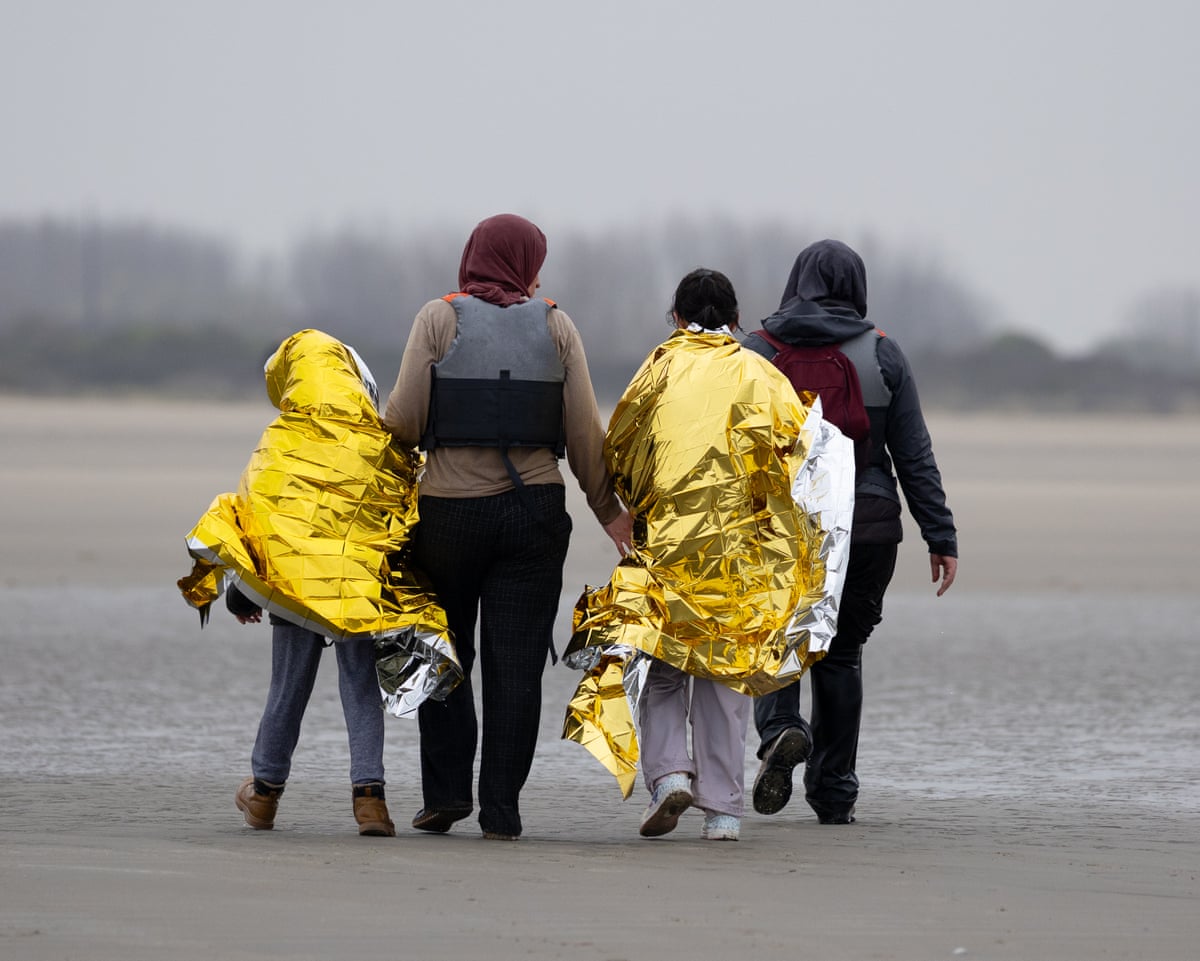
Report Findings and Recommendations
The report, titled Benchmarks and Borders: the use of facial age estimation to assess the age of unaccompanied young people seeking asylum, does not entirely dismiss the use of AI but advises caution. It stresses that AI should not replace comprehensive age assessments conducted by social workers.
It recommends that the Home Office employ AI as an advisory tool rather than a definitive measure. The report also calls for safeguards such as ensuring access to an appropriate adult during assessments, provision of legal advice, and the right to challenge decisions based on AI findings.
The consortium urges the government to avoid substituting human errors in age assessments with potential machine errors.
Complexities in Age Assessments
Assessing the age of unaccompanied young asylum seekers is inherently complex, particularly as most lone child asylum seekers arriving in the UK are aged 16 or 17. Home Office data indicates that social workers conduct more age assessments than immigration officers at the border, with over two-thirds of these young people being assessed as minors.
The Home Office’s announcement highlights concerns about adults making false age claims to appear as children and exploit the system but acknowledges the necessity of safeguarding genuine minors.
Government Statement on AI Implementation
The minister for border security and asylum, Alex Norris, stated:
“For too long, adult migrants making false age claims have exploited the system and diverted vital support away from children at risk.
That is why we are rolling out AI technology to put a stop to this, ensuring those who game the system are identified, detained and removed without delay, and those who deserve support and protection are given it.”
The Home Office confirmed that final decisions regarding age will continue to be made by immigration officers. The AI technology will undergo extensive testing, evaluation, and assurance before a national rollout.
Concerns from Refugee and Migrant Children’s Consortium
Kamena Dorling, co-chair of the Refugee and Migrant Children’s Consortium, expressed deep concerns about the government’s proposals:
“The government’s proposals are deeply concerning. AI cannot account for the factors that can significantly affect a young person’s appearance after fleeing conflict and persecution and undertaking dangerous journeys, including trauma, malnutrition, and exhaustion.
Existing evidence also shows that AI faces the same problems with bias and inaccuracy as human decision-making, with similar patterns of errors.”
Kama Petruczenko, senior policy analyst at the Refugee Council and consortium member, added:
“The government’s own figures already show that hundreds of children are being wrongly treated as adults following flawed visual assessments at the border, with devastating consequences for their safety and wellbeing.
AI and facial age estimation technology are not a simple or risk-free answer to these longstanding problems. Poor image quality and bias in datasets can also affect accuracy.
There is a real danger that this technology creates a false sense of certainty in decisions that are already extremely difficult to get right. If flawed assessments are simply automated, more children could end up wrongly placed in adult accommodation, detention centres or even prisons.”
Details of AI Technology Deployment
The Home Office stated that the AI system will estimate an individual’s age within seconds by analysing facial photographs already taken of small-boat arrivals at Dover. A contract valued at £322,000 over three years has been awarded to Akhter Computers Ltd. This contract covers further testing and development of the technology before its planned rollout in 2027.


