

Migrants Exploiting Domestic Abuse Rules to Remain in UK, BBC Finds
A BBC investigation has uncovered that some migrants are falsely claiming to be victims of domestic abuse to remain in the UK. They are exploiting government rules designed to assist genuine abuse victims in obtaining permanent residence more rapidly than through other immigration routes, such as asylum.
Lawyers have raised concerns that insufficient Home Office checks enable these false claims to succeed with minimal evidence, often disrupting the lives of unsuspecting British partners targeted by such accusations.
The investigation highlights misuse of the Migrant Victims of Domestic Abuse Concession, a protection mechanism intended to support genuine victims.
Today’s report reveals that some migrants, both men and women, deceive British partners into relationships or marriages and subsequently make fabricated domestic abuse allegations after arriving in the UK. Additionally, some legal advisers actively encourage clients to fabricate abuse claims, advertising such services online.
A BBC undercover reporter encountered one such adviser who encouraged him to make false domestic abuse allegations.
The number of individuals applying for fast-track residency based on domestic abuse claims has surpassed 5,500 annually, marking an increase of over 50% in three years.
In one instance, a British mother who left her partner after reporting him for rape was later falsely accused by him of domestic abuse, an allegation he used to avoid deportation to Pakistan despite no proof.
£900 to Fabricate Claims
In February, at a hotel lounge in London’s St Pancras, immigration adviser Eli Ciswaka met a client who wished to leave his British wife to live with a mistress but faced visa restrictions tied to his marriage.
During an initial phone call, Ciswaka suggested the client pretend to be a domestic abuse victim. He later confirmed to the undercover reporter that for £900 he would fabricate a claim to present to the Home Office, securing the client’s UK status.
Unaware of the reporter’s true identity, Ciswaka detailed how he would convince the Home Office by claiming psychological abuse, despite no physical violence, and assured success based on previous cases.
He showed a Home Office letter confirming a client’s successful application, though it was unclear if the case involved genuine abuse.
Ciswaka is not a registered solicitor or regulated immigration adviser, making his provision of immigration advice illegal. Nonetheless, the Home Office had shared official correspondence with him regarding paying clients without verifying his credentials.
He explained the process: after submitting the claim, the client would receive three months’ limited leave to remain, during which they could apply for indefinite leave to remain, granting permanent residency rights.
Regarding the impact on the accused spouse, Ciswaka stated:
"She will not be questioned, she will not be called because there is no crime."
When confronted about the investigation, Ciswaka denied willingness to fabricate abuse claims.
The Immigration Advice Authority pledged to investigate and take decisive enforcement action against wrongdoing, with Commissioner Gaon Hart advising the public to use only registered advisers to avoid serious risks.
'Dirty Money'
Freedom of Information data obtained by indicates that 5,596 migrants applied for indefinite leave to remain as domestic abuse victims in the 12 months ending September 2025.
Approximately 25% of these applications (1,424) were from men, a 66% increase over two years, while applications from women rose 47%.
These trends have raised concerns about abuse of the system by both male and female migrants making false allegations.
Victims of false claims report that their partners made police reports which generated crime references used as evidence for Home Office applications, despite police investigations resulting in no action.
The Home Office states that a crime reference number alone does not prove domestic abuse.
Some applicants have also used reports to domestic violence charities or obtained non-molestation court orders, which can be granted without the partner’s knowledge.
In 2014, a Home Office internal assessment identified potential abuse of the domestic violence route to settlement. A 2015 report by the Independent Chief Inspector of Borders and Immigration found issues with official checks and overreliance on unverified evidence such as support agency letters repeating alleged victim accounts.
Home Office safeguarding minister Jess Phillips stated:
"The unacceptable abuse of this route, which protects genuine victims from the devastation of domestic abuse, is utterly shameful. I have personally seen the deplorable impact of this type of underhanded tactic.
Let me be clear: try to defraud the British people to remain in the UK and your application will be refused, and you will find yourself on a one-way flight out of Britain.
Sham lawyers facilitating this advice abuse will be put behind bars and their dirty money seized will be reinvested to shut down the crime they once bankrolled."
'He Was Promising the World'
This issue is personal to Phillips, who was alerted by a constituent, Aisha (not her real name), who met her ex-husband on a Muslim dating app during the pandemic.
Aisha described a rapid romance with promises and gifts, followed by an Islamic wedding and formal ceremony. The relationship deteriorated after she discovered he was not a British citizen but reliant on her visa as a Pakistani national.
She recounted:
"He became fully controlling, very abusive. He started demanding that he wanted a baby in the country.
And I think his friends at the time were telling him, you should have a baby to secure yourself here. So he was trying very hard to get me pregnant. And that included, unfortunately, rape as well."
She left the marital home and reported the abuse to police and the Home Office, which informed her husband his visa would expire without spousal support.
She believes this prompted him to take further action.
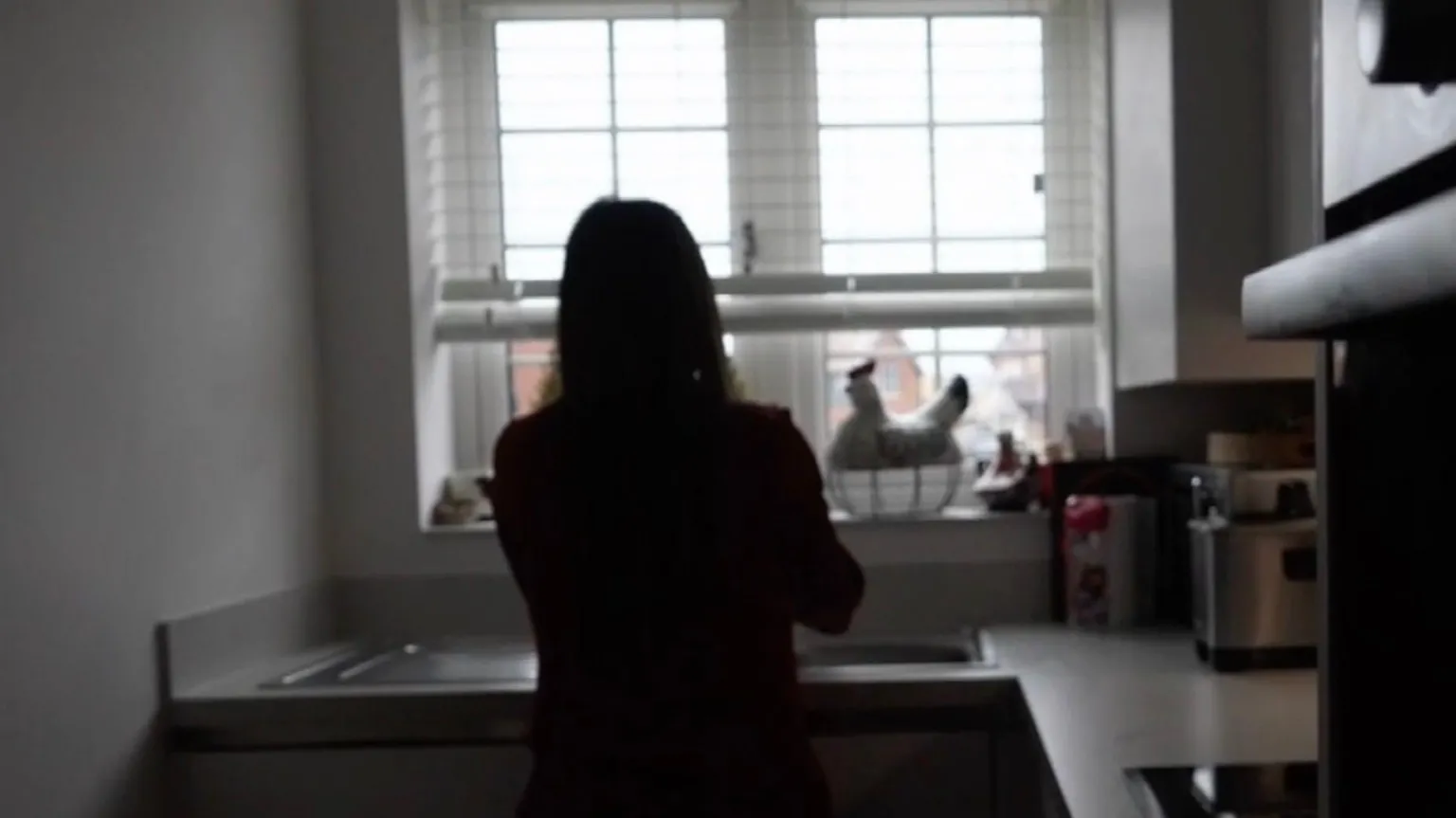
From Victim to Perpetrator
Aisha said her ex-husband then reported to police that he was the victim of domestic abuse, alleging coercive control and physical violence by her and her family.
She recalled:
"He told me just before he made the domestic abuse report: 'Oh don't worry, I've multiple ways to stay here. I don't need you to stay in the country.'"
She had been supported by authorities and domestic abuse agencies before his allegation, making the reversal of roles particularly distressing.
The police took no action against her regarding his allegations. She also chose not to pursue rape charges. However, she received over £17,000 from the Criminal Injuries Compensation Authority, which found her sexual assault claim more likely than not.
Aisha described ongoing harassment, including a police arrest in January 2023 following another allegation by her ex-husband. She spent eight hours away from her breastfeeding baby during this incident.
She said:
"When I left, I went to breastfeed my baby and when I got home, I just wanted to end my life."
Her MP, Jess Phillips, intervened, stating:
"I do not believe she would have been arrested had they [police] been aware of the history between her and her ex-partner."
Phillips, now a Home Office minister, advised Aisha to submit evidence to the Home Office for follow-up.
Aisha criticized the Home Office for allowing her ex-husband’s behavior to continue, saying she has endured four years of hardship due to their inaction.
'Turned Upside Down'
Bradford criminal lawyer Jabran Hussain said Aisha’s case is not isolated. He has represented British nationals falsely accused of domestic abuse by migrant partners seeking visa advantages.
He explained that while migrant spouses typically face strict requirements for indefinite leave to remain, such as English tests and fees, these do not apply under the domestic abuse concession.
Hussain stated:
"This route was well-intended and it was there to protect some of the most vulnerable in society - victims of domestic violence.
But I think there's certain people out there that see it OK to abuse that for their own gain or to get settlement here fast-track."
Parliamentary concerns have also been raised. In November 2024, West Yorkshire Conservative MP Robbie Moore described a "worrying" trend of recent arrivals making false domestic abuse claims against partners in his Keighley constituency.
He told MPs:
"Some of the claims of domestic abuse are now being made as early as a few weeks into the claimants' arrival in the UK, both by men and women.
I fear that even in loving relationships, a claim of domestic abuse is being used by certain individuals to accelerate getting settled status or to avoid the costs that must be paid to apply for settled status or for visa extension."
Get in touch – politicsinvestigations@bbc.co.uk
If you are affected by any of the issues raised in this story, help and support is available via BBC Action Line.

for our Politics Essential newsletter to read top political analysis, gain insight from across the UK and stay up to speed with the big moments. It'll be delivered straight to your inbox every weekday.


