

US Military Buildup and Diplomatic Tensions in the Middle East
The United States is reportedly preparing to send three additional warships and thousands more troops to the Middle East amid escalating tensions. This development coincides with former President Donald Trump publicly criticizing NATO allies for their reluctance to assist in reopening the Strait of Hormuz, a critical maritime passage.
Reports indicate that Washington is considering a strategic move to occupy or blockade Iran’s Kharg Island, a vital oil export terminal, to pressure Tehran into reopening the strait. These reports emerged as Iran’s military issued threats to target US and Israeli officials and commanders globally, including at tourist locations.
“We are watching your cowardly officials and commanders, pilots and wicked soldiers,” said Iranian armed forces spokesperson Abolfazl Shekarchi, as quoted by state television. “From now on, based on the information we have on you, the promenades, resorts and tourist and entertainment centres in the world will not be safe.”
On Friday night, Trump dismissed the possibility of a ceasefire with Iran, asserting that the United States holds the advantage in the ongoing conflict, which has lasted three weeks.
“I don’t want to do a ceasefire. You know you don’t do a ceasefire when you’re literally obliterating the other side,” he told journalists at the White House.
Later that evening, Trump posted on his Truth Social platform that the US was considering winding down military operations in Iran.
“We are getting very close to meeting our objectives as we consider winding down our great Military efforts in the Middle East with respect to the Terrorist Regime of Iran.”
Despite earlier indications from Trump that he was not inclined to deploy ground forces, the reports about potential occupation or blockade of Kharg Island suggest a shift in strategy. The island, approximately 8 square miles (20 square kilometers) in size and located 16 miles (25 kilometers) from the Iranian city of Bushehr at the northern end of the Gulf, serves as the export terminal for about 90% of Iran’s oil, connected by pipelines from offshore fields.
Given Iran’s heavy reliance on fossil fuel revenues, any attempt to seize Kharg Island would likely face strong resistance and expose US forces to significant risks, including drone and rocket attacks in a confined geographic area.
Trump also criticized NATO allies on social media, accusing them of inaction regarding the Strait of Hormuz.
“Without the U.S.A., NATO IS A PAPER TIGER! They didn’t want to join the fight to stop a Nuclear Powered Iran. Now that fight is Militarily WON, with very little danger for them, they complain about the high oil prices they are forced to pay, but don’t want to help open the Strait of Hormuz, a simple military maneuver that is the single reason for the high oil prices. So easy for them to do, with so little risk. COWARDS, and we will REMEMBER!”
The Pentagon has already deployed the 31st Marine Expeditionary Unit, a rapid-response force of approximately 2,200 marines, to the Middle East. Military officials have not disclosed the specific missions assigned to these marines. Additionally, the USS Boxer, carrying the Marine Expeditionary Unit, departed the US about three weeks ahead of schedule, though its mission remains unclear.
The Trump administration and its Israeli allies have provided limited clarity regarding their war intentions, with plans seemingly evolving frequently amid the conflict’s expanding consequences.
A White House official stated:
“As President Trump said, he has no plans to send troops anywhere – but he wisely does not broadcast his military strategy to the media, and he retains all options as commander-in-chief. The United States military can take out Kharg Island at any time.”
Escalating Violence and Regional Impact
The conflict showed no signs of abating on Friday. An Iranian drone attack targeted a refinery in Kuwait, while US and Israeli forces struck 16 Iranian cargo vessels in Gulf port towns.
“Following the American-Zionist air attack, at least 16 cargo vessels belonging to citizens of the towns of Bandar Lengeh and Bandar Kong were completely burned in the fire,” a local official from southern Hormozgan province reported, as cited by the Tasnim news agency.

Heavy explosions also occurred in Dubai as air defenses intercepted incoming rockets during Eid al-Fitr, marking the end of the Muslim holy month of Ramadan.
Separately, Israel attacked Syrian government positions, days after US officials suggested anonymously the possibility of employing Syrian forces to disarm Hezbollah in eastern Lebanon.
As violence continues across the region—from Tel Aviv and Haifa to the Caspian Sea—oil and gas prices have surged amid growing concerns exacerbated by inconsistent messaging from Washington.
Approaching the fourth week of conflict, Kuwait reported two waves of Iranian drone strikes on its Mina al-Ahmadi oil refinery, one of three refineries in the small, oil-rich Gulf country. The refinery, capable of processing approximately 730,000 barrels of oil daily, had already sustained damage from an Iranian attack on Thursday.
Iran has targeted energy infrastructure in Gulf Arab states following Israeli strikes on Iranian assets in the Gulf on Wednesday.
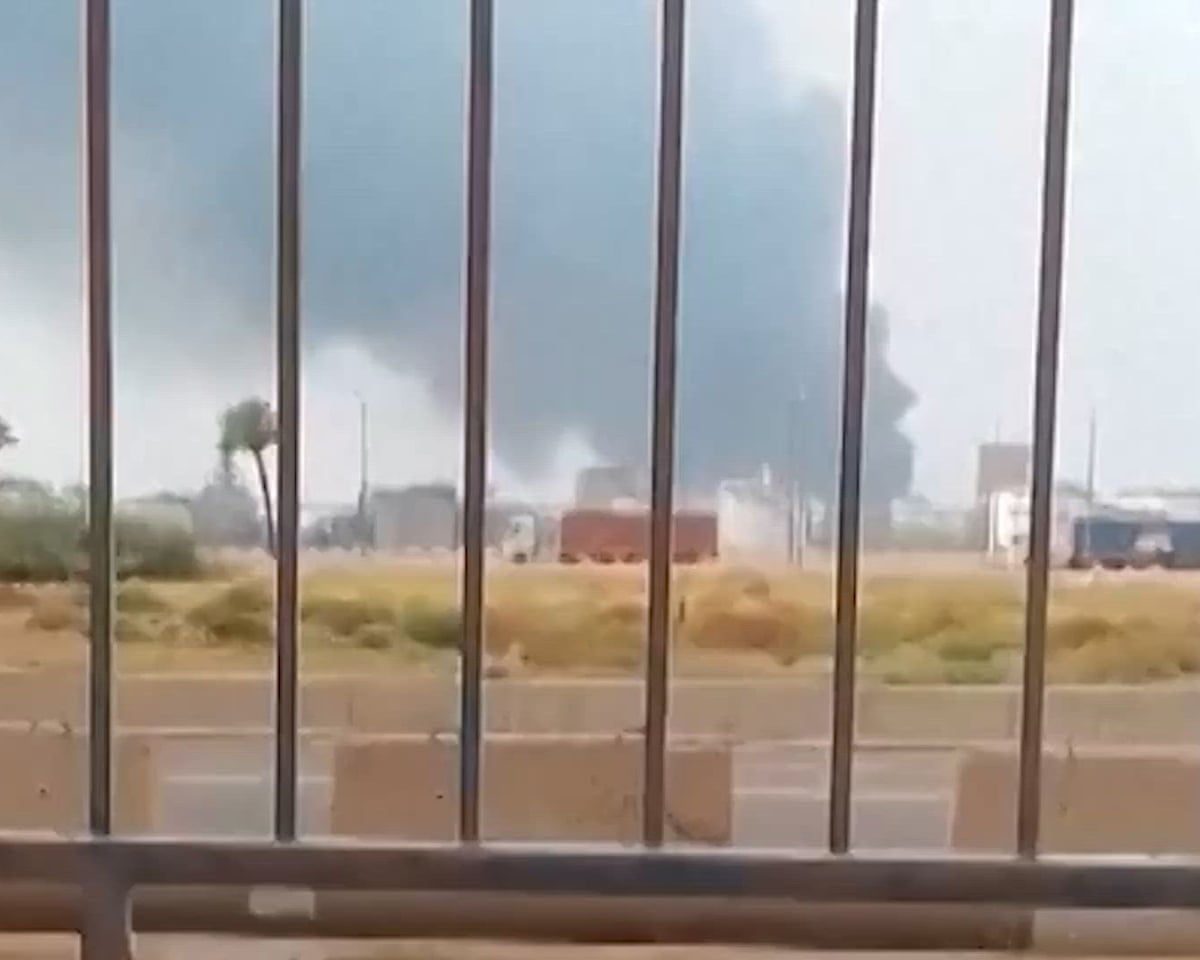
Explosions were also heard in Jerusalem after the Israeli military warned of incoming Iranian missiles.
In a rare statement, Iran’s new supreme leader, Ayatollah Mojtaba Khamenei—reportedly appointed after the death of his father, Ali Khamenei, who was killed in an Israeli airstrike on the war’s first day—declared that Tehran’s adversaries must have their “security” removed.
Khamenei’s remarks were conveyed in a statement issued on his behalf and sent to President Masoud Pezeshkian following the killing of Iran’s intelligence minister, Esmail Khatib, earlier in the week.
The renewed attacks followed a day of intense Iranian strikes on regional energy infrastructure and more than a dozen missile salvoes launched at Israel after an attack on South Pars.
South Pars, the Iranian section of the world’s largest gas field, is located offshore in the Gulf and jointly owned with Qatar. Since approximately 80% of Iran’s power generation relies on natural gas, the attack posed a direct threat to the country’s electricity supply.
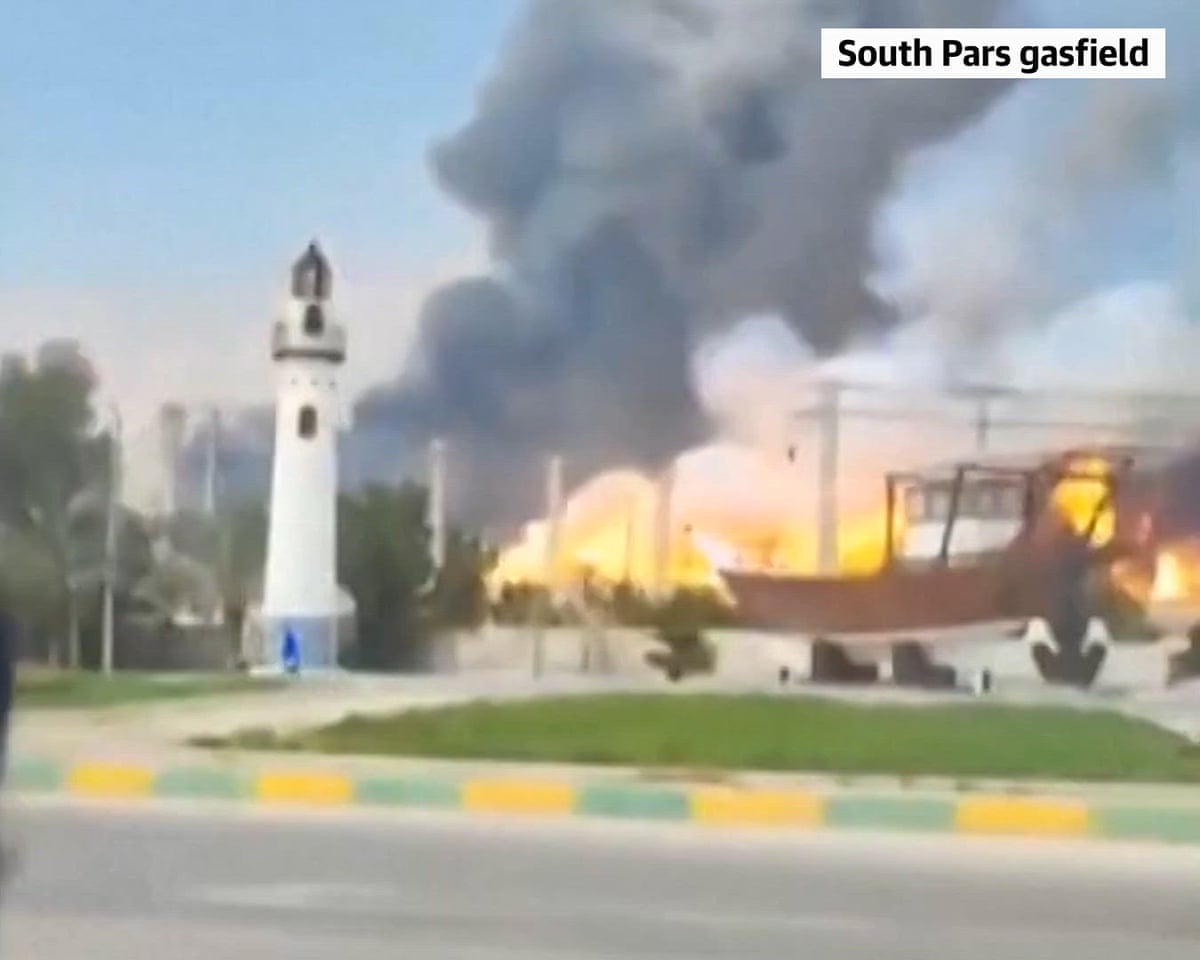
On Thursday night, Israeli Prime Minister Benjamin Netanyahu announced that Israel would refrain from further attacks on the gas field at Trump’s request after the Iranian response caused oil prices to spike.
Netanyahu claimed that Iran’s ballistic missile production capabilities had been neutralized. However, the paramilitary Revolutionary Guards stated on Friday that missile production continues.
“We are producing missiles even during war conditions, which is amazing, and there is no particular problem in stockpiling,” said General Ali Mohammad Naini, a spokesperson who was killed in an airstrike on Friday, as reported in a state-run newspaper.
“These people expect the war to continue until the enemy is completely exhausted. This war must end when the shadow of war is lifted from the country.”


