

Trump Considering 'Winding Down' Iran Conflict and Delegating Strait of Hormuz Security
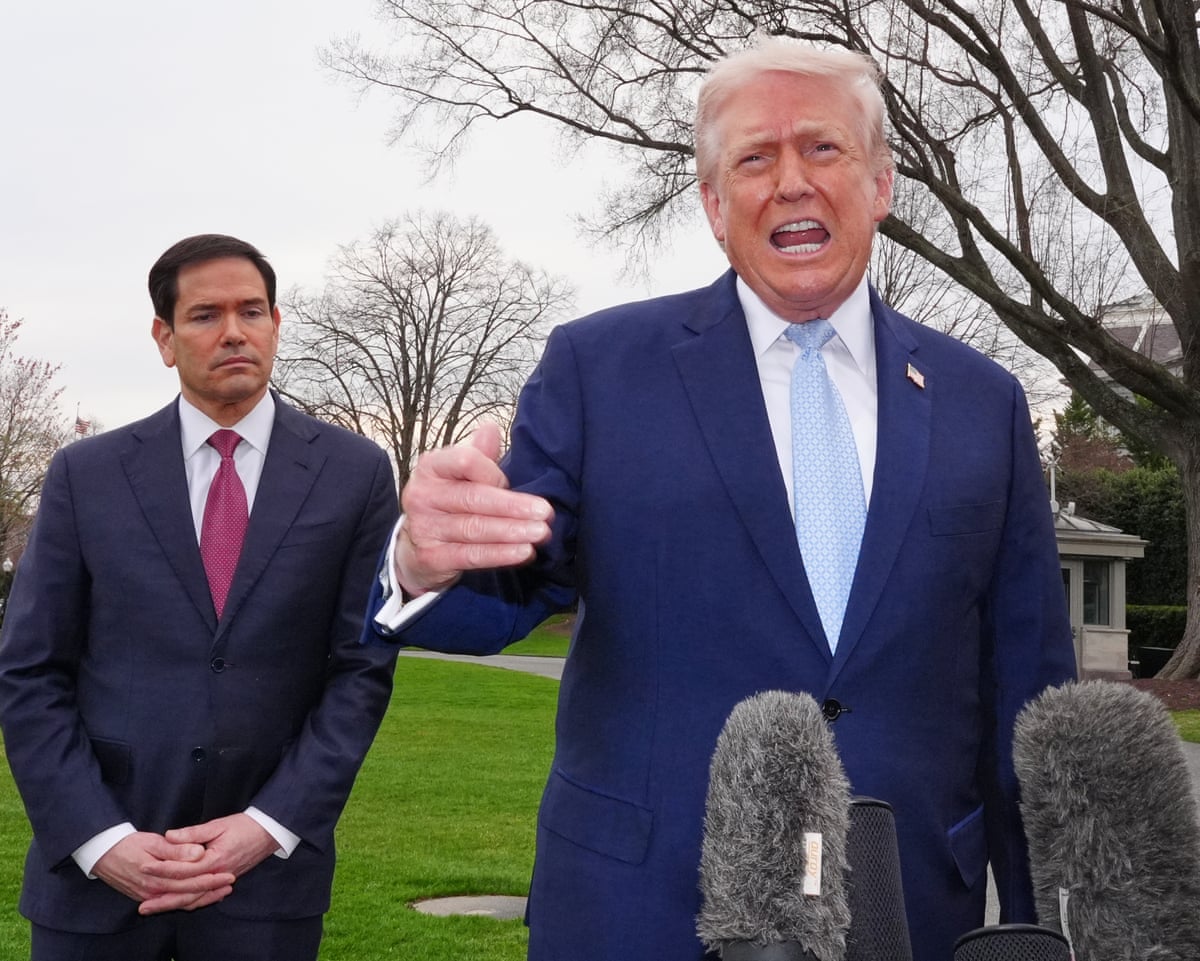
Donald Trump stated that the United States is "getting very close to meeting our objectives" and is contemplating "winding down" its military efforts against Iran. He reiterated that the US does not utilize the Strait of Hormuz, and therefore, other nations that do will need to "guard and police" the vital shipping lane. This follows US-Israeli operations against Iran, which led Tehran to target vessels in this strategic waterway.
Trump added that the US would assist "if asked," but believes such help "shouldn’t be necessary," describing the task as "an easy Military Operation" for those countries involved. He posted on Truth Social:
We are getting very close to meeting our objectives as we consider winding down our great Military efforts in the Middle East with respect to the Terrorist Regime of Iran. The Hormuz Strait will have to be guarded and policed, as necessary, by other Nations who use it — The United States does not! If asked, we will help these Countries in their Hormuz efforts, but it shouldn’t be necessary once Iran’s threat is eradicated. Importantly, it will be an easy Military Operation for them.
Several NATO members and US allies have pledged to participate in "appropriate efforts to ensure safe passage" through the Strait of Hormuz. However, a joint statement from leaders of over a dozen countries, including the UK, France, Germany, Japan, Canada, South Korea, Sweden, and Bahrain, did not specify the nature of their involvement.
This follows criticism from Trump, who previously labeled alliance members "cowards" for reluctance to "help open" the Strait of Hormuz, as detailed in recent coverage of the Trump administration's stance amid the Iran conflict.
The NATO allies’ commitments coincide with reports that the US is preparing to deploy three additional warships and thousands more troops to the Middle East.
Simultaneously, Trump confirmed he is considering "winding down" the US military engagement in Iran. Regarding a ceasefire, he declined, stating to reporters on Friday:
Look, we can have dialogue but I don’t want to do a ceasefire. You don’t do a ceasefire when you’re literally obliterating the other side.
Israel Targets Hezbollah Positions in Beirut
The Israeli military announced it is conducting strikes against Hezbollah targets in Beirut. The announcement came via social media after Israeli forces warned residents in the southern suburbs of Beirut to evacuate immediately. The Arabic-language spokesperson for the Israeli military identified seven neighborhoods in the southern area, a Hezbollah stronghold, as potential targets.
The Defense Army continues its operations and strikes against military infrastructure belonging to the terrorist Hezbollah in various parts of the suburbs with increasing force.
Casualties Reported in Israeli Airstrike on Southern Lebanon
Lebanese state media reported that one person was killed and two others wounded after an Israeli airstrike struck a house in the southern town of Ghandouriyeh early Saturday morning. Lebanon’s National News Agency, cited by Agence France-Presse, stated:
Israeli fighter jets launched a heavy strike at dawn on a house in the town of Ghandouriyeh ... resulting in one martyr and two wounded people who were pulled from under the rubble.
Saudi Arabia’s defense ministry confirmed intercepting and destroying 10 drones in its eastern region, including six drones intercepted recently. The United Arab Emirates reported responding to missile and drone attacks attributed to Iran, while Kuwait’s army stated it was "confronting hostile missile and drone attacks." Adam Fulton continues live coverage with these developments.
US Treasury Authorizes Purchase of Iranian Oil at Sea
The US Treasury Department has authorized the purchase of Iranian oil already loaded onto vessels at sea, exempting buyers from sanctions. The license permits the purchase of oil loaded onto ships by 12:01 a.m. ET (5:01 a.m. GMT) on Friday, with the exemption valid until April 19. This measure aims to mitigate rising oil prices caused by the US-Israeli conflict with Iran.
US Treasury Secretary Scott Bessent indicated earlier this week on Fox Business Network’s "Mornings With Maria" that the US might un-sanction approximately 140 million barrels of Iranian oil currently at sea, which represents about 10 days to two weeks of supply primarily destined for China.
In essence, we will be using the Iranian barrels against the Iranians to keep the price down for the next 10 to 14 days as we continue this campaign.
United Airlines CEO Scott Kirby announced that the airline will cancel about 5% of its planned flights this year in the short term due to soaring jet fuel prices driven by the escalating Middle East conflict. Kirby noted that sustained high fuel prices could add $11 billion in annual expenses. The airline plans to restore its full flight schedule by fall.
Recent missile launches from Iran toward Israel were reported by the Israel Defense Forces (IDF), which stated that defensive systems are intercepting the threats. The IDF urged residents to follow instructions from Israel’s Home Front Command, which sent precautionary alerts to mobile phones in affected areas.
Additional Countries Join Statement on Strait of Hormuz Security
On Friday, several countries joined leading European nations, Japan, and Canada in signing a joint statement expressing readiness to contribute to efforts ensuring safe passage through the Strait of Hormuz and to stabilize energy markets, though specific actions were not detailed.
The statement, signed by Britain, France, Germany, Italy, the Netherlands, Japan, Canada, South Korea, New Zealand, Denmark, Latvia, Slovenia, Estonia, Norway, Sweden, Finland, Czech Republic, Romania, Bahrain, and Lithuania, reads in part:
We condemn in the strongest terms recent attacks by Iran on unarmed commercial vessels in the Gulf, attacks on civilian infrastructure including oil and gas installations, and the de facto closure of the Strait of Hormuz by Iranian forces. We express our deep concern about the escalating conflict. We call on Iran to cease immediately its threats, laying of mines, drone and missile attacks and other attempts to block the Strait to commercial shipping, and to comply with UN Security Council Resolution 2817. Freedom of navigation is a fundamental principle of international law, including under the United Nations Convention on the Law of the Sea. The effects of Iran’s actions will be felt by people in all parts of the world, especially the most vulnerable. Consistent with UNSC Resolution 2817, we emphasise that such interference with international shipping and the disruption of global energy supply chains constitute a threat to international peace and security. In this regard, we call for an immediate comprehensive moratorium on attacks on civilian infrastructure, including oil and gas installations. We express our readiness to contribute to appropriate efforts to ensure safe passage through the Strait. We welcome the commitment of nations who are engaging in preparatory planning. We welcome the International Energy Agency decision to authorise a coordinated release of strategic petroleum reserves. We will take other steps to stabilise energy markets, including working with certain producing nations to increase output. We will also work to provide support for the most affected nations, including through the United Nations and the IFIs (International Financial Institutions). Maritime security and freedom of navigation benefit all countries. We call on all states to respect international law and uphold the fundamental principles of international prosperity and security.
Saudi Arabia’s defense ministry recently reported intercepting and destroying six drones in its eastern region. The UAE and Kuwait have also reported responding to missile and drone attacks attributed to Iran.
Israeli Military Issues New Evacuation Order for Beirut’s Southern Suburbs
The Israel Defense Forces (IDF) Arabic-language spokesperson, Avichay Adraee, issued a call on X (formerly Twitter) for residents of Beirut’s southern suburbs to evacuate immediately. The IDF warned that it will target infrastructure belonging to Hezbollah in the following neighborhoods: Haret Hreik, Ghobeiry, Laylaki, Hadath, Burj al-Barajneh, Tahwitat al-Ghadir, and Chiyah.
Since the renewed Israeli offensive began on March 2, strikes on Beirut’s southern suburbs have resulted in over 1,000 deaths, including at least 118 children, more than 2,500 wounded, and the displacement of over one million people.

Summary of the Day’s Developments
Donald Trump expressed disappointment with the British government’s delay in permitting US military use of its bases in the Middle East. He said, "I was a little surprised at the UK, to be honest with you. They should have acted a lot faster." This followed Downing Street’s approval of US use of its bases for "the collective self-defence of the region," including defensive operations targeting Iranian missile sites threatening vessels in the Strait of Hormuz. The UK clarified it would not be directly involved in strikes and maintained its principles regarding the conflict.
Iranian Foreign Minister Abbas Araghchi criticized UK Prime Minister Keir Starmer, accusing him of "putting British lives in danger" by allowing UK bases to be used in aggression against Iran. Araghchi emphasized Iran’s right to self-defense. This came after UK Foreign Secretary Yvette Cooper warned Araghchi against targeting UK bases or interests directly. Iran’s foreign ministry had earlier stated that US use of British military bases for attacks would constitute UK participation in aggression.
Araghchi also accused the US of being "detached from reality" amid claims of winning the war against Iran, comparing Washington’s rhetoric to that during the Vietnam War.
Trump reiterated his rejection of a ceasefire with Iran, claiming the war was "militarily won." He said, "You don’t do a ceasefire when you’re literally obliterating the other side." He added that the US was "roaming free" in Iran and that Iranian forces were "finished" militarily.
When asked if Israel would be ready to end the war when the US is, Trump responded, "I think so, yeah," describing the US-Israel relationship as "a very good one" with aligned goals of victory. This contrasts with reports suggesting divergence between US and Israeli war aims and strategies against Tehran.
Trump also criticized NATO, which he previously labeled "cowards," stating that securing the Strait of Hormuz would require "a lot of help" and that it "would be nice" if countries using the strait, such as China and Japan, became involved in reopening this critical waterway.
Global repercussions of the US-Israeli conflict with Iran are evident, including restaurant closures in the Philippines, petrol rationing in Sri Lanka, and food production crises in Asia due to fertilizer shortages.
Trump Criticizes UK Response on Military Base Use
Regarding the UK government’s decision to allow US military strikes from its bases, Trump expressed dissatisfaction:
Well, it’s been a very late response. A surprise, because the relationship is so good, but this has never happened before. They were really pretty much our first ally all over the world, first ally, and they didn’t want us to use the island, the so-called island, which for some reason they gave up rights to it. I was a little surprised at the UK, to be honest with you. They should have acted a lot faster.
Trump Rejects Ceasefire Proposal
When asked about ending the conflict, Trump stated:
Look we can have dialogue but I don’t want to do a ceasefire. You don’t do a ceasefire when you’re literally obliterating the other side.
Trump Urges China and Japan to Help Secure Strait of Hormuz
Addressing the reopening of the Strait of Hormuz, Trump reiterated his criticism of NATO’s reluctance and said:
We don’t use [the strait]. At a certain point, it will open itself.
He added that securing the strait would require "a lot of help" and that it "would be nice" if countries that use the strait, such as China and Japan, would "get involved."
Trump Comments on US and Israeli War Efforts
Speaking to reporters before departing the White House for Mar-a-Lago, Trump said:
Asked if Israel would be ready to end the war when the US is, he replied, "I think so, yeah." He described the US-Israel relationship as "a very good one," with both parties seeking victory.
Regarding Kharg Island, Trump said:
I may have a plan, I may not, but how would I ever say that to a reporter … It is certainly a place that people are talking about.
On his claim that the war was militarily won, he said the US was "roaming free" in Iran and that Iranian forces were "finished" militarily.
Iranian Foreign Minister Criticizes UK Prime Minister’s Decision
Iranian Foreign Minister Abbas Araghchi criticized UK Prime Minister Keir Starmer for allowing UK bases to be used in the conflict, stating:
Vast majority of the British People do not want any part in the Israel-U.S. war of choice on Iran. Ignoring his own People, Mr. Starmer is putting British lives in danger by allowing UK bases to be used for aggression against Iran. Iran will exercise its right to self-defense.
This follows UK Foreign Secretary Yvette Cooper’s warning to Araghchi against targeting UK bases or interests directly, and Iran’s foreign ministry’s statement that US use of British military bases for attacks would constitute UK participation in aggression.
Araghchi also accused the US government of being "detached from reality" amid its claims of success in the conflict.


