

Netanyahu's Secret Visit Claim and UAE Denial
Israeli Prime Minister Benjamin Netanyahu stated that he "secretly visited" the United Arab Emirates and met with its president during the ongoing war with Iran.
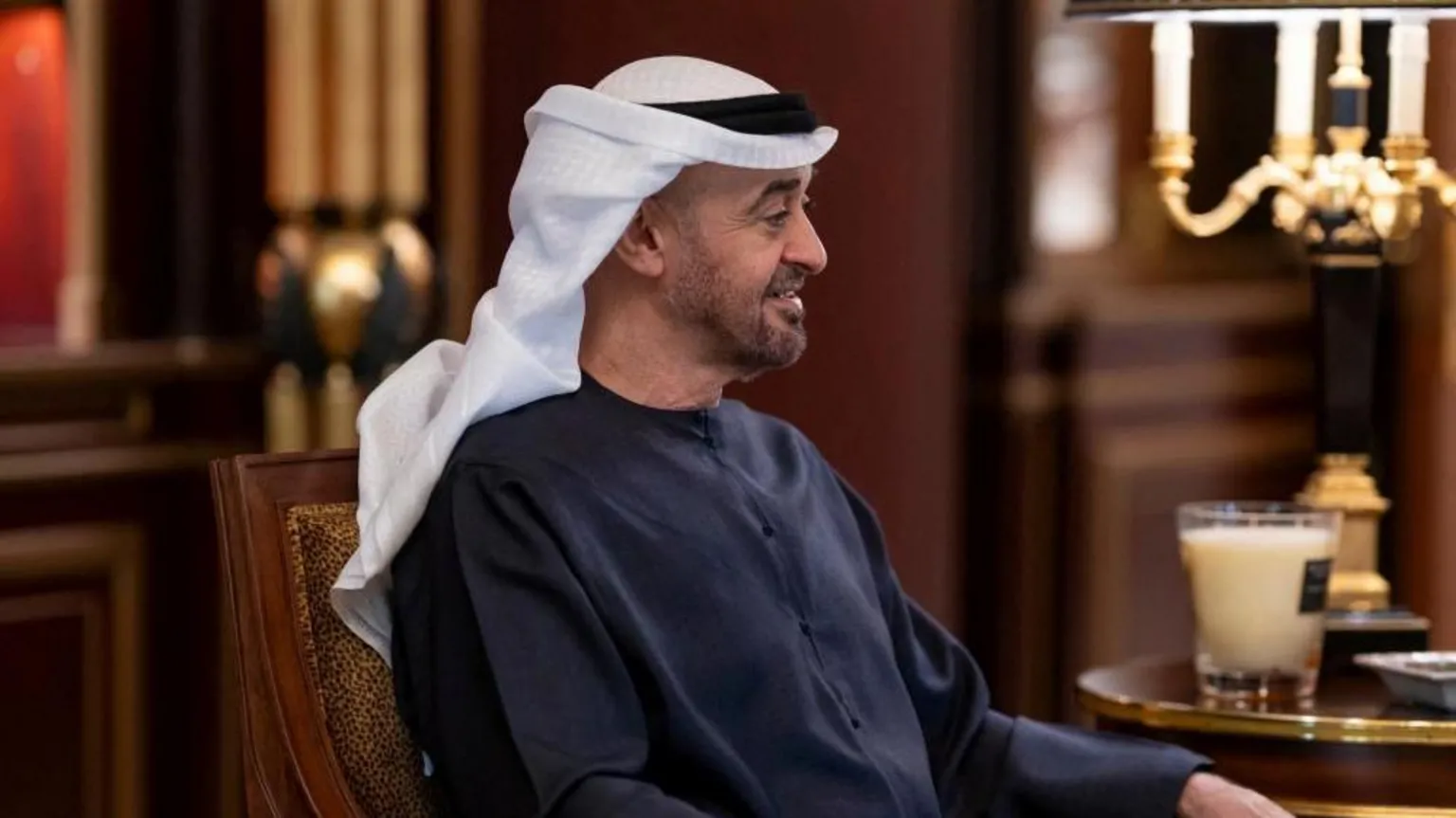
According to Netanyahu's office, the meeting between the Israeli Prime Minister and President Sheikh Mohammed bin Zayed resulted in a "historic breakthrough."
However, shortly after these claims, the UAE foreign ministry issued a statement denying the reports of such a meeting, describing them as "entirely unfounded." The ministry emphasized that relations between the two countries are not based on "unofficial arrangements."
UAE Foreign Ministry Statement
In its official statement, the UAE foreign ministry rejected the allegations of Netanyahu's visit or any Israeli military delegation's presence in the country.
"The UAE reaffirms that its relations with Israel are public and conducted within the framework of the well-known and officially declared Abraham Accords, and are not based on non-transparent or unofficial arrangements."
The Abraham Accords are agreements that normalized relations between Israel and several Arab nations during former US President Donald Trump's first term.
Details of the Meeting and Military Cooperation
cited a source confirming that the meeting between Netanyahu and the Emirati president occurred in Al-Ain, an oasis city near the Oman border, and lasted several hours.
On Tuesday, US Ambassador to Israel Mike Huckabee revealed that Israel had deployed anti-missile batteries from its Iron Dome system to assist the UAE in countering Iranian attacks.
The Iron Dome is an advanced Israeli air defense system designed to intercept and destroy various aerial threats, including missiles, rockets, and drones.
Huckabee stated that the Iron Dome deployment was a result of an "extraordinary relationship between the UAE and Israel" grounded in the Abraham Accords.
The conflict with Iran appears to have strengthened the ties between Israel and the US, extending their alliance into military cooperation.
Iranian Attacks on the UAE
During the war, Iran launched multiple missile and drone attacks targeting the UAE. On 10 May, the UAE Ministry of Defence reported that its air defense systems engaged two drones launched from Iran.
The ministry also stated that since the war's outbreak in late February, the UAE had engaged a total of 551 ballistic missiles, 29 cruise missiles, and 2,265 other aerial threats.
UAE Strikes on Iran
On Monday, the Wall Street Journal reported that the UAE had conducted strikes against Iran, which it had not publicly acknowledged. These included an attack on a refinery on Iran's Lavan Island in early April.
UAE's Diplomatic Stance
Earlier on Wednesday, Emirati presidential adviser Anwar Gargash affirmed the UAE's commitment to diplomacy while asserting its right to self-defense.
In his statement, Gargash emphasized that the UAE did not seek war and had endeavored to avoid it, noting that "Arab-Iranian relations in the Gulf cannot be built on confrontations and conflicts."
Ceasefire and Ongoing Tensions
A ceasefire between the US and Iran has been in effect for approximately one month.
Despite this, Iran has continued to block the Strait of Hormuz in retaliation for US and Israeli strikes, causing a rise in global oil prices. The strait is a critical passage through which about 20% of the world's oil and liquefied natural gas is transported.
The US has enforced a blockade of Iranian ports to pressure Tehran into accepting its terms.
Iran's Demands and US Rejection
On Sunday, Iran presented its demands to end the war and reopen the Strait of Hormuz in a counter-offer sent to the US.
Former President Trump rejected the proposal, labeling it "totally unacceptable" and a "piece of garbage," and later stated that the ceasefire was "on massive life support."
In response, Iranian parliamentary speaker Mohammad Ghalibaf declared on X that Iran's armed forces were "ready to respond and to teach a lesson for any aggression."
Additional reporting by Ella Kipling and Tom McArthur.


