
Israeli Strikes Ordered on Beirut's Southern Suburbs
Israel's Prime Minister Benjamin Netanyahu has directed military strikes targeting the southern suburbs of Beirut, Lebanon, as tensions escalate in the ongoing conflict with Hezbollah, the Iran-backed armed group.
Netanyahu stated that "terror targets" within Dahieh, a Hezbollah stronghold, would be attacked in retaliation for rocket and drone assaults on Israeli civilians and other breaches of the ceasefire declared in April, which has failed to halt hostilities.
Soon after the announcement, significant traffic congestion occurred on routes leading out of the suburbs as numerous families sought to escape potential violence.

Lebanese Government and US Mediation Efforts
A senior Lebanese government official indicated reliance on US diplomatic efforts to pressure Israel into ceasing its violations and preventing further civilian casualties.
On Sunday, US Secretary of State Marco Rubio proposed a "gradual de-escalation" plan to Netanyahu and Lebanon's President Joseph Aoun, according to an American official.
Official Statements on Military Actions
In a joint statement released Monday morning, Israel's Prime Minister and Defence Minister confirmed orders for the Israeli military to conduct strikes on Dahieh, citing "the Hezbollah terrorist organisation's repeated and ongoing violations of the ceasefire in Lebanon and its attacks against our civilians and cities."
No additional details were provided, and the Israeli military did not issue evacuation orders, which typically precede aerial attacks.
Nevertheless, families, often crowded into vehicles laden with suitcases, blankets, and personal belongings, fled the suburbs, joining thousands moving toward mountainous areas amid fears of intensified violence.
Two parents with their two children were seen sharing a single scooter, while other vehicles carried multiple generations, with infants held on laps clutching toys as they navigated the traffic jams.
Few drivers paused to converse, prioritizing reaching safety over delaying traffic.
However, those who did slow down expressed readiness to support Hezbollah while simultaneously seeking to protect their families from further Israeli attacks.
Context of Israeli Military Activity Since Ceasefire
The Israeli military has conducted two strikes on Beirut since the ceasefire between Israel and Lebanon took effect on 16 April, the most recent occurring on Thursday.
This represents a significant reduction compared to earlier activity, reportedly influenced by White House pressure on Israel to limit military operations in Beirut to avoid undermining broader negotiations aimed at ending the conflict involving the US, Israel, and Iran.
Iran, a longstanding provider of ideological, military, and financial support to Hezbollah, has emphasized that any agreement must include peace in Lebanon.
Background of the Conflict and Casualties
Lebanon entered the war on 2 March when Hezbollah launched rockets into Israel in retaliation for an Israeli strike that killed Iran's supreme leader. Israel responded with an air campaign across Lebanon and a ground invasion in the south, with escalation continuing in recent weeks despite reduced strikes on Beirut.
According to Lebanon's health ministry, at least 3,412 people have died since the war began, though the figures do not differentiate between combatants and civilians.
Israel reports 24 soldiers and four civilians killed during the same period on both sides of the border.
Recent Developments and Israeli Advances
With a US-Iran deal still unresolved, Israeli restraint in Beirut appears to have diminished.
There is growing concern in Lebanon regarding Israeli forces' recent advances in the south, including their capture on Sunday of Beaufort Castle, a 900-year-old fortress, after crossing the Litani River.
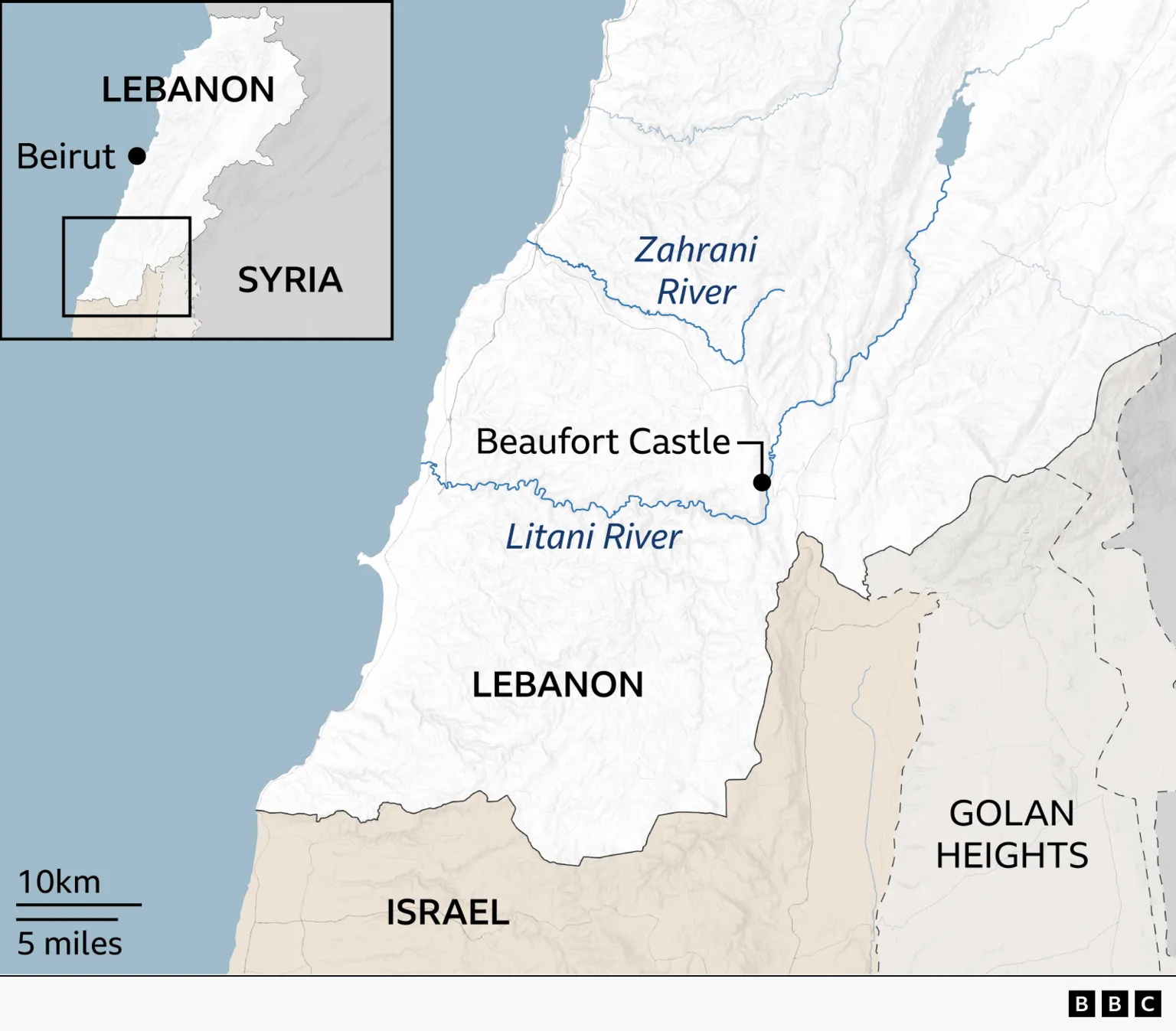
Israeli officials have described this as both a symbolic and strategic victory, asserting that control of the high ground provides a commanding view over southern Lebanon and Israel's Galilee region, potentially aiding in countering Hezbollah attacks.
Despite these gains, Hezbollah continues to launch rockets and drones across the border.
Israeli leadership states the operation aims to weaken Hezbollah's military capabilities, though the group has managed to withdraw from advancing troops while maintaining cross-border fire.
Diplomatic Efforts and Challenges
Diplomatic attempts to halt the fighting have made limited progress.
A US official reported that Marco Rubio engaged in discussions with Netanyahu and President Aoun, focusing on increasing pressure on Hezbollah rather than curbing Israel's military operations.
The official explained that Rubio proposed Lebanese officials first pressure Hezbollah to cease attacks on Israel, with Israel reciprocating by refraining from escalation in Beirut, creating space for gradual de-escalation and an effective cessation of hostilities.
While President Aoun has sought to advance this proposal, Lebanese Parliament Speaker Nabih Berri, who claimed on Sunday he could "guarantee" Hezbollah's commitment to a ceasefire, insisted that Israel must stop shooting first.
A senior Lebanese government official told the BBC on Monday that Lebanon relies on US mediation to pressure Israel to limit military actions and prevent further civilian casualties.
"We are trying our best, just to stop the killing of people,"
the official said, describing daily Israeli violations and the difficulty in influencing developments on the ground.
The official also confirmed that Lebanon and Israel would hold a round of talks in Washington this week.
"We don't have another choice,"
the official added.
"We have to go to the negotiation and put on the table that we want a ceasefire."
Public Sentiment and Political Reactions in Lebanon
While Hezbollah maintains strong support in its strongholds, including southern Beirut, there is increasing war fatigue and criticism nationwide regarding the group's decision to engage in attacks supporting Iran, which has contributed to Lebanon's renewed conflict involvement.
Simultaneously, public anger grows over Israel's expanding campaign, characterized by daily airstrikes, territorial gains in southern Lebanon, widespread displacement, and rising civilian casualties.
Over the weekend, Lebanese Prime Minister Nawaf Salam accused Israel of escalating the conflict and pursuing a "scorched-earth" policy.
Outlook and Potential for Escalation
Currently, there is little indication of a diplomatic breakthrough.
Many in Lebanon fear Israel perceives a military advantage and intends to capitalize on it, with Netanyahu suggesting the offensive could intensify and broaden in the coming days.


