

Explosions Near Macron’s Hotel in Damascus
Explosions occurred near the Four Seasons hotel in Damascus on Tuesday, where French President Emmanuel Macron was staying during his visit to Syria. Syrian authorities reported that at least 18 people were wounded in the blasts.
At the time of the explosions, Macron was meeting with Syrian President Ahmed al-Sharaa at the presidential palace. The detonations were caused by two improvised explosive devices (IEDs) placed near the hotel, which is known to host United Nations staff and foreign diplomats and is one of the most heavily guarded locations in the Syrian capital.
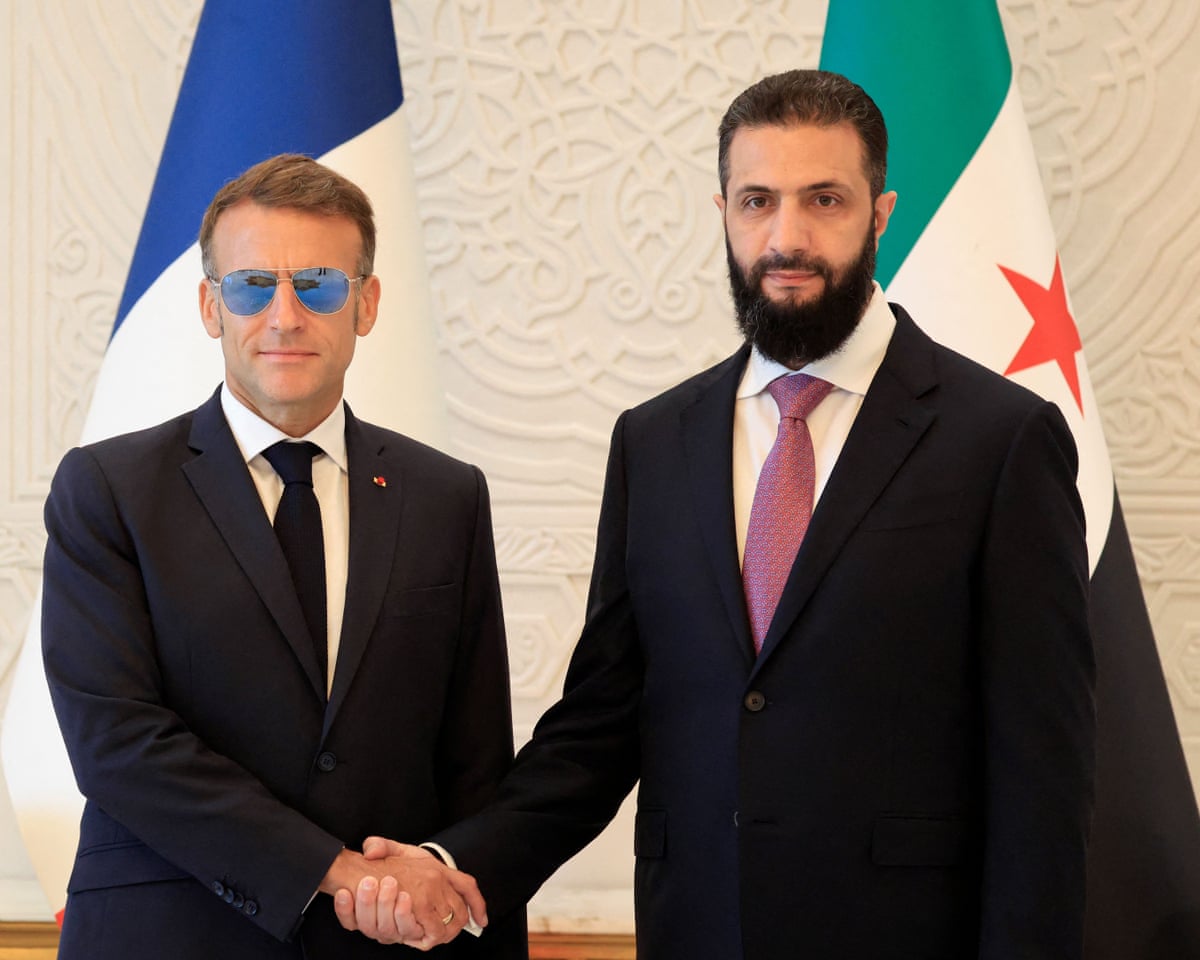
Despite the attacks, Macron’s visit continued uninterrupted, according to Syrian state media, which released images of the French and Syrian presidents embracing at the presidential palace.
Impact on Syria’s Political Stability
The explosions represented a setback for Syria’s new leadership, who have been attempting to project an image of stability and attract foreign investment since the ousting of former president Bashar al-Assad in December 2024.
Macron is the first major Western leader to visit Syria since Assad was removed from power. His meeting with al-Sharaa in Damascus was widely seen as a significant endorsement of the Syrian president. Al-Sharaa and his cabinet have worked to distance themselves from their previous affiliations with Islamist fighters in Hayat Tahrir al-Sham, an organization that evolved from al-Qaida.
France has been one of the most supportive Western governments of al-Sharaa’s administration, advocating for the United States to lift sanctions on Syria and playing a key role in mediating relations between Syria and Israel.
Macron’s Statements and Diplomatic Developments
Following the explosions, Macron posted on X (formerly Twitter):

"Nothing can smother the aspiration of Syrian women and men to live in a fully sovereign, safe, pluralistic and united Syria. This morning I met Syria in all its diversity. I saw dignity, courage and determination."
After their meeting, Macron and al-Sharaa announced that France and Syria would appoint ambassadors to each other’s countries, marking a significant restoration of diplomatic ties after France severed relations in 2012 in response to Assad’s violent suppression of protests.
Economic Delegation and Agreements Signed
Macron was accompanied by an economic delegation that included Rodolphe Saadé, head of the shipping conglomerate CMA CGM, and Patrick Pouyanné, CEO of TotalEnergies. French companies signed over a dozen agreements aimed at boosting investor confidence in Syria, a country struggling to recover economically after years of conflict.
The agreements cover a range of projects, including the reconstruction of water and electricity infrastructure in Homs, technical assistance to Syria’s central bank, and capacity building for Damascus airport with CMA CGM.
One notable agreement involves initiating the return of £43.6 million in illicit assets taken from Syria by Rifaat al-Assad, the late uncle of Bashar al-Assad, who fled to France after attempting to overthrow Assad’s father.
Details of the Explosions and Security Situation
A video of one of the explosions showed Syrian police officers standing near a bin, which then exploded, injuring four officers. The Syrian interior ministry reported that another IED was found in a parked car, and that a total of 18 people were wounded in the attacks. An investigation is ongoing to identify those responsible.
Last Thursday, an IED placed in a busy café near the Justice Palace in Damascus killed at least 10 people and wounded more than 20. No group has claimed responsibility for that attack.
Syria has recently experienced attacks from various armed groups, including Islamic State and factions linked to the former Assad regime. Until last week, Damascus had largely been spared from violence, even as other parts of the country faced kidnappings and assassinations amid efforts by the new government to consolidate control.
Challenges Facing Postwar Syria
Beyond security concerns, Syria faces significant economic challenges resulting from 14 years of war and stringent international sanctions. Approximately 90% of Syrians live in poverty, and the country’s infrastructure remains severely damaged. Basic services such as electricity are unreliable in many areas, including the capital Damascus.


