

Russia Rejects Easter Ceasefire, Launches Deadly Attacks
Ukrainian President Volodymyr Zelensky has accused Moscow of opting for an "Easter escalation" rather than agreeing to an Easter ceasefire, following a large-scale drone and missile assault on Ukraine.
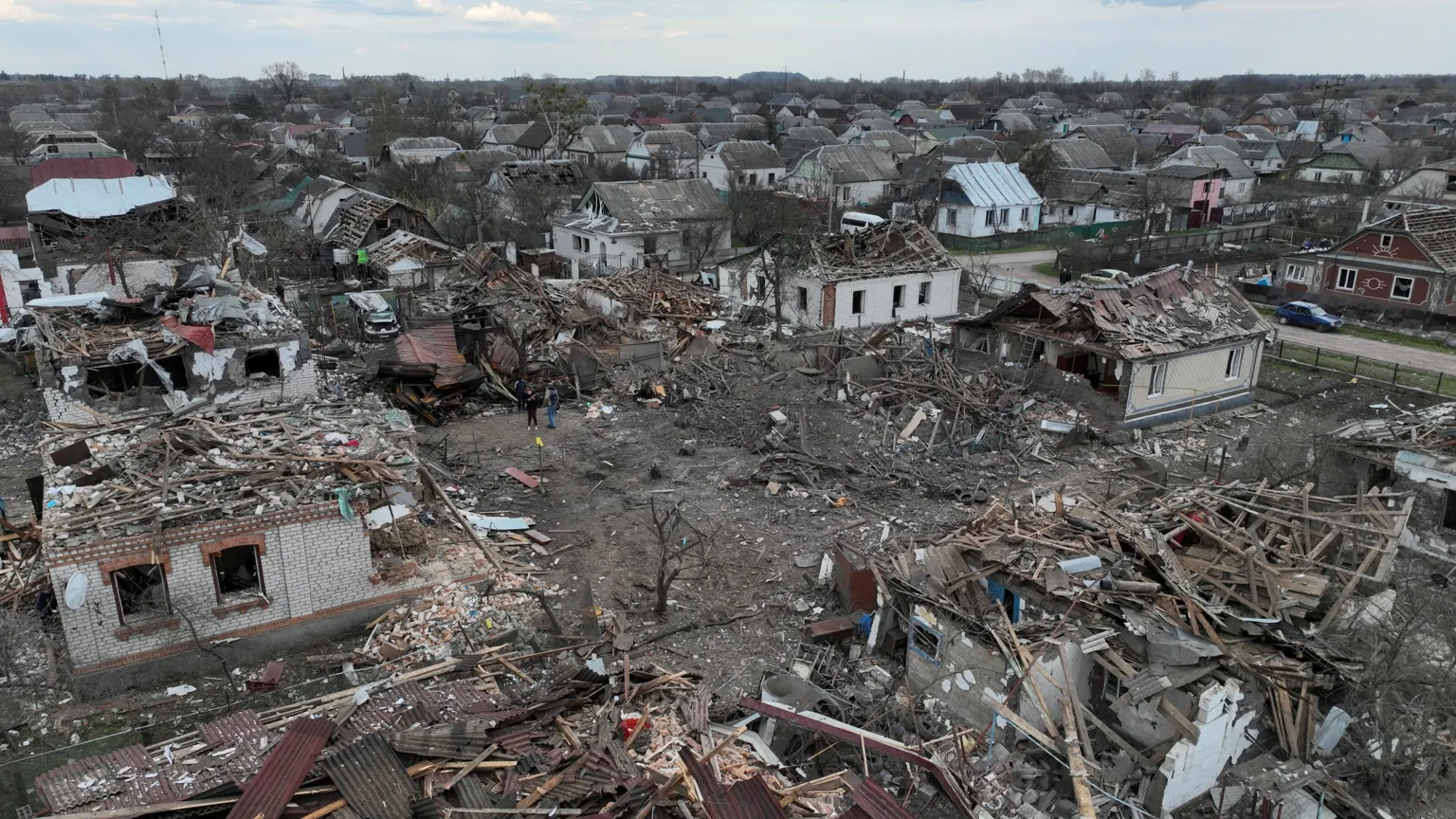
During this attack, six civilians were killed and 40 others injured as Russia deployed hundreds of drones and missiles across the country. Notably, major daytime attacks, which were previously rare, have been increasing in frequency.
These developments come amid stalled efforts to end the war, led by the United States, which have lost momentum since US President Donald Trump and his team redirected their focus to the conflict in the Middle East.
Frontline Conditions and Air Raids Continue
Meanwhile, Zelensky concurred with a British intelligence assessment that the frontline situation in eastern Ukraine is the "most favourable" for Ukraine in 10 months, as Russian troop advances appear to have slowed. However, air raids have shown no signs of abating.
In the Zhytomyr region, west of Kyiv, rescuers searched for survivors beneath the rubble after a line of houses was destroyed in the attacks.
In the Kyiv region, a drone was captured on video careering into a block of flats, crashing into its side and igniting a fire.
In Kharkiv, located in north-eastern Ukraine, a woman was killed and several others critically injured during what the city’s mayor described as "one of the biggest" days of strikes the city has experienced so far.
Zelensky’s Response and Ongoing Conflict Dynamics
Zelensky characterized the barrage as Russia’s reaction to his proposal for a temporary truce during the holidays, noting that Orthodox Christians in both Ukraine and Russia celebrate Easter next weekend.
"The Russians have only intensified their strikes, turning what should have been silence in the skies into an Easter escalation,"
he wrote on X.

In recent days, Ukraine has conducted multiple deep strikes of its own, targeting energy facilities along Russia’s northern coast. One port, Ust-Luga, has been hit by drones multiple times, forcing Russia to suspend exports.
Zelensky stated that the offer of a holiday truce remains available if Moscow consents, and that this message was conveyed during a call with Trump’s envoys, Steve Witkoff and Jared Kushner.
Plans for further in-person talks with Russia, mediated by the US, have been postponed twice, with Moscow describing them as "on hold." Zelensky welcomed Trump’s team to visit Kyiv and then travel to Moscow to maintain the peace process.
Despite this, doubts persist regarding Moscow’s genuine interest in a deal, especially as the global context appears to be shifting in Russia’s favor.
Economic and Military Concerns Amid Shifting Global Context
For Ukraine, the potential scarcity of fuel and rising prices caused by the war in Iran are concerning, as frontline troops require substantial diesel supplies for tanks and vehicles. Conversely, this situation benefits Russia, which can increase revenue from energy exports to fund weapons production and soldier payments.
There are also worries about a potential shortage of US defensive missiles needed to intercept ballistic missiles fired by Russia, as many US Patriot systems are currently deployed in the conflict with Iran.
"The longer the war in the Middle East continues, the greater the risk that we will receive less weaponry,"
Zelensky told journalists in Kyiv via recorded messages.
"This is extremely difficult – perhaps one of the most challenging tasks."
He described the frontline situation as "stable," with minor territorial gains and losses, and suggested the threat of a major Russian breakthrough has diminished.
Nonetheless, Ukraine’s current focus appears to be on maintaining its positions rather than pursuing significant advances.


