
Vatican Excommunicates SSPX Over Unauthorized Bishop Ordinations
The Vatican has excommunicated members of the ultra-conservative Society of Saint Pius X (SSPX) after the group ordained four bishops without the consent of Pope Leo, causing a schism within the Roman Catholic Church.
In a statement released on Thursday, Cardinal Víctor Manuel Fernández, head of the Holy See’s Dicastery for the Doctrine of the Faith, declared that the SSPX had "committed an act of a schismatic nature" which under canon law results in automatic excommunication.
The Vatican's declaration extended beyond the bishops, stating that all SSPX priests and Catholics who "adhere formally" to the group are in schism and thus excommunicated.
A schism refers to a severe and formal rupture within the Church.
Andrea Vreede, Vatican correspondent for NOS, the Dutch public radio and TV network, said: "The Vatican hopes that by being harsh on the bishops, the priests and faithful, maybe some of them will repent and turn back to mother church. Because it’s not nice to be excommunicated."
Background and Reactions to the Ordinations
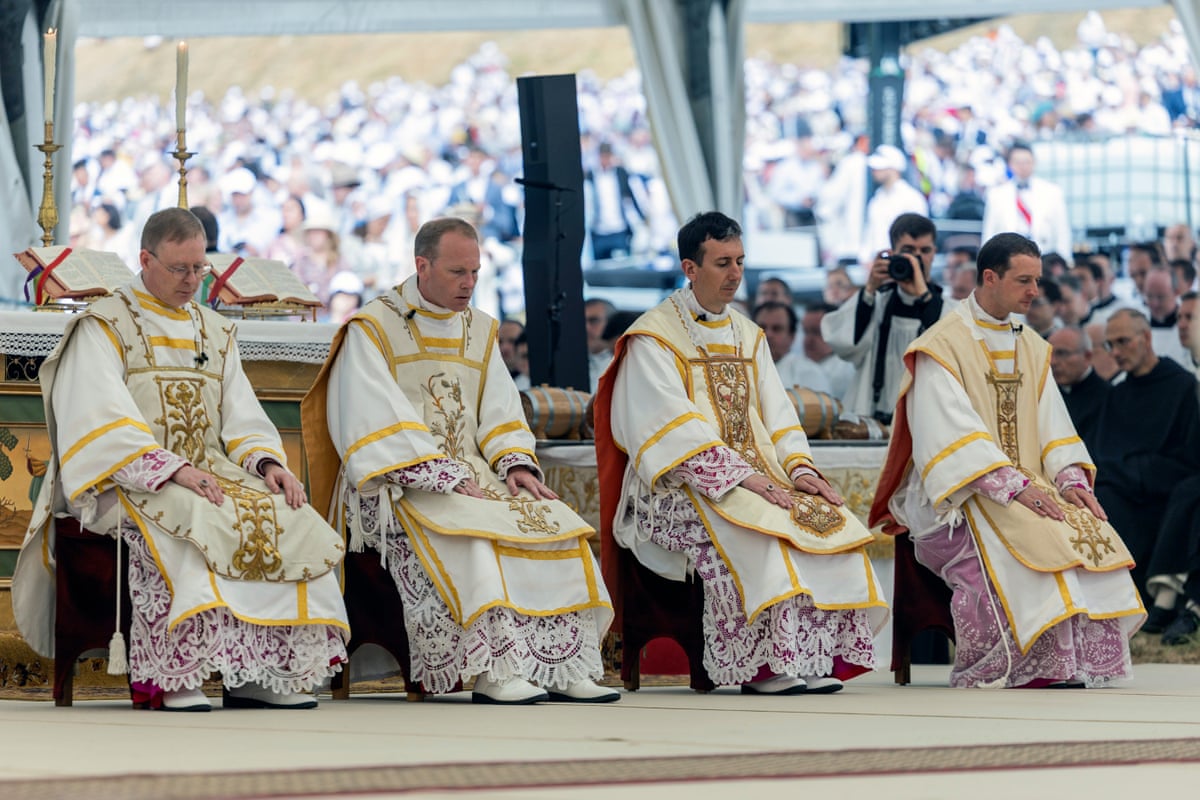
Pope Leo made a final attempt to dissuade the society from proceeding with the ordinations, which took place during a ritual-filled ceremony on Wednesday, describing the act as a "grave error."
The SSPX responded by asserting that ordaining bishops who "are entirely faithful" to the Catholic Church’s "tradition" was "a sacred duty."
An estimated 16,500 people attended the ceremony in Ecône, Switzerland, including members of Forza Nuova, an Italian neofascist political party, and Futuro Nazionale, a new far-right political group challenging Italian Prime Minister Giorgia Meloni’s prospects for re-election in next year’s general elections.
SSPX's Position and Influence
Although a splinter group, the SSPX comprises nearly 1,500 priests, seminarians, and other vocational members and has attracted an estimated following of 150,000 to 200,000 worldwide, particularly in the United States, France, and Argentina.
The society rejects key reforms from the Second Vatican Council (1962-1965), including the use of local languages in Mass, which had previously been conducted exclusively in Latin. It also opposes interreligious dialogue and does not recognize other Christian denominations.
"It’s a very minor group but they are very loud and very ultra-right," said Vreede.
Implications for Pope Leo and Church Unity
The ordinations represent the first major crisis for Pope Leo since his election in May of the previous year. As the first North American pope, he has prioritized church unity and worked to reconcile with traditionalist factions, whose divisions deepened during the papacy of his predecessor, Pope Francis.
According to Vreede, the SSPX pursued the ordinations for three main reasons: first, with only two aging bishops remaining, the group needed new bishops; second, after observing Pope Leo’s traditional papal vestments and his revival of the summer retreat at Castel Gandolfo near Rome, the society had hoped for greater tolerance than under Pope Francis but found his approach largely consistent with his predecessor’s; and third, the SSPX aims to capitalize on the global resurgence of far-right extremism.
"The world is so much turning towards extremism, and they think they might flourish with that," added Vreede, who expects Pope Leo to continue prioritizing unity rather than appeasing traditionalists.
Historical Context and Future Outlook
This confrontation marks the first significant conflict between the Vatican and the SSPX since 1988, when Archbishop Marcel Lefebvre, the society’s founder, and four bishops he ordained without papal permission were excommunicated by Pope John Paul II. Among those was British Bishop Richard Williamson, whose excommunication was lifted by Pope Benedict XVI in 2009 despite controversy surrounding Williamson’s Holocaust denial.
"Leo will be very unhappy about [what’s happened], but he saw it as inevitable," Vreede added. "It has happened in the past and it might happen again. It’s a nuisance but it won’t damage him. It’s not a very important schism and I think people will appreciate his coherence."


