

Natural Left-Turn Bias in Human Walking Patterns
From Spain to Japan, multiple experiments have consistently demonstrated a left-turn bias in human walking behavior, though the underlying mechanism remains unresolved.
In a humorous reference, Derek Zoolander, the fictional male model, once lamented his inability to turn left, calling it a lifelong problem. Recent research indicates that such a left-turn preference is more common than previously understood, with individuals naturally tending to turn left and walk in an anticlockwise direction when moving freely.
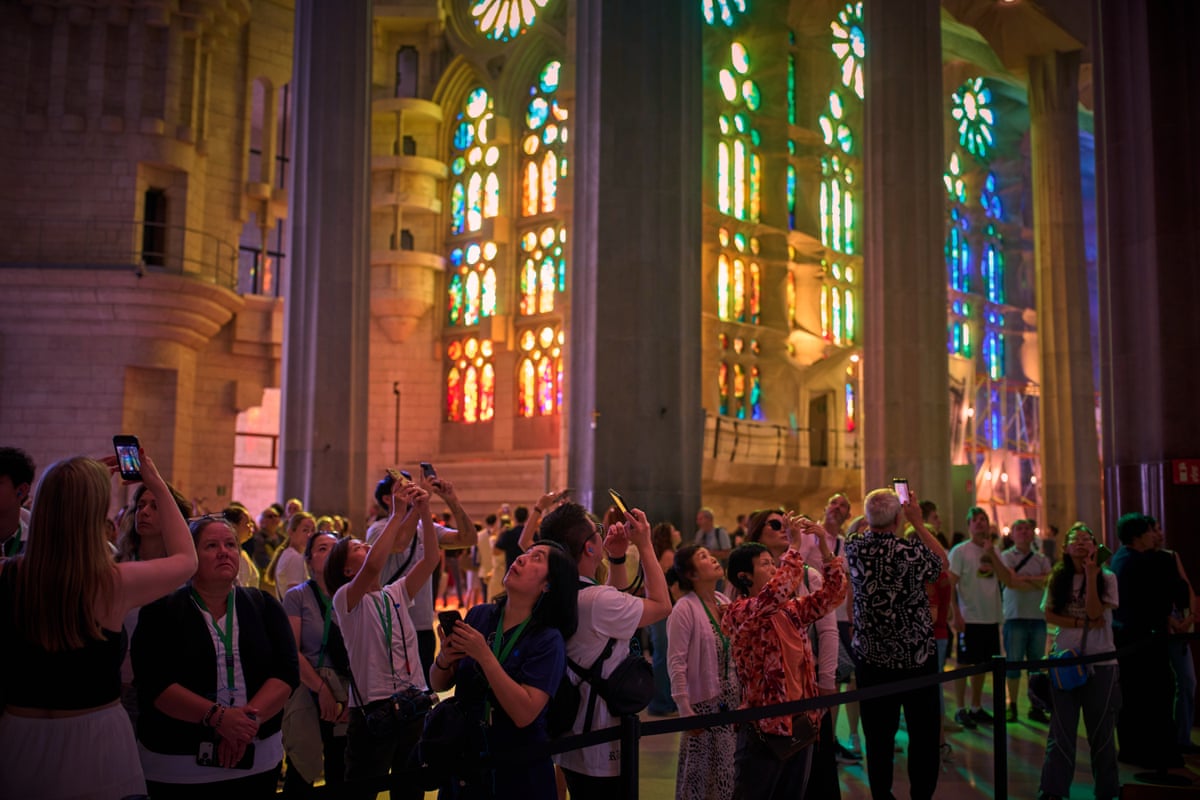
“If you simply ask someone to start walking, whether they are wandering around a museum, a supermarket, or even an empty room, it is surprisingly likely that they will drift counterclockwise,”said Dr Iñaki Echeverría Huarte of the University of Navarra in Spain.
During the COVID-19 pandemic, researchers initially studied how many people could share spaces while maintaining safe distances. Upon reviewing video footage, they observed that crowds predominantly moved in an anticlockwise direction.
This unexpected observation prompted a dedicated research project. The scientists conducted a series of experiments involving individuals and small groups walking within enclosed spaces. Repeatedly, they noted a consistent tendency to walk anticlockwise.
Considering cultural influences might affect this behavior, the team collaborated with Dr Claudio Feliciani from the University of Tokyo. His findings in Japan mirrored those in Spain, confirming the anticlockwise walking bias. This tendency persisted even after accounting for right-handedness, right-footedness, and right-eye dominance, and was evident in both male and female participants. Notably, the bias appeared more pronounced in children.
“Each of us carries a small personal bias to turn slightly to one side, and when many people share a space, those tiny biases add up into a net counterclockwise rotation,”explained Echeverría Huarte. The detailed findings are published in the journal Scientific Reports.

Investigating the Origins of the Bias
The precise origin of this left-turn bias remains uncertain. Further experiments have been conducted using virtual reality environments and scenarios where participants simulated having one leg immobilized, aiming to uncover potential causes. Some team members humorously speculated that the opposite trend might be observed in Australia, or that the Coriolis effect—Earth’s rotation influencing wind direction—could play a role.
“We don’t know why it happens, but we think that by understanding the reasons, we could better understand how we perceive the world,”said Feliciani.
“It can help us make other discoveries which may be more important than this one.”
Humans are not unique in exhibiting such directional preferences. Research conducted in Bristol demonstrated that rock ants also display a left-turn bias when exploring unfamiliar nests.
Biomechanics has been suggested as a possible explanation.
“None of us is perfectly symmetrical, and the way each person’s brain gathers sensory information and coordinates it with the muscles seems to tip them gently to one side,”said Echeverría Huarte.
“I should be honest, though. We have tested several ideas and the bias stubbornly keeps showing up, so the exact mechanism is still an open question.”
Understanding this bias could enhance the realism of crowd and evacuation simulations and inform the design of public spaces such as museums, supermarkets, and train stations, according to Echeverría Huarte.
Historical and Practical Implications
In the first modern Olympic Games held in 1896, athletes ran clockwise around the track. However, this was changed in 1913 because most athletes considered clockwise running an “unnatural direction.”
“Running anticlockwise is now written into the rules of athletics,”said Professor Gareth Irwin, head of sport and exercise biomechanics at Cardiff Metropolitan University.
“It is reasonable to assume that this emerged due to the right-leg dominance of the population. Running around the bend in an anticlockwise direction puts more internal force on the right side of the body.”

Professor Irwin also noted that the preference might be influenced less by biomechanics and more by social dominance of right-leg-dominant individuals.
“The idea of right-sided dominance transcends sport and athletics, and can be seen in other areas such as supermarket design, impacting on the direction companies aim to walk and direct you around the shop,”he added.


