

Repeated Strikes on Russian Oil Infrastructure Near Baltic Sea
Satellite imagery and verified videos confirm that Ukraine has conducted multiple strikes on critical Russian oil export infrastructure near the Baltic Sea over the past week, resulting in fires that have persisted for several days.
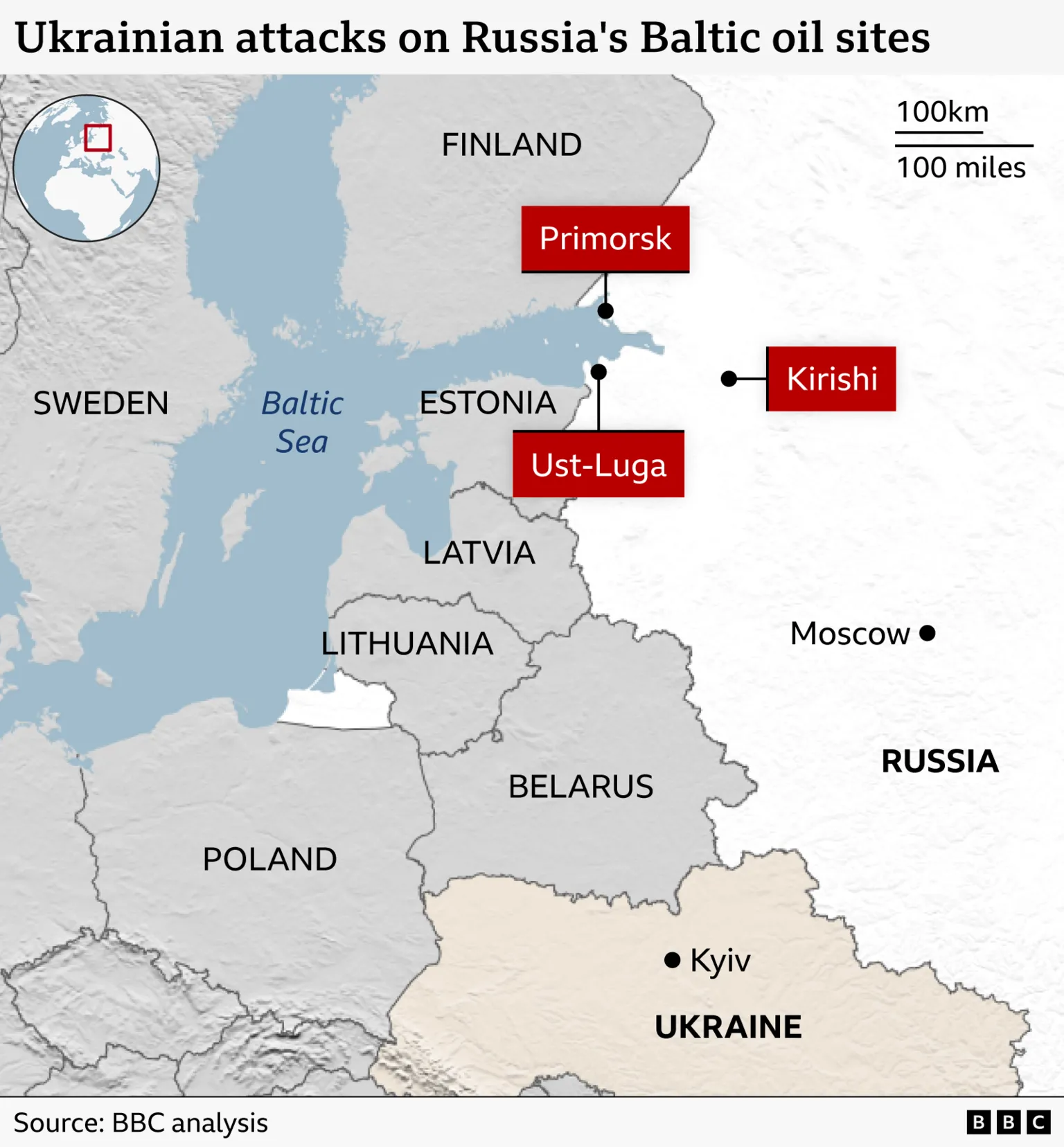
BBC Verify has authenticated attacks on at least three oil sites in Russia's Leningrad region, close to the city of St Petersburg, approximately 500 miles (800 km) north of the Ukrainian border, since 23 March.
The attacks targeted key Baltic Sea ports including Ust-Luga and Primorsk, as well as the nearby inland Kirishi oil refinery.
Significance of the Targeted Facilities
Analysis by the Finland-based Centre for Research on Energy and Clean Air (Crea) indicates that in 2025, 22% of Russia's total oil exports departed from Primorsk and 20% from Ust-Luga.
Recent data reveals that on 26 and 27 March, no oil loading activities occurred at any of Russia's three Baltic ports, marking the first consecutive two-day halt since Moscow initiated its full-scale invasion of Ukraine in 2022.
Evidence of Fires and Damage
Satellite images captured on 24 March show massive plumes of smoke rising from burning oil facilities in Primorsk. Fires were also observed at Ust-Luga, with extensive damage reported at the Kirishi refinery on 27 March.
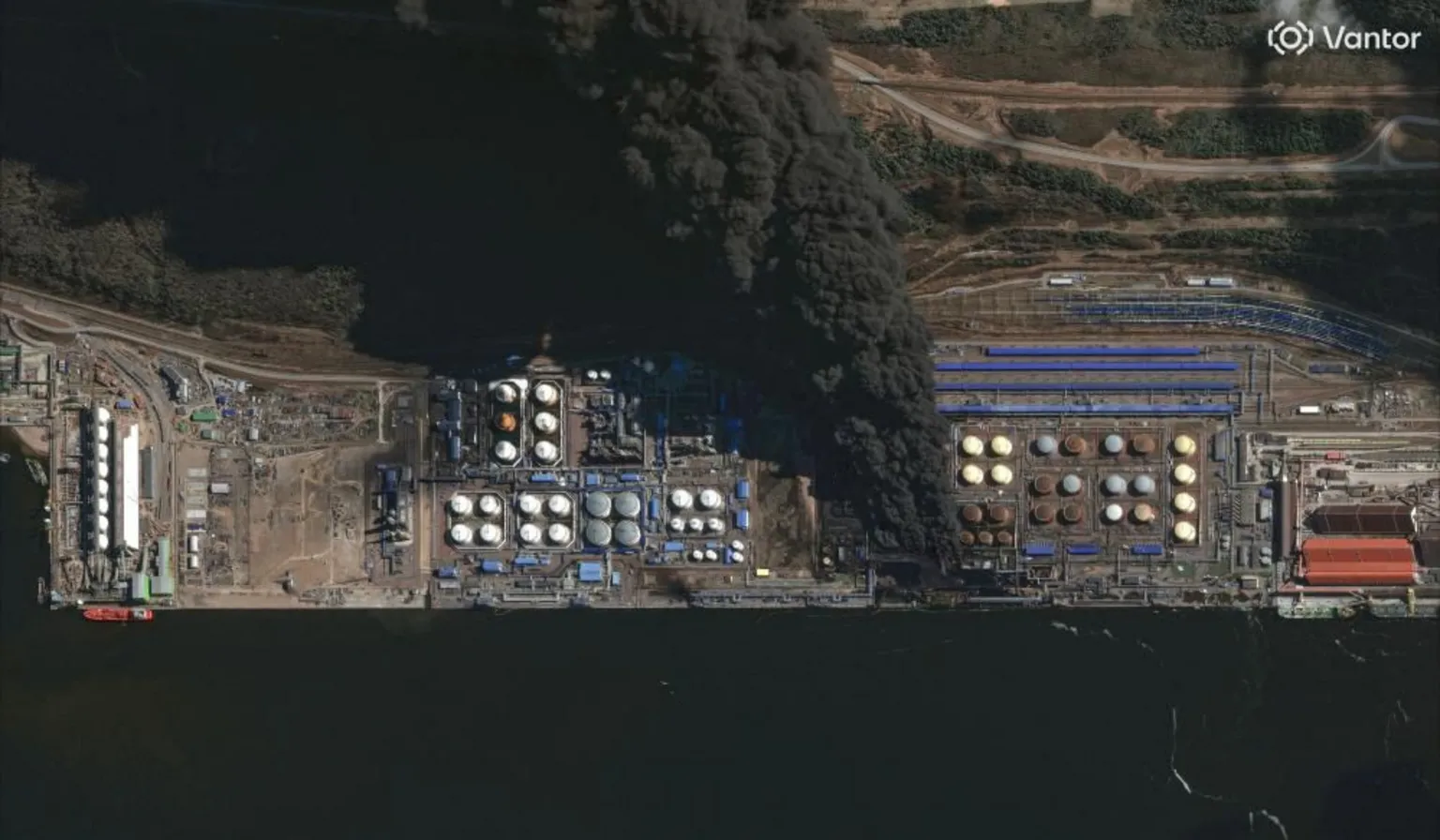
BBC Verify's analysis of these images includes data from NASA's satellite resource FIRMS, which detects heat signatures on Earth's surface. FIRMS data indicated that Primorsk was still burning as of 02:54 BST on Monday.
A heat signature was also detected at Ust-Luga at 12:28 BST on Monday. Leningrad region's governor, Alexander Drozdenko, stated that the fire had been contained on Sunday and reported no casualties.

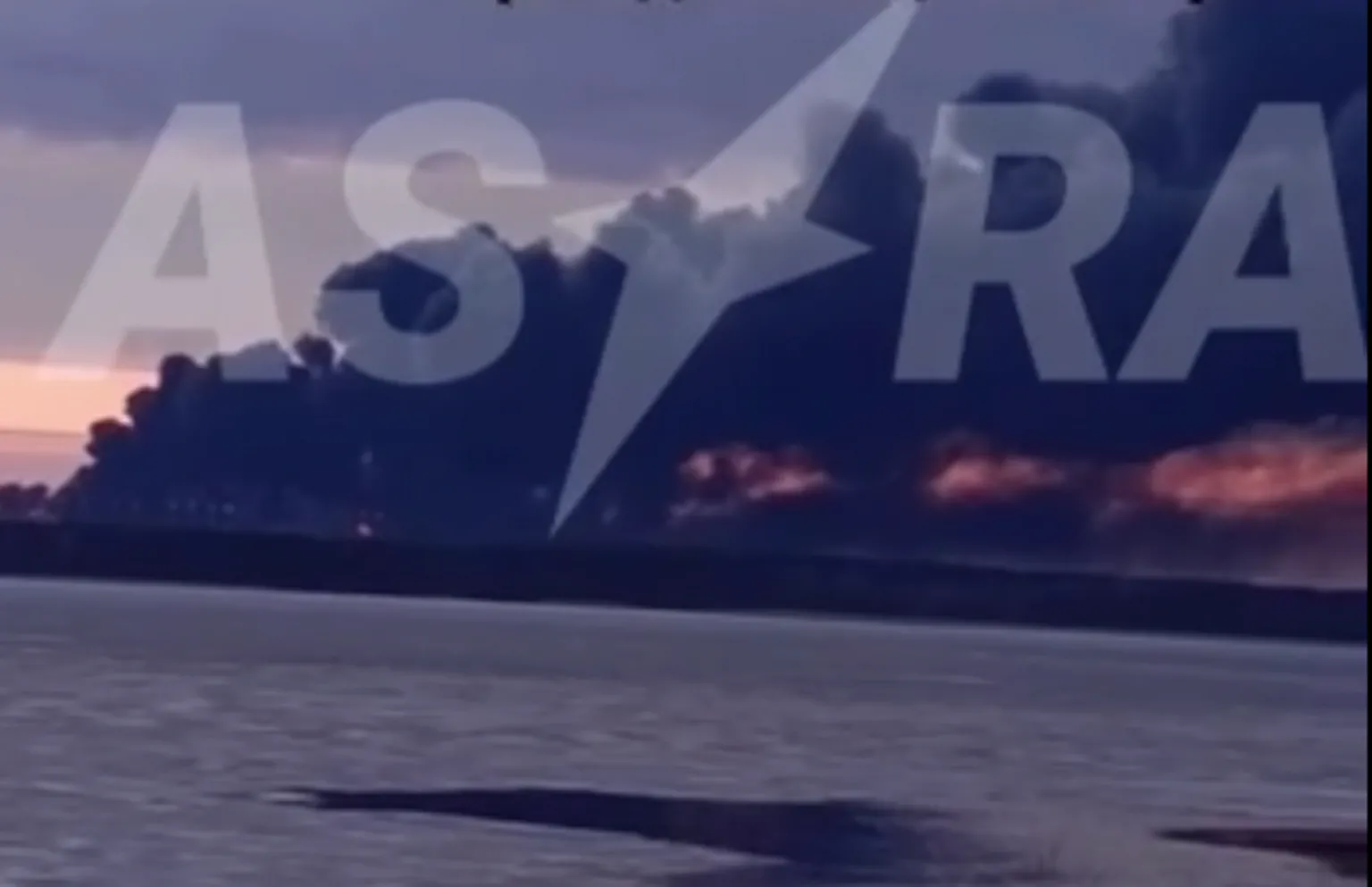
Several videos verified by BBC Verify show the aftermath of attacks on all three facilities over the past week, including footage of large smoke plumes rising from Primorsk.
Ukrainian Military Operations and Objectives
Robert Brovdi, commander of Ukrainian military drone forces, confirmed that an operation targeting these three Baltic oil export facilities was conducted between 23 and 28 March.
"The strikes were aimed at demilitarising Russia's oil arteries, refining capacity and crude export infrastructure," Brovdi said.
Ukraine's military has highlighted that the Kirishi refinery is among Russia's three largest oil-processing plants, producing fuels that support the armed forces of the aggressor state.
Impact on Russian Oil Exports and Market
Following the initial attacks on 25 March, at least 40% of Russia's oil export capacity was halted, according to calculations based on market data.
Crea's analysis estimates that Russia earned approximately £7.1 billion from oil exports in the final three weeks of March, with prices rising sharply due to disruptions linked to the US-Israel conflict involving Iran.
International Reactions and Strategic Considerations
Ukrainian President Volodymyr Zelensky stated on Monday that Kyiv's allies have requested a reduction in attacks on Russia's energy sector due to the global energy crisis.
"They would only end if Russia stopped targeting Ukraine's energy system," Zelensky added.
Alexander Lord, an analyst at UK-based intelligence company Sybelline, commented that Kyiv is likely attempting to counterbalance the revenue windfall currently enjoyed by Russian oil and gas exporters.
"The longer the war continues, the more likely it becomes that the US will attempt to pressure Ukraine to stop these targeted strikes, as part of wider efforts to suppress global oil prices," Lord said.
Additional reporting by Daniele Palumbo and Yaroslava Kiryukhina.


