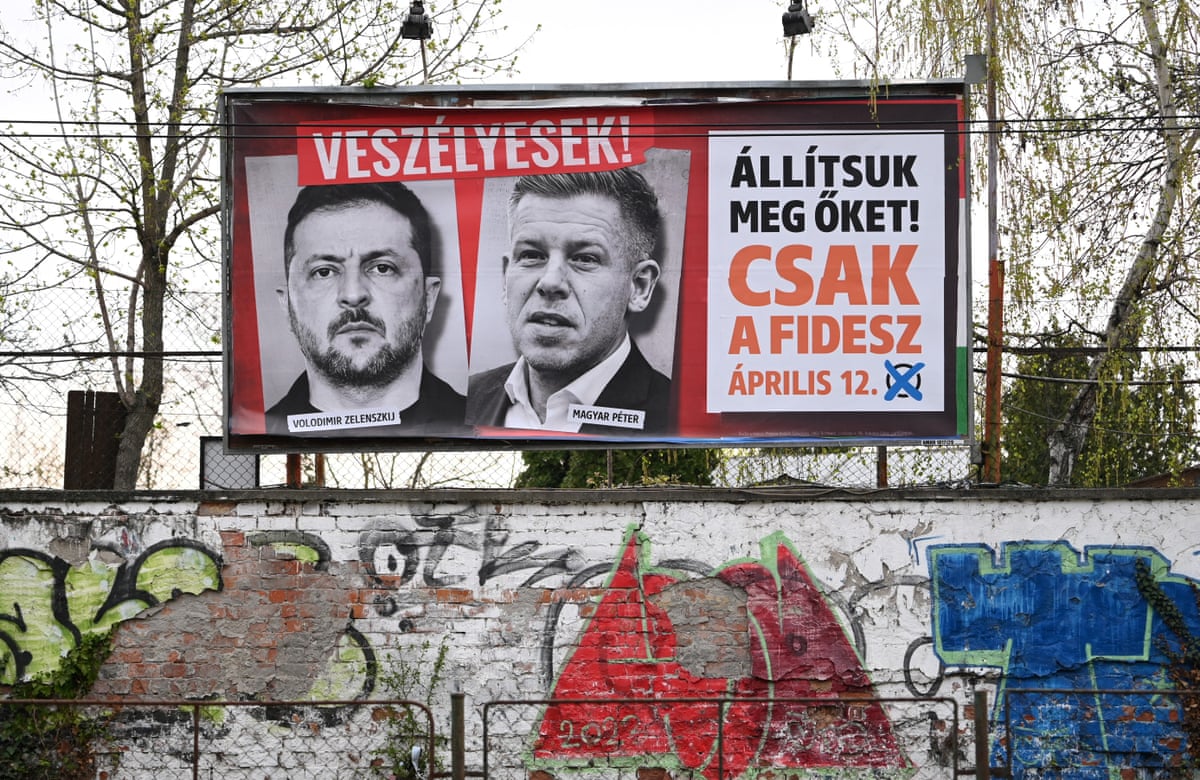
Early Influences and Political Awakening
Growing up in Budapest, Péter Magyar had a poster of Viktor Orbán, then a prominent figure in Hungary’s pro-democracy movement, displayed above his bed. Magyar recalled in a podcast last year how Orbán was among several political figures decorating his bedroom, reflecting his enthusiasm for the transformative changes following the collapse of communism.
Today, at 45, Magyar stands as the central figure behind a potential political upheaval in Hungary: the possible removal of Orbán, who has governed for 16 years, turning the country into what critics describe as a "petri dish for illiberalism."
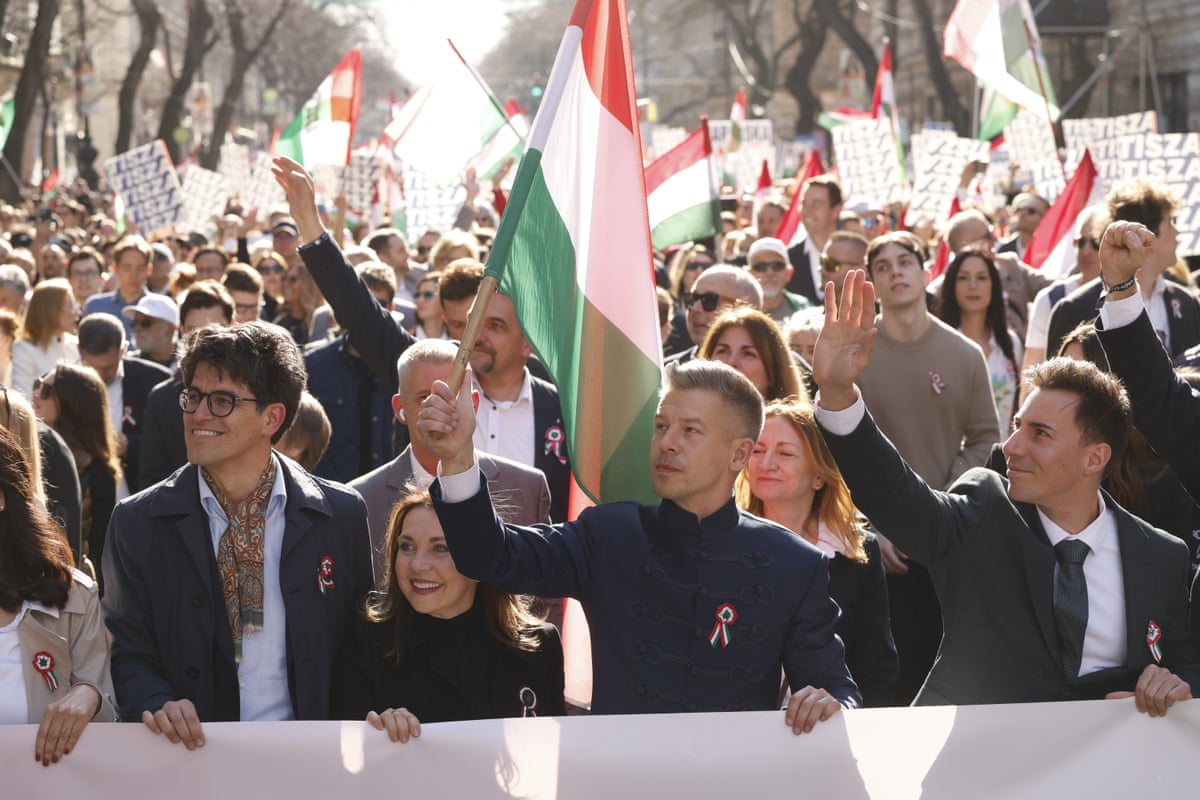
A Rapid Rise in Opposition Politics
Magyar’s ascent, alongside his Tisza party, has been remarkably swift. Gábor Győri of Policy Solutions, a Budapest-based political research institute, remarked,
“He has built an opposition movement at amazing speed. Never, since the history of this post-transition, have we seen a party rise this quickly.”
Those familiar with Magyar often express mixed feelings, balancing admiration for his achievements with criticism of his temperament. Many commend the disciplined movement he has constructed, noting his relentless schedule of up to six speeches daily across Hungary. However, some describe him as having a short temper and an occasionally abrasive style.
Filmmaker Tamás Topolánszky, who spent 18 months documenting Magyar’s journey for a film on Hungary’s societal changes, acknowledged,
“I think, like all politicians, he can be a difficult person.”He further described Magyar as authentic and passionate but sometimes impatient, qualities he believes were necessary to reach the current moment.
Topolánszky observed Magyar’s efforts to engage with communities in villages and towns, gradually overcoming the political apathy that had long prevailed.
“The energy at these rallies was something I’ve never experienced before,”he said.
Connections to Fidesz and Personal Background
Magyar’s rise is intertwined with his deep connections to Orbán’s Fidesz party. Much of his life has been spent within its elite circles. His close associates have included Gergely Gulyás, Orbán’s chief of staff. In 2006, Magyar married Judit Varga, a former justice minister for Fidesz. Professionally, he served as a Hungarian diplomat in Brussels and held senior roles in state institutions.
Breaking with Fidesz and Public Controversy
Magyar came into the spotlight in 2024 when it was revealed that Orbán’s government, which had long promoted itself as a defender of Christian families and children, was implicated in covering up a sex abuse scandal at a children’s home. Judit Varga, by then Magyar’s ex-wife, resigned amid the controversy.
Magyar responded with a sharp social media post accusing Fidesz officials of scapegoating the women involved, writing they were
“hiding behind women’s skirts.”
He continued to speak out, positioning himself as an insider exposing what he described as a corrupt system. Magyar characterized Fidesz as a
“political product”marketed to citizens while officials enriched themselves at the expense of ordinary Hungarians.
This message resonated amid widespread public frustration over rising living costs, deteriorating public services, and stagnant wages. After approximately 35,000 people attended a protest led by Magyar in March 2024, he formally launched his political movement.
Challenges of a Former Fidesz Insider
While Magyar’s former affiliation with Fidesz attracted attention, it also complicated his new political path. In the documentary Spring Wind, Magyar was asked,
“Who are you friends with now?”After a pause, he replied,
“That’s a good question. It’s hard to say whether you have real friends in a situation like this.”

Despite enthusiastic support from many, some of Magyar’s own voters remain skeptical.
One supporter, Anita, 33, from Kecskemét, acknowledged her vote for the Tisza party was a gamble driven by hope that Magyar would differ fundamentally from other Fidesz members. She expressed her frustration with rampant corruption that has left Hungary lagging in the EU, draining funds for public services and making life difficult for citizens like herself.
“Magyar is not a saint, but Fidesz needs to go,”she said.
“Anything is better than this quiet death.”

Relatability and Campaign Strategy
Topolánszky views Magyar’s background as an advantage, making him relatable in a country where government influence over local politics, culture, and universities has fostered fear of dissent.
“He’s an inside man who gave up everything – all the benefits – of going along with Fidesz,”the filmmaker said.
Despite over two years of campaigning and a 240-page election manifesto, Magyar’s specific plans if elected remain vague. This is partly intentional, as he has maintained a tightly controlled campaign to avoid providing material for Fidesz-controlled media attacks.
Győri described him as
“very much a dark horse. We don’t know much about him.”
Policy Positions and Future Prospects
Aside from migration, where Magyar promises a tougher stance than Orbán by ending the country’s guest worker program, he has pledged to dismantle many of Orbán’s most controversial policies.
His commitments include restoring democratic checks and balances, repairing relations with the European Union to release frozen funds, and combating corruption. Magyar also aims to end Hungary’s dependence on Russian energy by 2035 while maintaining
“pragmatic relations”with Moscow.
Regarding Ukraine, Magyar would continue Orbán’s opposition to sending arms and fast-tracking Kyiv’s EU membership. Nonetheless, Győri noted that merely stopping Hungary’s vetoes in the European Council could significantly improve relations with the EU.
“I think what people underestimate is that if Hungary stops vetoing vital EU action in the European Council, that’s a major breakthrough,”he said.
“You don’t have to have Péter Magyar go out and say: ‘We’re enthusiastic about helping Ukraine or everything the EU does.’”
On social issues, such as the government’s efforts to restrict LGBTQ+ rights, Magyar has remained silent. Győri commented,
“So gender and sexual minorities, he just doesn’t address. Everybody assumes that he will be a lot friendlier on these issues than the Fidesz government was, and it’s probably true, but he just doesn’t talk about them. So this is speculative.”
Uncertainties and Public Support
A significant question remains about what a Tisza-led government could realistically achieve if elected. During Fidesz’s 16 years in power, the party filled the state apparatus, media, and judiciary with loyalists, and how these institutions would react to a change in government is uncertain.
Additionally, constitutional amendments and key legislative changes require a two-thirds majority, so Tisza’s ability to enact reforms may be limited if it wins but falls short of a supermajority.
Despite these challenges, Magyar has garnered substantial public support. Ákos Hadházy, an independent Hungarian MP and longtime Orbán critic, noted that many Hungarians see Magyar – imperfections notwithstanding – as the best option to counter the profound changes brought by Orbán and Fidesz.
Hadházy stated,
“When it comes to Péter Magyar, there are both question marks and exclamation marks. But Hungarian society has accepted this.”