

Pro-Palestinian Activists Charged Over Ulm Arms Factory Attack
Five pro-Palestinian activists have appeared in court charged with causing approximately €1 million in damage during an attack on an Israeli arms company in Ulm, Germany.
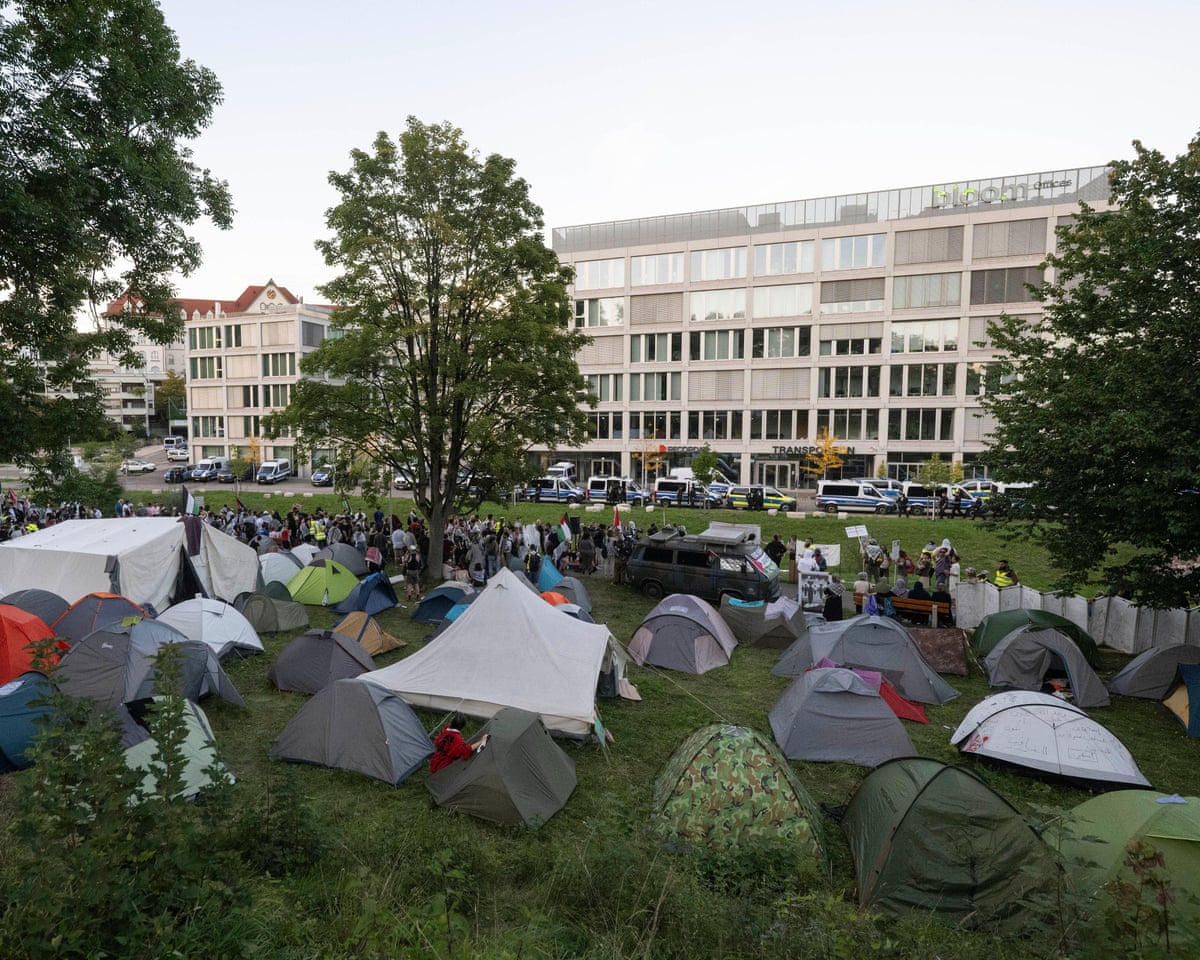
According to prosecutors, the defendants, aged between 25 and 40, trespassed on the premises and shouted pro-Palestinian slogans while damaging office equipment, sensitive measuring devices, and breaking windows at a site associated with Elbit Systems in the southern city of Ulm.
The activists posted videos online claiming responsibility for the attack, stating their intent was to highlight Germany's support for Israel and its military operations in Gaza.
Trial Proceedings Marked by Tensions
The trial, which began on Monday at Stuttgart’s regional court, was described as chaotic by attendees. Defence lawyers exited the courtroom after being denied permission to sit alongside their clients, who were separated from the public gallery by thick security glass.
Following a two-hour adjournment, the lawyers occupied the defendants’ seats and refused the judge’s order to return to their own, leading to a further adjournment. The hearing is scheduled to resume in one week.
After the adjournment, the defence team issued a statement announcing they had filed a motion to recuse the presiding judge, alleging the court had committed "an unacceptable violation of the defendants’ right to a fair trial."
Defendants Held Under Strict Pre-Trial Detention
The defendants, known as the Ulm 5, are Berlin-based activists holding British, Irish, German, and Spanish citizenships. They have been in pre-trial detention in separate prisons since their arrest on 8 September, the date of the alleged attack and subsequent police notification.
The group faces charges including trespass, property destruction, and membership in a criminal organisation—Action Germany—under section 129 of the German criminal code. This charge classifies the accused as a societal threat, permitting denial of bail.
Family members report that the defendants have been confined for up to 23 hours daily, with limited access to visits, reading materials, phone calls, and mail. If convicted, they could face up to five years imprisonment.
Defence Lawyers Criticize State's Approach
Benjamin Düsberg, representing defendant Daniel Tatlow-Devally, 32, from Dublin, stated on behalf of all defendants that the German state aims to set an example with the five, none of whom have prior convictions.
“The attack on the weapons factory was an action in ‘defence of others’ in trying to obstruct the movement of arms to Israel,”
Düsberg, one of eight defence lawyers, added:
“We intend to use the proceedings to essentially turn the tables. We want to show that it’s not our clients who should be on the hook, but rather the Elbit bosses, who continued delivering weapons even during the genocide.”
Elbit Systems is a primary land-based weapons supplier to the Israel Defense Forces (IDF). The company has been contacted for comment regarding the trial.

Legal Justification and International Context
Invoking section 32 of the German criminal code, Düsberg explained:
“Our central argument will be that the actions of our clients there – namely the destruction of laboratory equipment and office equipment – were justified under the grounds of emergency assistance.”
This clause permits otherwise unlawful acts if no alternative exists to prevent imminent harm or attack.
Germany ranks as the second-largest arms supplier to Israel after the United States. The defence will argue that following the 2024 ruling by the International Court of Justice (ICJ) deeming the genocide claim against Palestinians in Gaza “plausible,” Germany should have ceased all arms deliveries. Israel has rejected the ICJ’s accusation as “outrageous and false.”
Families Express Concerns Over Detention Conditions
Mimi Tatlow-Golden, mother of Daniel Tatlow-Devally, a philosophy graduate, expressed fears of political motivations behind the case, suggesting the defendants face a “show trial” intended to deter similar actions.
“The friends carried out only property damage, at a specific location and with the aim to end a genocide. They did not hide their identities and presented themselves for arrest. They represent no harm to the public. Using section 129 to keep them in detention … before the trial can, in my view, only be viewed as serving a political purpose.”

Matthias Schuster, another defence lawyer, stated:
“Our clients are not dangerous but [authorities] believe they should be seen as such to justify the strict custody conditions in which they have been held.”
Nicky Robertson, mother of Zo Hailu, 25, detained in Bühl, Baden-Württemberg, described the treatment of the group as “extreme” and disproportionate to the property damage charges.
“Hailu, a British citizen, was strip-searched on arriving at the prison and forced to wear an adult nappy,”
Robertson added:
“These are people who love the environment and children, who are caring, creative, sporty, decent team players. They’re not a danger to society. Quite the opposite.”

Rosie Tricks, sister of Crow Tricks, 25, also a British citizen held at the maximum-security Stuttgart-Stammheim prison, noted that visits have been limited to two hours per month.
“It’s lovely to see them, but knowing Crow as a sociable, bubbly, fun person, the light of our family, it’s really hard to see them in this position,”
Rosie continued:
“Their health has definitely suffered. They look OK but inside there’s a lot of anxiety and worry.”

Details on Other Defendants and Bail Denial
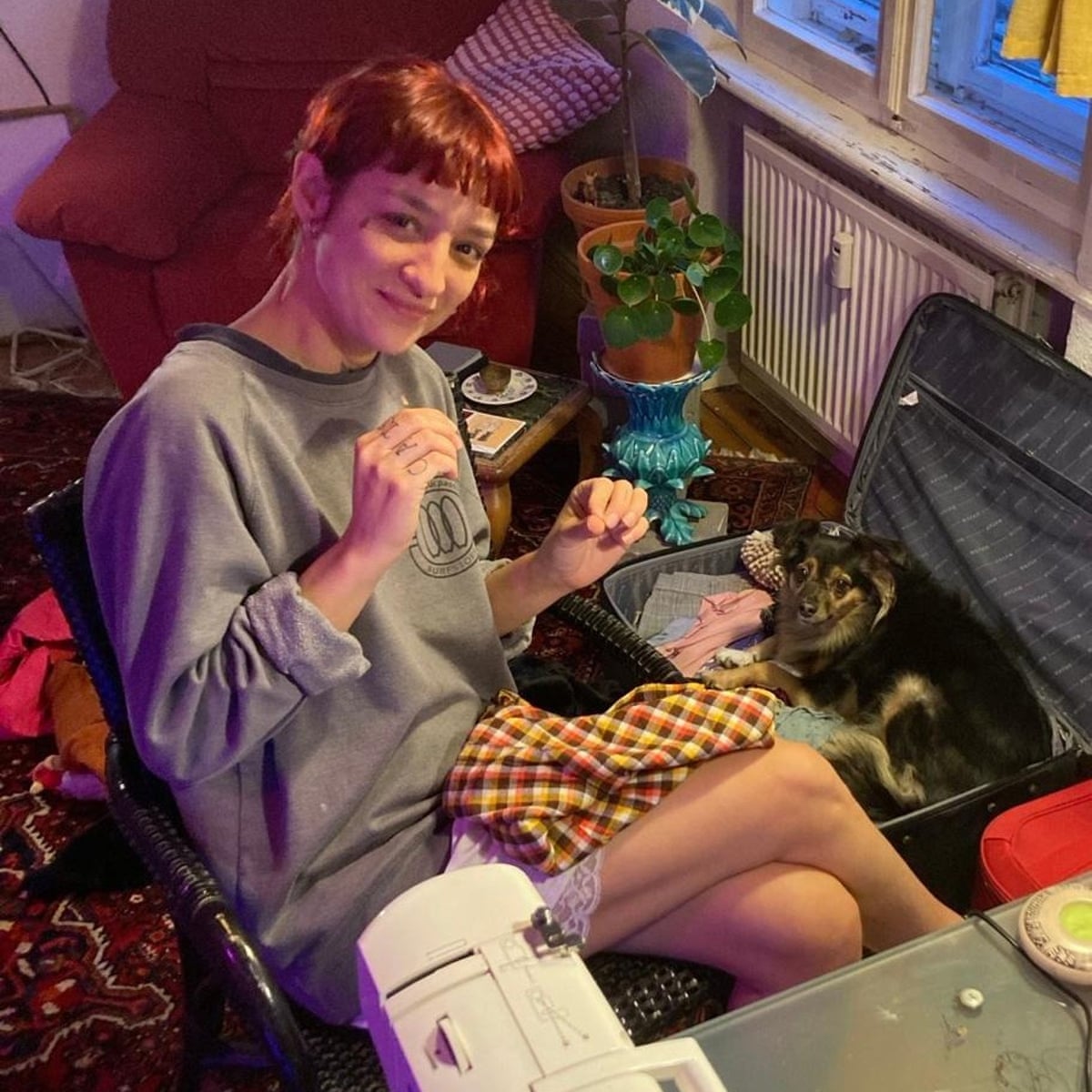
The other defendants include Vi Kovarbasic, a 29-year-old German citizen, and Leandra Rollo, a 40-year-old Spanish citizen originally from Argentina. All five have been denied bail despite the six-month pre-trial detention limit having passed.

A spokesperson for the Stuttgart-Stammheim court explained:
“The code of criminal procedure allows, under certain conditions, for the extension of pre-trial detention.”
In a recent detention review, Stuttgart’s higher regional court examined these conditions and ordered the continuation of pre-trial detention for all defendants, citing a flight risk that would not be sufficiently mitigated by bail.
The trial is anticipated to continue until the end of July.


