

Introduction to Patriotic Education in Russia
When her seven-year-old daughter was assigned to learn a poem about Russia's "glorious army" for a school event, Nina from Moscow felt it was excessive.
She has found it increasingly difficult to protect her daughter from a growing number of "patriotic" activities and lessons promoted by the state.
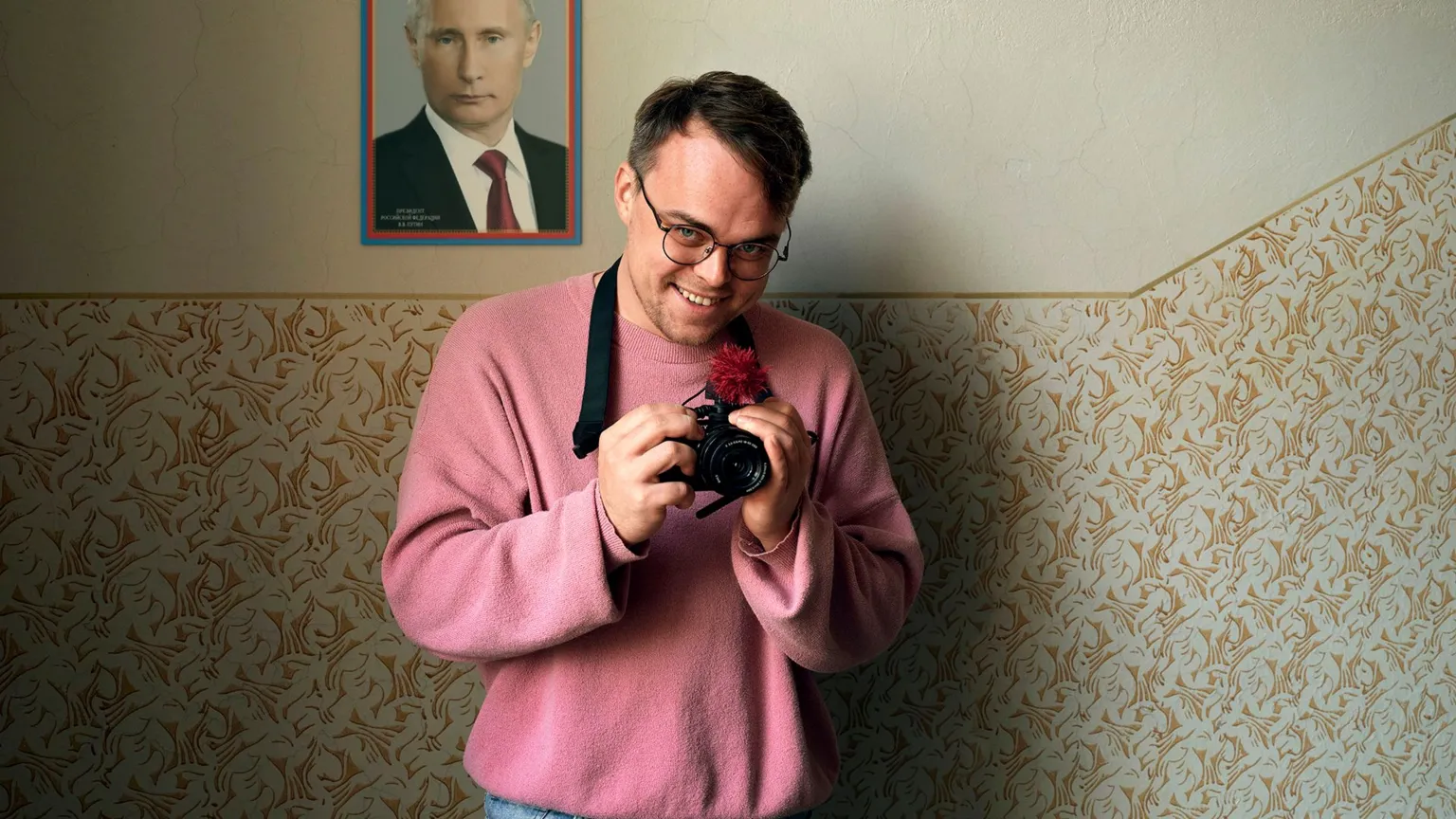
This intensification of war-related propaganda aimed at Russian children has been exposed to a global audience through the Oscar-winning documentary Mr Nobody Against Putin.
The BBC documentary was based on footage captured by Pavel Talankin, a primary school events coordinator and videographer from the small provincial town of Karabash in the Ural mountains.
Children's Engagement and Parental Concerns
What concerns Nina most is that her daughter enjoys participating in the state-sponsored patriotic program. For safety reasons, names in this report have been changed.
"She likes her teacher, she likes her classmates - she likes being a part of it,"
Nina explains.
She worries that openly opposing these school activities could socially isolate her daughter. On one occasion, when she kept her daughter home to avoid a patriotic school event, her daughter was upset.
"I don't want her to feel like she doesn't belong."
Documenting the Propaganda Machine
Talankin's BBC film chronicles his reluctant involvement in Putin's propaganda apparatus as Russia's full-scale invasion of Ukraine began in 2022.
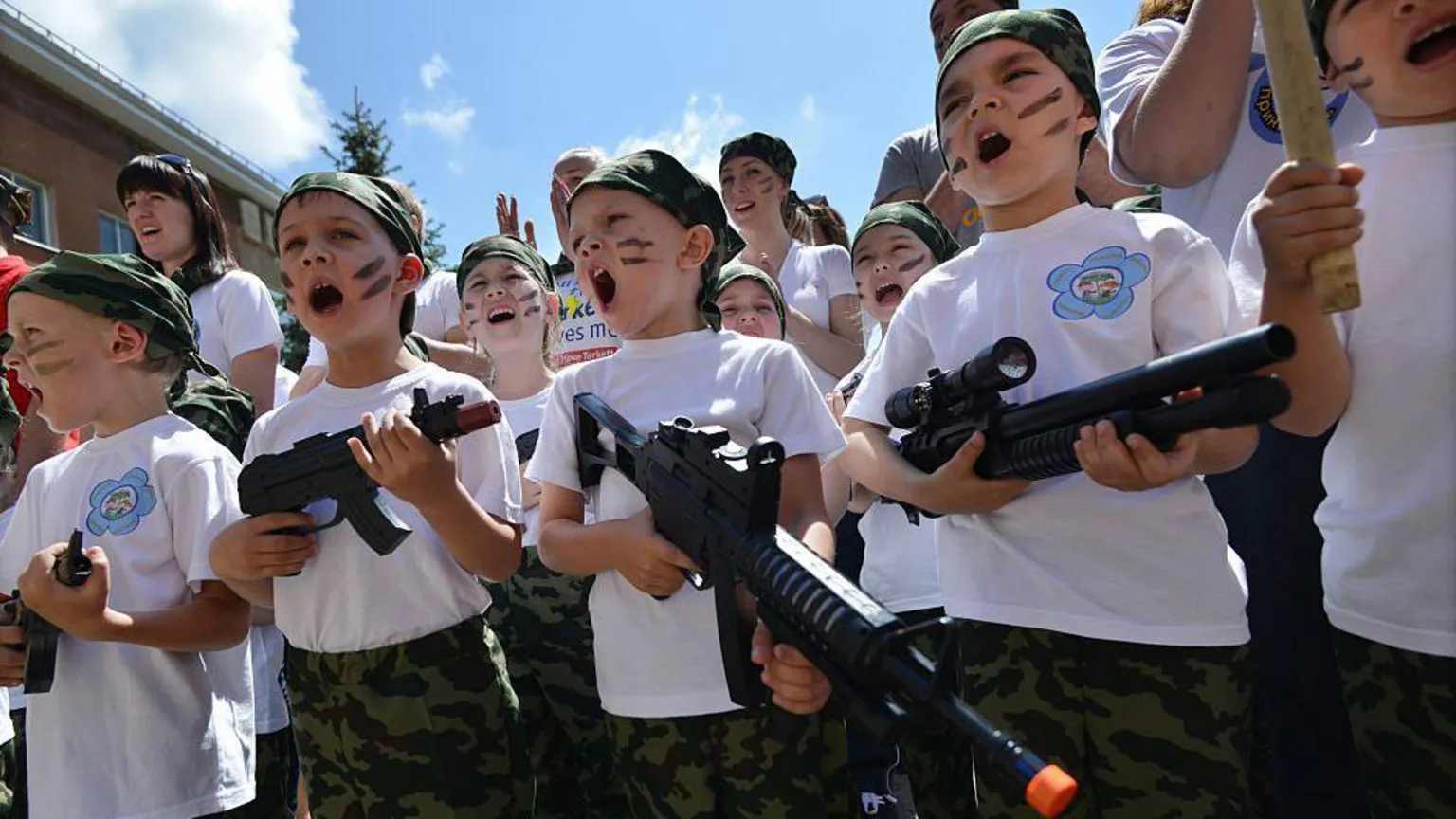
New rituals such as flag-raising ceremonies were introduced alongside mandatory lessons designed to teach pupils the government's perspective on Russian values and global affairs.
History textbooks were rewritten and updated to include the latest developments, including the official terminology of the conflict as a "special military operation."
These directives have persisted. In fact, only last month, Russia's education ministry announced plans to introduce a list of state-approved toys and games for nurseries aimed at promoting "traditional Russian values."
Government Messaging and Family Perspectives
The messages the government seeks to instill are clear: the invasion is defensive, and patriotism equates to unquestioning loyalty. However, some families hold differing views at home.
Maksim, aged eight, recounts what he has learned in his patriotic education lessons: about great Russian poets and painters, friendship, and conflict avoidance. His enthusiasm grows as he recalls discussions about robots, tanks, and laser tag.
"They told us this is how to prepare for war,"
he says.
Like Nina, Maksim's mother Marina opposes Russia's invasion but avoids discussing it openly in front of her son, fearing he might repeat her views publicly.
"An active anti-war position might attract unwanted attention,"
Marina told the BBC.
Psychological Impact and Parental Guidance
Navigating the conflicting messages from school and home is challenging, says psychotherapist Anastasia Rubtsova.
"A child has to live in this environment - attending the school, being a part of this group,"
she explains.
"This doesn't mean parents should agree with the propaganda. But there is no need to take a political stance in front of your child."

She recommends that parents emphasize universal values such as the importance of human life and peaceful conflict resolution instead of directly confronting school narratives.
Research shows that younger children are especially receptive to messages from authority figures.
"If you tell a young child that the war is good, they will accept it,"
Rubtsova notes.
Long-Term Effects and Social Environment
Emily Willoughby, a behavioural genetics researcher at the University of Minnesota, states that childhood and adolescence offer a critical period for shaping attitudes.
The key question is whether these attitudes endure, which depends significantly on the individual's broader social environment.
"When parents actively disagree with institutional messaging, family influence usually prevails in the long run,"
she says.
However, when the state controls most information sources and alternative viewpoints are limited, the outcome becomes less predictable, as is the case in Russia.
Historical studies, such as those examining Nazi-era education, have found that school-based indoctrination can have lasting effects, especially when reinforced by the wider social context.
Variations in Implementation
The application of the Russian government's guidelines varies widely.
Some schools implement them enthusiastically, while others soften or avoid them. Teachers may adapt, dilute, or quietly resist the messaging.
In one scene from Talankin's film, children in Karabash receive Russian flags as they gather in the school hall to listen to Putin announce the creation of a children's movement reminiscent of the Soviet-era Pioneer youth organisation.
In another scene, a class is cautioned that the enemy will attempt to recruit from their communities and spread propaganda to undermine them from within.
Patriotic Education and Student Perspectives
The patriotic education lessons are known in Russian as "Conversations about Important Things." Maia, a 14-year-old from St Petersburg, describes them as very dull.
"No one is participating in the discussion. We just sit there and listen to the teacher, and then leave,"
she explains.
Paul Goode, professor of Russian studies at Carleton University, Canada, comments on the broader implications.
"Compelling citizens to engage in public performances of patriotism is a way of reminding citizens of the regime's overwhelming power,"
he says. He adds that this perception is reinforced by state-run media, state-commissioned public opinion polls, and rigged elections.
Military Recruitment and Social Dynamics
To maximize the impact of "patriotic education" in schools, Russian authorities in 2023 facilitated easier enlistment for school-leavers into the army. Some have been attracted by substantial signing bonuses, while others were persuaded to participate in the war effort.
Maia, who shares her parents' belief that Russia's war is wrong, does not discuss it at school and is uncertain about her classmates' opinions.
"At first I was worried that I couldn't be friends with those who support the war and Putin,"
she recalls.
"But nowadays everyone behaves so neutrally that everything feels normal."


