

Communities Minister Responds to Accusations on Irish Language Funding
Communities Minister Gordon Lyons has rejected claims by Sinn Féin that he is "hostile" to the Irish language, accusing the party of attempting to create a misleading narrative. The Democratic Unionist Party (DUP) assembly member addressed concerns regarding the cessation of funding for a project that assists councils with Irish-English street sign translations.
Last month, tensions escalated when Sinn Féin accused Lyons of cutting the £90,000 annual funding for the Northern Ireland Place-Name Project. However, Lyons stated that neither he nor any official within his department had made a decision to end the funding.
High Court Hears Stormont Will Not Implement Irish Language Strategy Soon
In a related development, the High Court was informed that Stormont will not implement an Irish language strategy within the current assembly mandate, which runs until May 2027. This was revealed during ongoing legal proceedings concerning delays in adopting the strategy.
Irish language advocacy group Conradh na Gaeilge has previously taken the matter to court twice, with judges ruling that the Stormont executive breached its legal obligations each time.
Conchúr Ó Muadaigh, advocacy manager with Conradh na Gaeilge, told NI the latest delay shows "contempt" for both the Irish language community and the courts.
Details on the Street Sign Scheme and Departmental Oversight
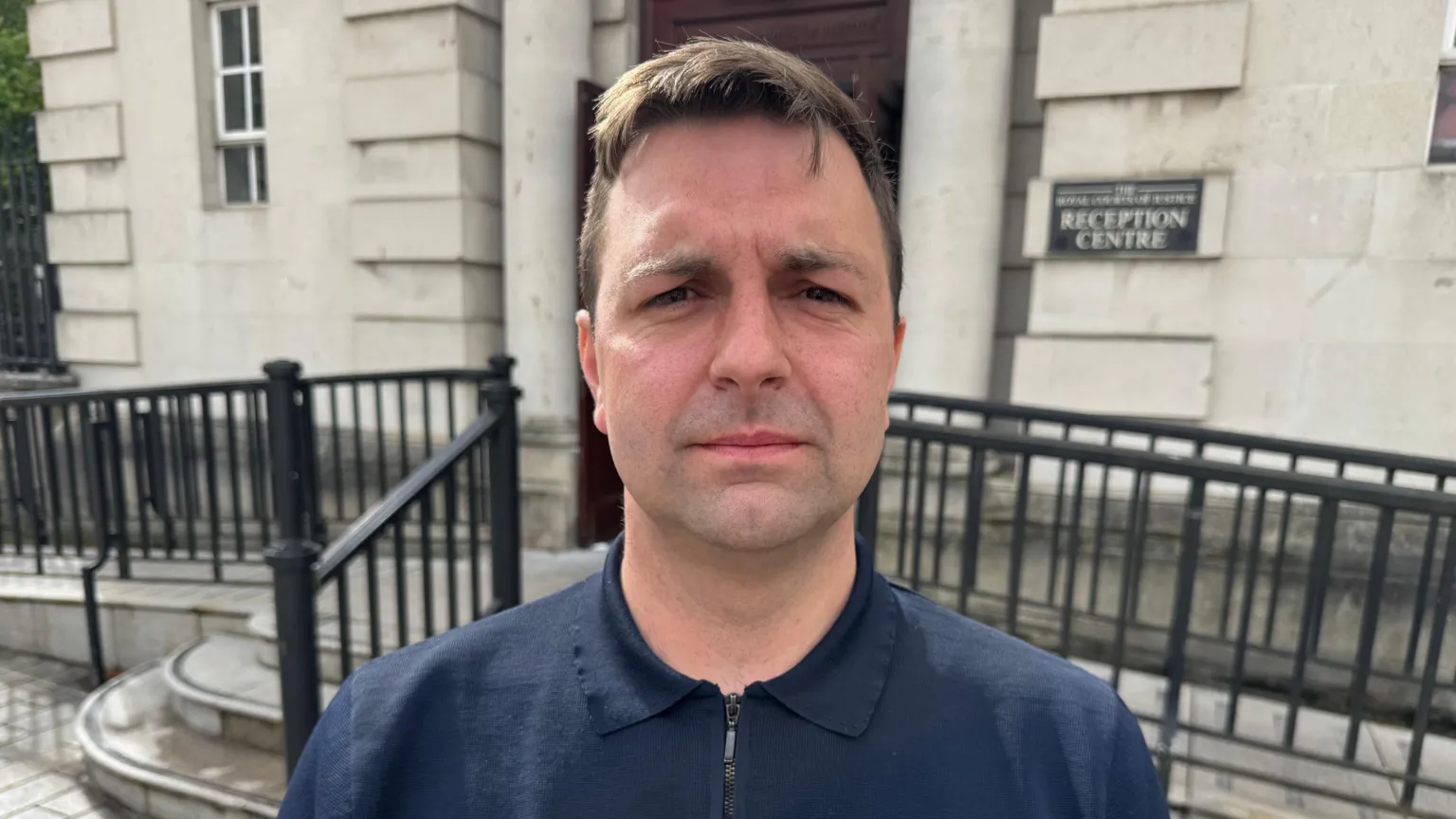
Lyons appeared before Stormont's communities committee on Thursday to clarify his department's involvement with the Northern Ireland Place-Name Project. Established in the 1980s and based at Queen's University Belfast, the project researches the origins and meanings of local place names across Northern Ireland.
Lyons explained that while his department oversees the scheme, funding for the past four years has come from the Department of Finance. A departmental official, Iain Greenway, confirmed that no decision to discontinue the project was ever made to the minister.
Sinn Féin Economy Minister Caoimhe Archibald stated she had instructed officials to engage with Queen's University regarding the project. However, Lyons indicated that his department is still seeking clarity from her about the project's status.
The deputy chair of the committee, Sinn Féin's Cathy Mason, accused Lyons of being "afraid of Irish language and identity" and said, "We've got Place Names, you're embroiled in court cases against the Irish language, you removed branding from your department, you're clearly blocking the Irish language strategy, you've got form on this."
Lyons responded firmly:
"I'm certainly not afraid of the Irish language or Irish identity... I know there is a narrative some are trying to establish."
Under further questioning from Sinn Féin members, Lyons reiterated his support for the Irish language but expressed concern about how it is being politicized.
"Many of your representatives said I cut funding for this project, that is just wrong. The evidence has been produced and people still fail to grasp that," he said. "If you really care about the language there needs to be the end to the politicisation of the language. I know you are trying to build up a narrative that in some way I am hostile. I'm hostile to the actions your party have taken against the Irish language, I have been to Irish language events in the community, I have had conversations with those who really care about the language... and I am more than supportive of that."
Legal Obligations and Calls for Urgent Action on Language Strategy
Stormont's power-sharing government has a legal duty, dating back to 1998, to introduce a strategy to protect and promote the Irish and Ulster-Scots languages. The Department for Communities is responsible for leading the preparation of this strategy.
Speaking on Thursday, Conchúr Ó Muadaigh described the further delay until after the next assembly election as "outrageous" and "unacceptable."
"It's another illustration of the contempt that is shown to the Irish language community and indeed to the courts," Ó Muadaigh said.
Conradh na Gaeilge is now seeking a judicial order compelling the Stormont Executive to implement the language strategy, rather than just a judge's declaration.
"We don't think another judge's declaration is enough," Ó Muadaigh explained. "That's why we are seeking a court order to compel the executive to act."
He recalled that in 2017 the High Court ruled the failure to adopt an Irish language strategy violated the 1998 Northern Ireland Act. In 2022, the group returned to court and secured a further declaration confirming the executive's breach of duty.
The Northern Ireland Assembly's work has been significantly disrupted over the past decade, due to the Covid-19 pandemic and two extended suspensions. Notably, no locally elected ministers were in office from January 2017 to January 2020 following the RHI energy scandal and Brexit-related disputes, leading to a two-year hiatus from February 2024.
Ó Muadaigh detailed that the group is now pursuing an "order of mandamus," a court ruling that would legally require the government to fulfill its official duties.
The case continues at the High Court, with hearings expected to last until the end of the week.


