

Legal Challenge to French Migrant Detention Centre Funded by UK
A newly planned migrant detention centre in France, which the UK has offered financial support for, faces a legal challenge that could delay a £660 million agreement aimed at addressing illegal crossings of the English Channel.
The lawsuit may postpone the centre's opening, and the UK has stipulated that funding will only commence once the facility near Dunkirk is operational.
The Home Office has indicated that the £160 million allocated for the centre will be withdrawn if the project does not demonstrate effective results within its first year.
This legal dispute threatens a crucial element of the agreement, which Home Secretary Shabana Mahmood described as a measure to "restore order and control to our borders" when signing the deal in France last month.
Prime Minister Sir Keir Starmer is under increasing pressure to reduce the rising number of people attempting Channel crossings in small boats, and this agreement with France forms a significant part of his strategy.
The detention centre, located in northern France, is currently under construction and is expected by the Home Office to be operational by the end of this year.
The lawsuit, initiated by the French environmental group ADELFA, contends that the building permit should be revoked because the facility in the Loon-Plage area does not comply with local planning regulations.
While construction can proceed during the legal proceedings, French legal experts told the BBC that if the lawsuit succeeds, the building permit could be annulled.
However, delays are more probable, as legal challenges typically slow the opening of migrant detention centres in France rather than halt them entirely.
"France has committed to building this detention centre," a UK government spokesperson said. "The UK will only pay when the work is completed."
The French government has not responded to the BBC's requests for comment.
The ongoing costs of constructing and operating the detention centre have not been disclosed by the French authorities.
However, a recent report by the French Senate estimated that a standard 140-bed detention centre costs approximately €40 million (£36 million).
France's Ministry of the Interior was granted permission to build a detention centre with a capacity for 140 individuals in July last year.
Flemish-Artois Coastal Environmental Defense Assembly (ADELFA), an environmental group, challenged this decision in November 2023, arguing that the permit should be revoked due to violations of local planning rules.
The initial challenge was dismissed, prompting ADELFA to file an appeal at the Administrative Court of Lille in February 2024.
The group's legal representatives argue that the facility is situated in an industrial zone where residential accommodation is prohibited under planning regulations.
The appeal highlights the proximity of the site to industrial facilities, including a warehouse using ammonia refrigeration, which it claims poses "significant health risks for occupants."
The lawsuit also accuses the Ministry of the Interior of breaching fire safety regulations and failing to publicly display the building permit as legally required.
"Although winning the lawsuit is not certain, I am still trying to hinder this process of building the detention centre with the appeal," said Nicolas Fournier, president of ADELFA.
"Putting so many resources solely into repression, with ever more police, doesn't work," Fournier told the BBC. "So we really need to find other solutions, because we can't continue to allow this risk of seeing people take to the sea in unacceptable, deplorable conditions that endanger them."
The appeal does not suspend construction, meaning building can continue while the legal process unfolds.
France committed to constructing the detention centre in 2023 under a previous agreement with the Conservative government led by then-Prime Minister Rishi Sunak.
The 2023 agreement stated the centre would "contribute significantly to improve the number of returns and prevent the recurrence of crossing attempts."
However, progress on the centre has been slow.
Under the new deal signed by Home Secretary Mahmood, approximately £160 million of UK funding is tied to measurable results in reducing Channel crossings for the first time.
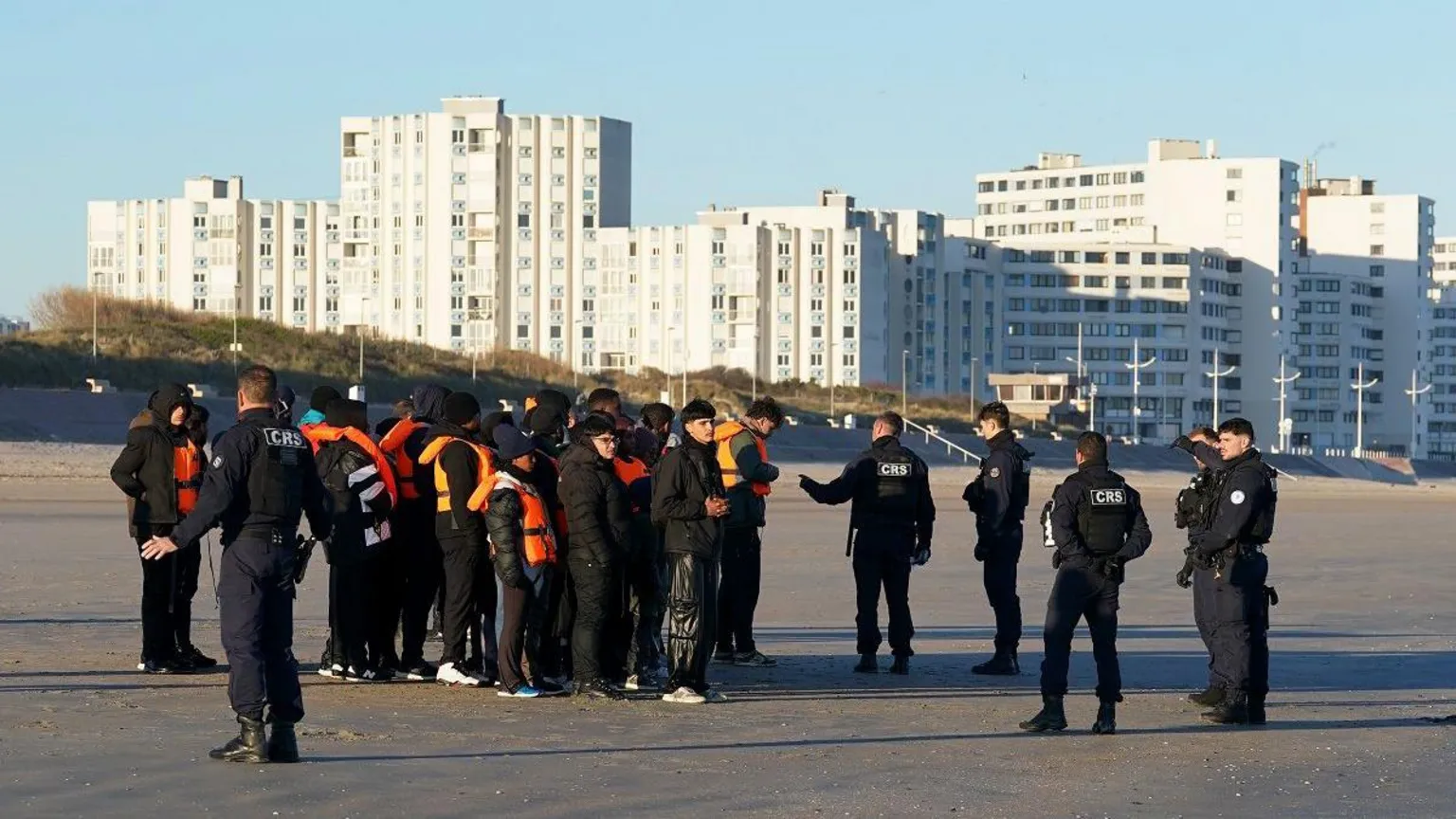
France has agreed to target and detain migrants attempting to board small boats on its beaches.
Some migrants will be held at the new detention centre, expected to be staffed by over 200 French officers, before deportation to their home countries or other EU nations they transited through.
Once operational, the centre will focus on removing migrants from Eritrea, Afghanistan, Iran, Sudan, Somalia, Ethiopia, Iraq, Syria, Vietnam, and Yemen, according to the Home Office.
These countries represent the top ten origins of people who attempted Channel crossings in small boats last year.
The approach will initially be trialled using existing capacity at a nearby removal centre in Coquelles from May 2024 until the Dunkirk facility is completed.
Expert Opinions and Legal Perspectives
Dr Mihnea Cuibus, a researcher at The Migration Observatory, noted numerous barriers to effectively scaling up migrant removals from the detention centre.
He described the centre's success as a "potentially contentious issue" in UK-France relations.
François Benchendikh, a senior lecturer in public law at Sciences Po Lille, explained that the court debate will focus on whether the Dunkirk centre qualifies as residential accommodation.
He added that the presence of ammonia near the site could lead to the annulment of the building permit.
Alice Darson, an urban planning lawyer based in Paris, stated that the detention centre should not violate planning regulations as it falls under "facilities of collective interest and public service."
However, she noted that the building permit could be revoked if fire safety authorities were not properly consulted.
"In that case, the building could be demolished," she told the BBC.


