

Referendum Outcome Challenges Meloni's Government
Italy's Prime Minister Giorgia Meloni has suffered a significant setback after losing a crucial referendum on a constitutional reform, which evolved into a broader vote on her administration's performance.
The final tally showed approximately 54% of voters opposed the reform, supporting the "No" campaign, while 46% voted "Yes," backing the proposal endorsed by Meloni.
In a video shared on social media prior to the completion of the ballot count, Meloni acknowledged the clear decision of the Italian electorate and pledged to respect the outcome. She expressed regret over what she described as a
"lost chance to modernise"the nation.
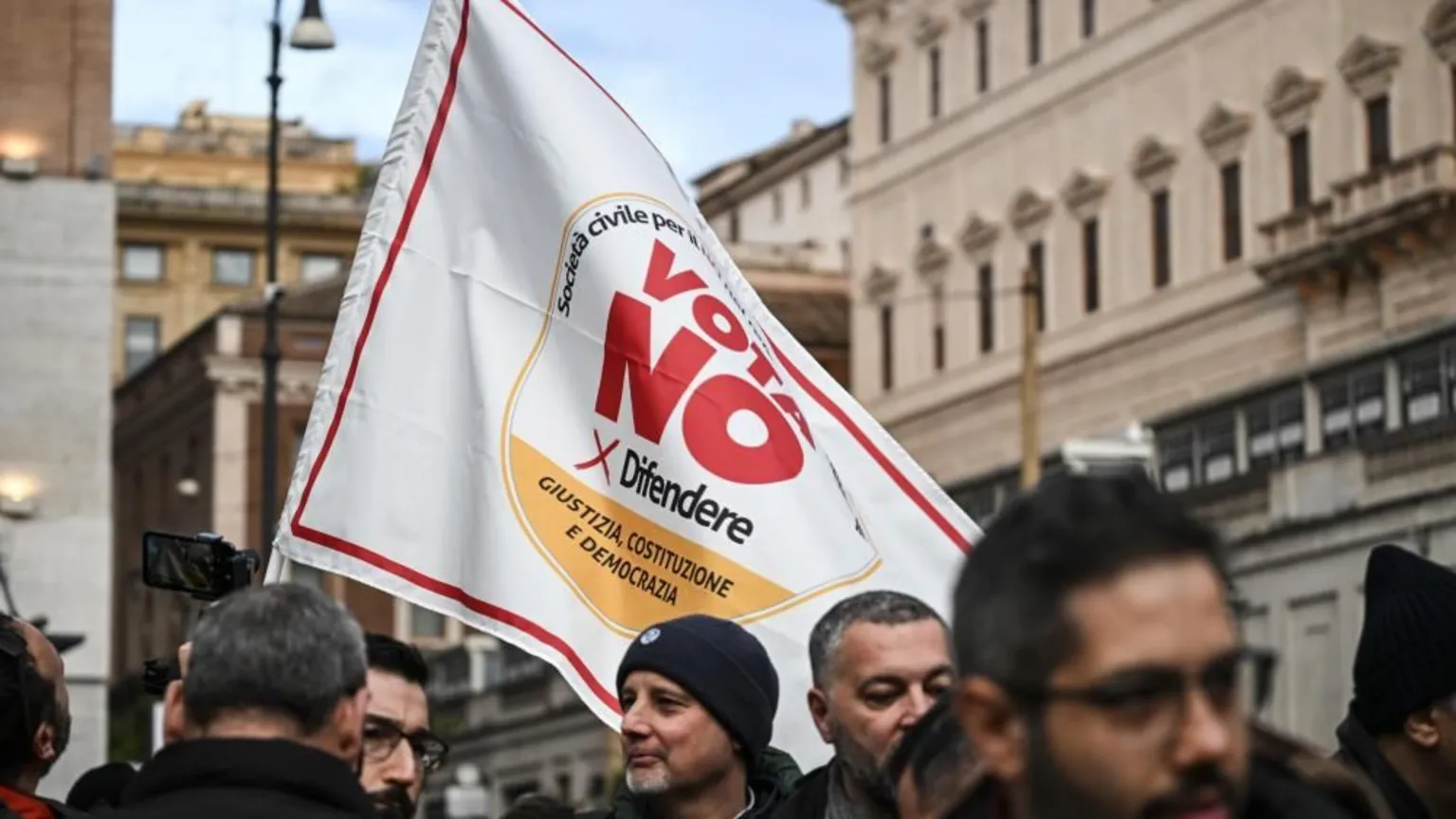
Political Implications and Opposition Response
This referendum marks the first major defeat for Meloni and her right-wing coalition, which has maintained a rare period of political stability in Italy. Opposition parties have interpreted the result as an indication that voters desire change, especially with a general election scheduled for the following year.
When voting concluded on Monday afternoon after two days, initial exit polls showed a narrow lead for the "No" vote, which expanded to a decisive margin as counting progressed.
Voter turnout was nearly 60%, a relatively high figure given the referendum's complex subject matter. Although a strong turnout was anticipated to favor the government, it ultimately did not suffice to secure a victory.
Details of the Proposed Reform
The rejected reform aimed to constitutionally enshrine a clear separation between judges and prosecutors. It also proposed establishing distinct governing bodies for each and creating a new disciplinary court.
The government argued that these changes were essential to enhancing judicial independence.
Conversely, the opposition contended that the reform would disrupt the carefully balanced separation of powers established after the fall of fascism and potentially increase political interference in the judiciary.

Public Understanding and Political Context
Many Italians found the referendum's technical details difficult to comprehend, possibly due to ineffective communication by Meloni's team. Consequently, the vote quickly became a de facto referendum on her nearly three and a half years in office.
The timing of the referendum was challenging for Meloni. She is known as a close ally of former US President Donald Trump, who has become increasingly unpopular in Italy, along with his policies regarding the Middle East conflict.
Moreover, Italy's stagnant economy and concerns about the war's impact on energy prices have heightened public unease.
Meloni's Response and Future Prospects
Despite the defeat, Meloni ruled out resigning, distinguishing herself from former Prime Minister Matteo Renzi, who stepped down after losing his own constitutional referendum in 2016.
Before the vote, Meloni stated,
"The vote is not about me, but about justice."
Following the results, Renzi advised that Meloni's government had lost its
"magic touch"and needed to be more attentive to voters' concerns. He remarked on Italian radio,
"Losing and walking out whistling just isn't an option."
Had the referendum passed, Meloni might have pursued further political reforms, including introducing direct elections for the prime minister.
Instead, Elly Schlein, leader of the opposition Democratic Party, stated that Meloni's defeat demonstrated
"there is an alternative to this government"ahead of next year's general elections.
This loss has diminished some of the coalition's momentum, leaving Meloni, once regarded as a formidable figure in Italian politics, appearing more vulnerable.


