

Is the Northern Ireland Executive dysfunctional?
They say every picture tells a story – this certainly applies to the Northern Ireland Executive.
As a metaphor for how coordinated or otherwise the current ministers at Stormont are, consider this: they have never been photographed together as a group.
The media's latest attempt to capture a team photo occurred on Thursday.
After persistent requests, Stormont Castle finally permitted a pool cameraman to enter so broadcasters could obtain current images of the ministers gathered around the executive table.
However, at the last moment, while waiting outside, the cameraman was informed the photo session was cancelled because one of the ministers, Naomi Long, was joining remotely and would not be physically present.
A spokesman for the justice minister and Alliance leader stated:
"Whilst others might be more interested in photo ops, Alliance's focus is on delivery around the Executive table.
Despite being unwell on Thursday, Minister Long attended the executive via video link to tend to the business of government."
There used to be regular joint news conferences following executive meetings, but the last one was on 16 October 2025 – over five and a half months ago.
"The parties complain that there is a good news story waiting to get out but they're just not telling it," said a source with deep insight into Stormont Castle operations.
"After the cabinet meets in London there are always lobby briefings," remarked a veteran journalist.
"Here we get told nothing except what can be gleaned from party sources. They could be discussing tiddlywinks for all we know."
In a statement, The Executive Office (TEO) said the suggestion of a lack of communication or joint working by ministers does not reflect reality.
A TEO spokesperson noted that the first minister and deputy first minister regularly engage with the media and public through interviews, joint appearances, press releases, and social media.
Why should anyone really care what journalists are told or not told?
Perhaps few do. However, this contributes to a narrative that ministers are achieving little, or at least sharing little with the public.
"What do they do in that big house up on the hill?" asks an increasingly sceptical public.
The truth is that the media receives only limited information from the executive table.
This is a stark contrast to the period when the executive resumed after a two-year hiatus in February 2024.
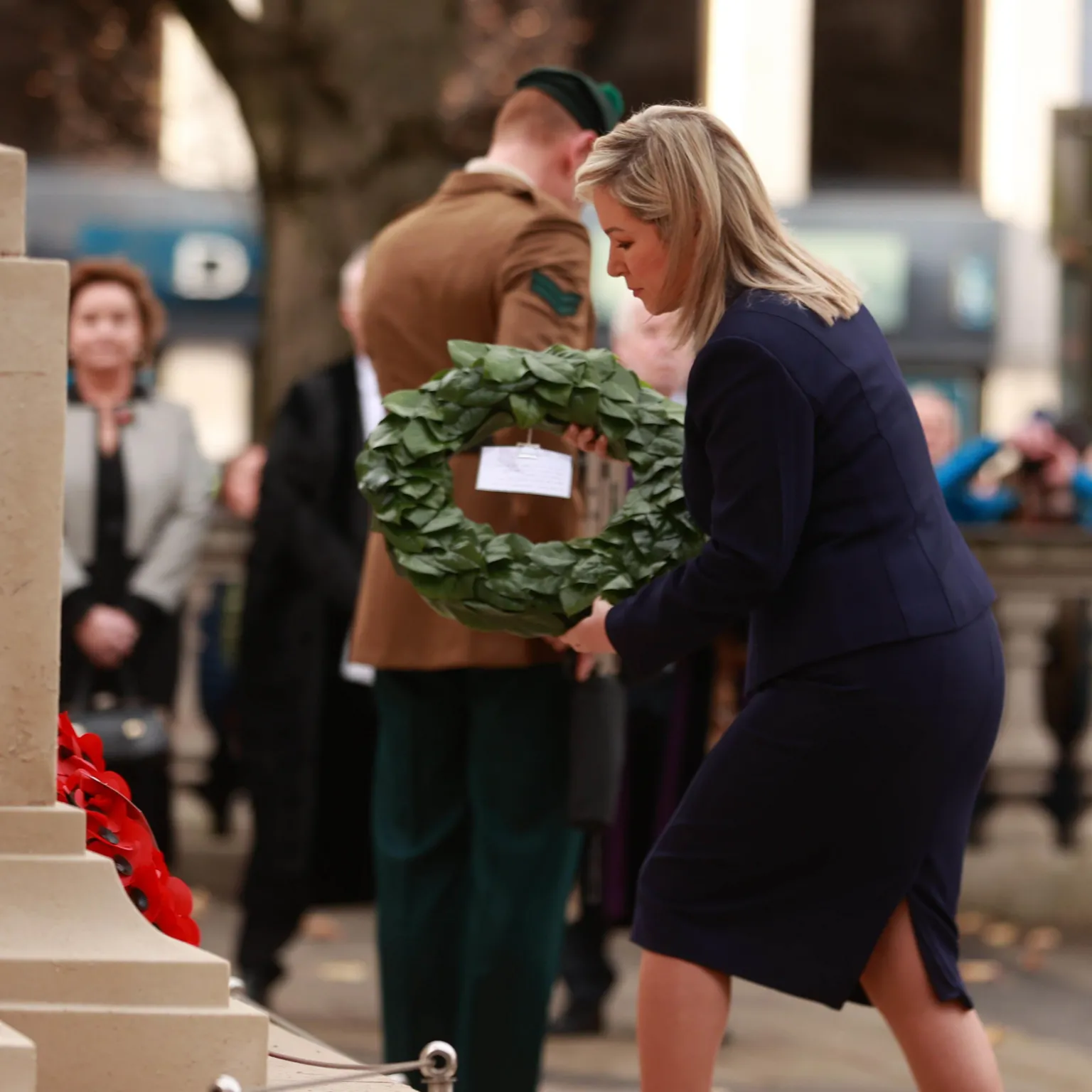
At that time, DUP ministers were frequently seen participating in Irish dancing or playing camogie, and Sinn Féin ministers attended Remembrance Sunday ceremonies.

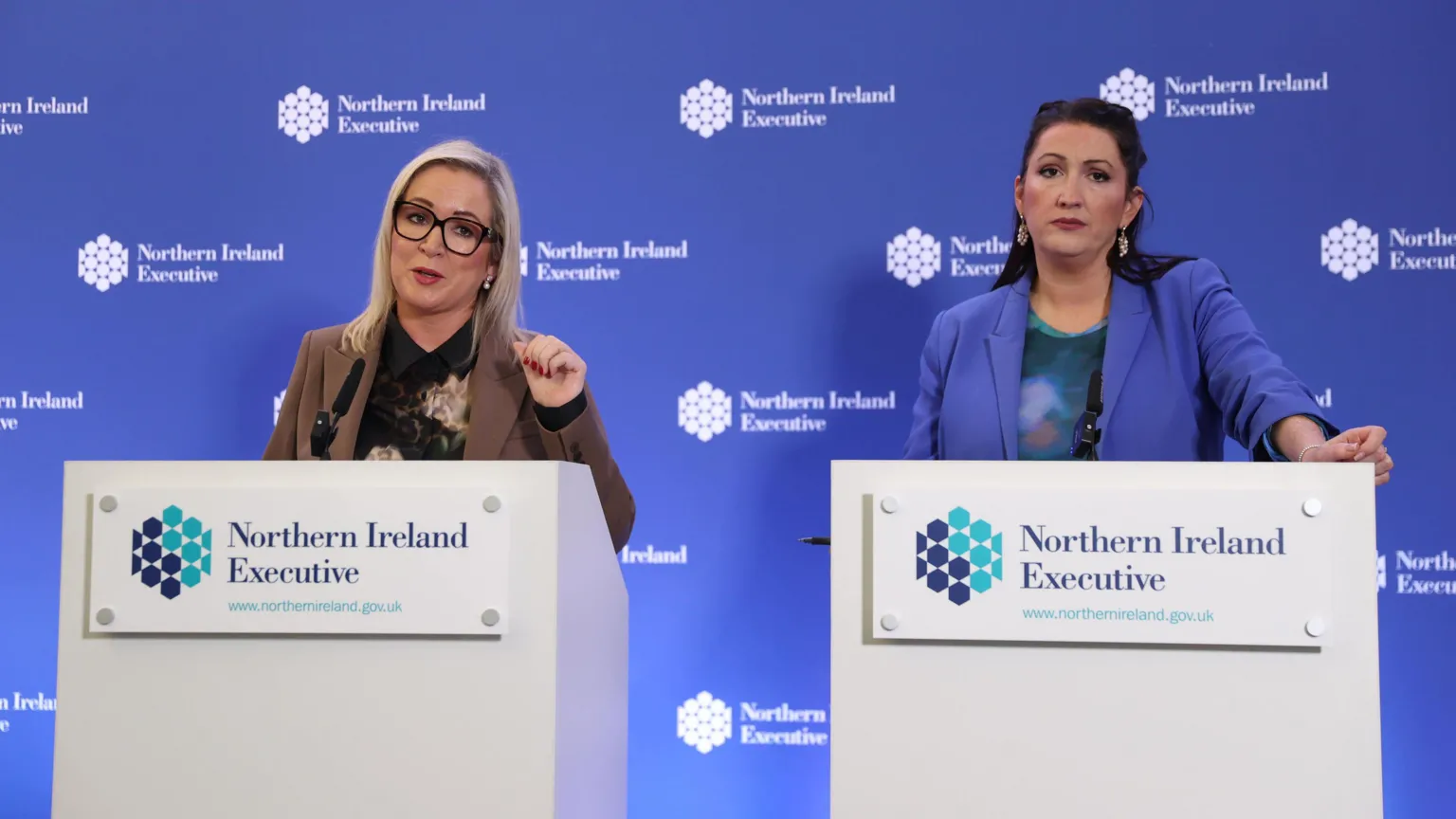
This week, First Minister Michelle O'Neill and Deputy First Minister Emma Little-Pengelly appeared separately in Stormont's Great Hall within minutes of each other to condemn violence against women and girls following the Natalie McNally court verdict.
They were repeatedly asked why they were not standing together, especially since their message was identical.
It is notable that a strategy to prevent Violence Against Women and Girls was part of the Programme For Government they have jointly agreed – one of the executive's successes.
Their explanations for appearing separately were unconvincing.
Later the same day, they addressed the media together on the same topic during an event at Belfast's Waterfront Hall.
Perhaps the questions had an impact.
"There's always a tension palpable at Stormont Castle but in the past there have often been big-hitters able to manage it," said a source.
"My sense is there aren't the people there now with the same political clout."
'Brazen and shameless'
It is widely acknowledged that some of these issues relate to the upcoming assembly election.
However, that election is still thirteen months away, although last week the DUP launched its candidate for West Belfast.
An executive under increasing scrutiny cannot afford to tread water until May 2027, or voters may justifiably question its purpose.
This week in the Stormont Assembly Chamber, most other parties criticized the DUP for blocking legislation to introduce minimum unit pricing for alcohol in Northern Ireland before the next election.
"Disgraceful," said a Sinn Féin MLA; "brazen and shameless," said SDLP Leader of the Opposition Matthew O'Toole.
The DUP argued that addressing alcohol harm requires more than one measure, but Health Minister Mike Nesbitt called that a "deflection."
Time they started telling us
There is also the multi-year budget that Sinn Féin Finance Minister John O'Dowd told MLAs in December he was confident would be agreed before the end of 2025.
To date, there is no sign of this budget.
Recently, Sinn Féin and the DUP have engaged in a blame game over delays in distributing funds to assist people struggling with rising fuel bills.
All these factors suggest a government becoming increasingly dysfunctional.
If this is not the case, it is time the executive began communicating more openly.
A TEO spokesperson said:
"Executive ministers are working together every day to deliver on Programme for Government priorities, taking decisions on the issues that matter most to people.
The executive has made significant progress already, with delivery on reduced waiting lists, expanded childcare provision, investment in skills, and a programme of transformation for public services."


