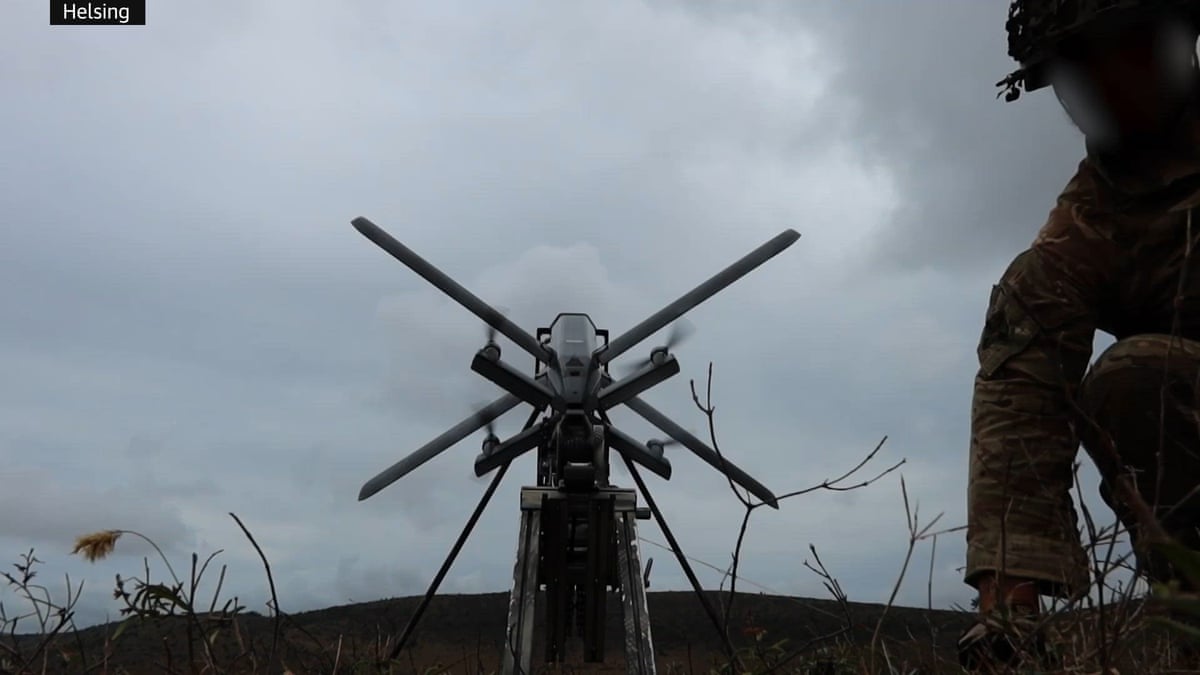
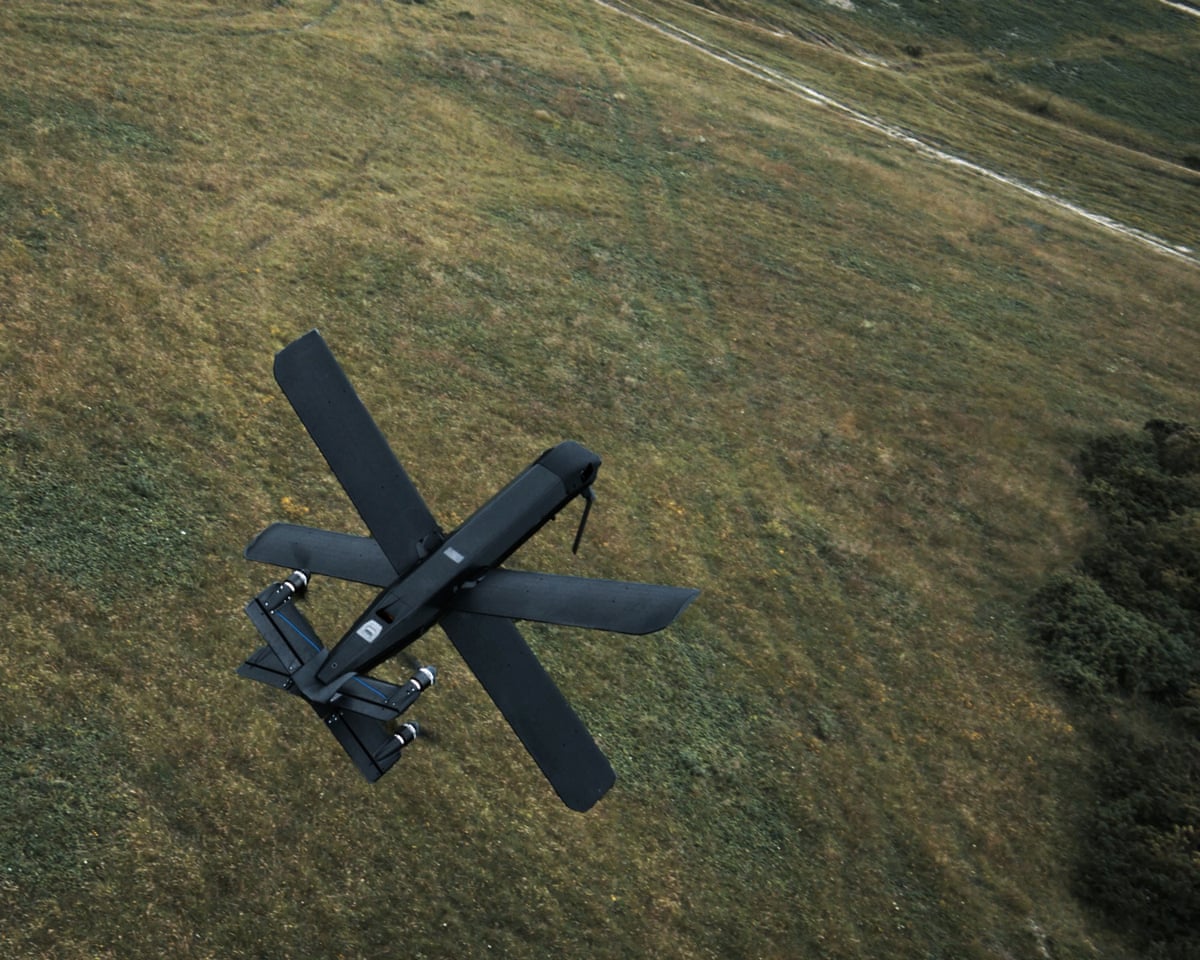
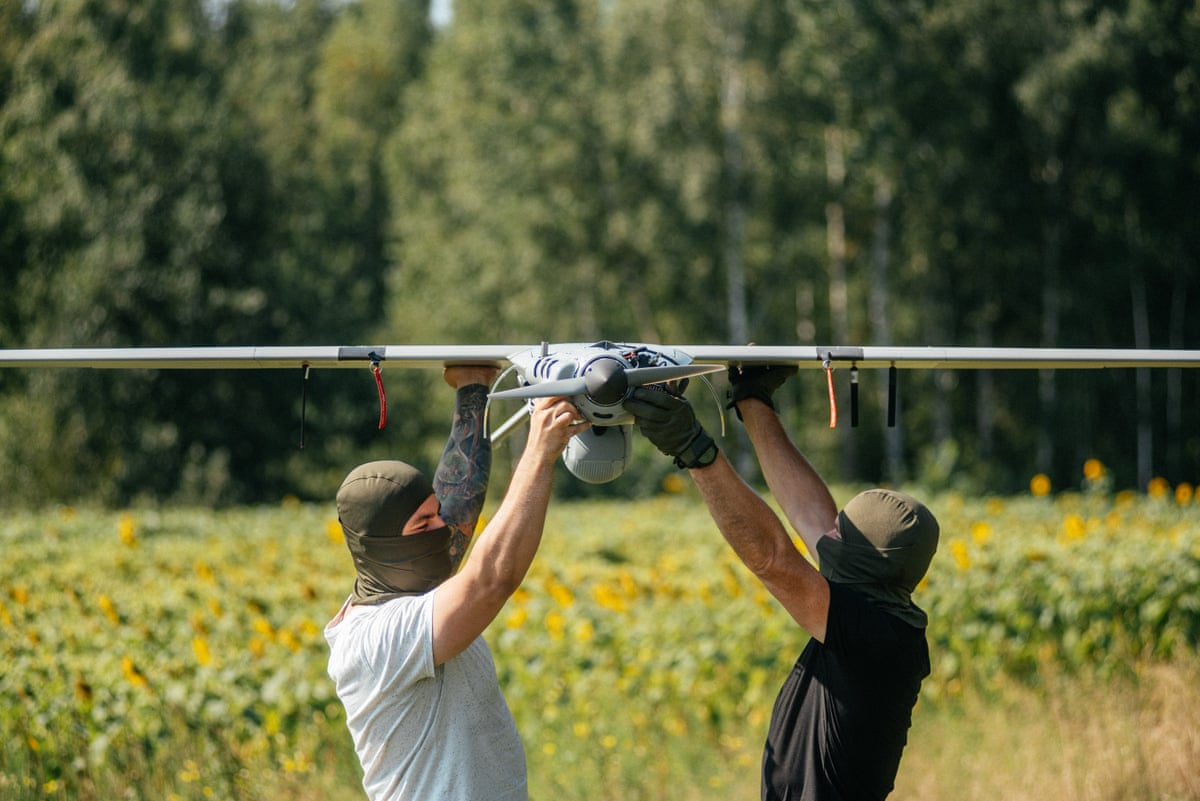
In a small workshop in England’s East Midlands, engineers at the British startup Skycutter are designing weapons for modern combat. A row of 3D printers produce the fuselage for interceptor drones, while components such as motors and navigation chips are assembled manually. This process is replicated hundreds of thousands of times monthly in partner factories in Ukraine.
The deployment of swarms of inexpensive, lethal, and often autonomous drones in the ongoing conflict has transformed warfare. Troops stationed far from the frontline must constantly relocate to evade aerial attacks, moving through netted tunnels and terrain engineered to guide drones around radio jamming. These drones are more affordable and thus more widely deployed than previous models.
European militaries are urgently striving to catch up, committing billions to weapons procurement amid pressure from the United States and its president’s insistence that NATO members increase defence budgets.
The combination of former President Trump’s unpredictable stance on NATO and the war on Europe’s doorstep has intensified longstanding criticism that the continent has been overly reliant on American arms manufacturers.
In response, the European Union has pledged to invest €8 billion over four years. The United Kingdom has also committed to increasing defence spending, with Labour leader Keir Starmer expected to face pressure to demonstrate progress following recent election results.
With a renewed emphasis on defence sovereignty—the capacity to produce and utilize weaponry independently of the United States—significant funding is directed toward domestic companies. A growing number of well-financed startups are expanding production and making ambitious claims, many yet to be fully validated, that they can outperform traditional manufacturers and Silicon Valley competitors.
Survivable vs Attritable
Military strategists acknowledge that infantry and heavier equipment such as tanks, artillery, and naval vessels remain indispensable. However, a substantial portion of planned expenditure is allocated to drones of various types, including aerial, land, and sea platforms.
Gen Sir Roly Walker, the UK’s Chief of the General Staff, stated last year that he envisions the forces’ equipment to be composed of 20% “survivable” assets (those with personnel onboard), 40% “attritable” (assets that can be lost without significant concern), and 40% “consumable” (single-use systems).
Across Europe, there is a growing consensus that the continent must be self-reliant. As one individual from a rapidly expanding weapons startup explained,
“We should be able to stand up on our own two feet. Sovereignty is about control. If you buy things off the shelf from elsewhere you are always ceding some control.”
This principle extends to components and raw materials. The UK government is consulting on the proportion of British-origin content required for a product to be considered sovereign. Manufacturers cannot depend on parts and materials sourced from countries that could become adversaries, notably China.
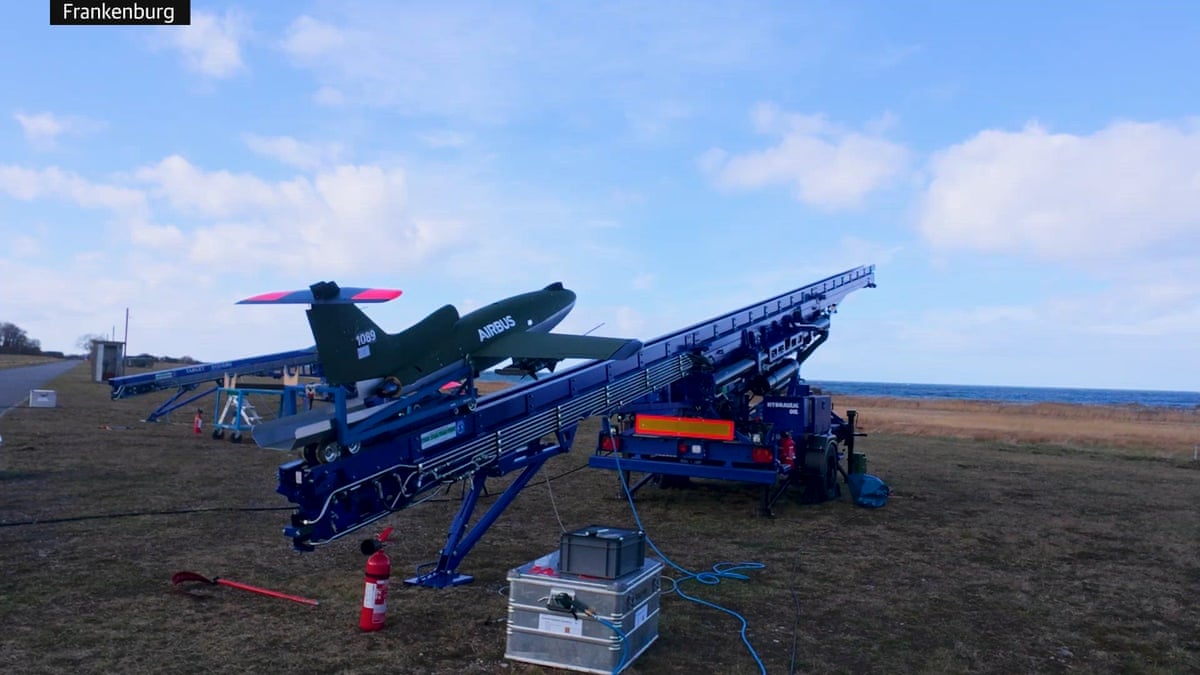
Kusti Salm, former Estonian defence official and current CEO of the anti-drone missile startup Frankenburg, commented,
“A lot of supply chain diversification dreams have evaporated. I think it’s natural if Europe wants to sustain its prosperity and freedom.”
Ricardo Mendes, CEO of the drone manufacturer Tekever, noted that the rise of unmanned aerial vehicles has triggered
“a radical transformation in how defence technology is built,”
with companies betting on future demand rather than securing long-term contracts before production.
Tekever, co-founded by Mendes in Portugal in 2001, achieved a billion-dollar “unicorn” valuation last year and employs 1,200 people, including at new factories in the UK’s drone cluster in Swindon, Wiltshire, and another in Cahors, southwestern France.
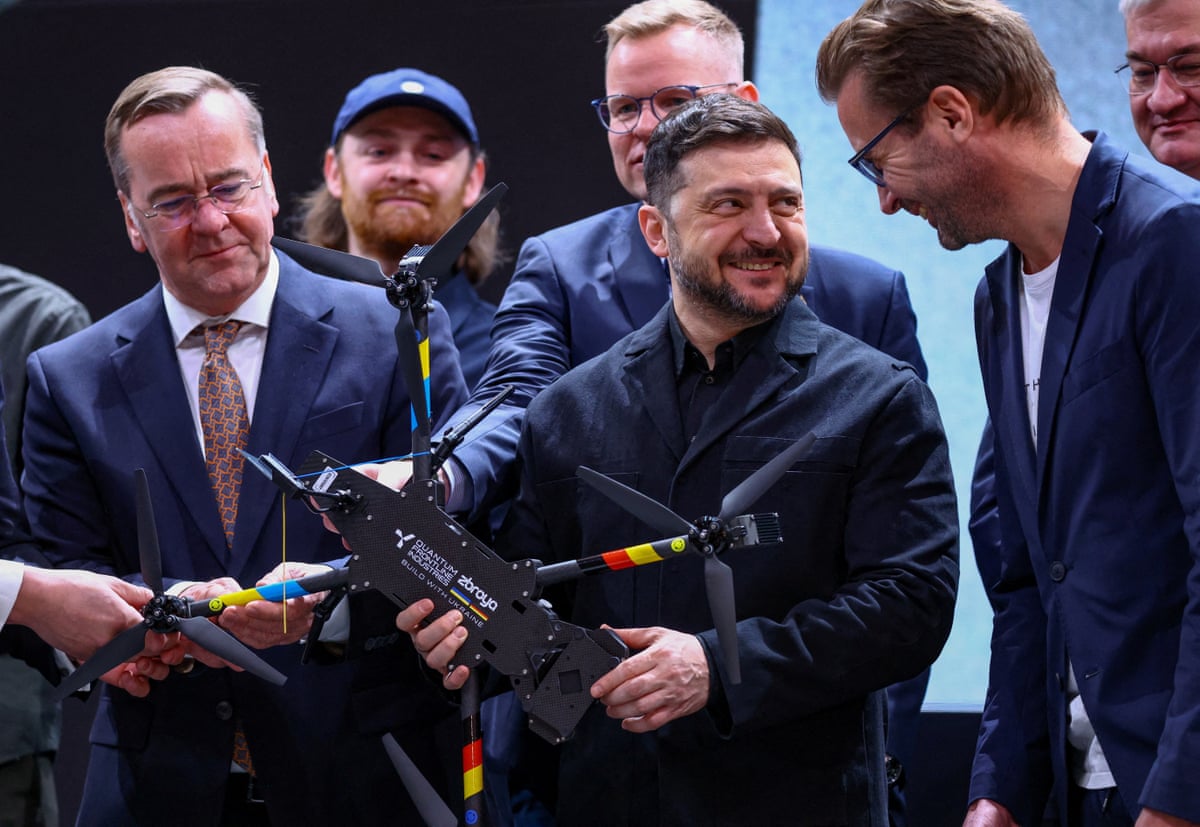
Other European defence tech unicorns include Helsing, a German company backed by Spotify founder Daniel Ek, and German drone manufacturers Quantum Systems and Stark Defence. Stark and Helsing recently secured contracts from Germany’s military for attack drones, while all except Quantum are investing in UK factories. The British missile manufacturer Cambridge Aerospace is reportedly close to joining the billion-dollar club.
US competitors include drone maker Shield AI, autonomous boat company Saronic Technologies, and anti-drone weapons firm Epirus. Two companies named after J.R.R. Tolkien’s Lord of the Rings characters lead the American sector: software company Palantir and autonomous weapons manufacturer Anduril. Both are expanding significantly into Europe, particularly the UK, though their growth faces resistance due to their strong pro-Trump associations.
Palantir was backed by billionaire Trump supporter Peter Thiel, a vocal critic of liberal democracies who has also invested in Stark, raising concerns in Germany. Stark asserts that Thiel has no direct operational or strategic influence. Palantir’s CEO, Alex Karp, has repeatedly criticized liberal democracies, while Anduril is led by 33-year-old Palmer Luckey, who has cultivated close ties with the Trump administration.
Cat and Mouse Game
The declining costs of components such as sensors and motors have enabled startups to enter the defence sector. Established manufacturers were caught off guard by the drone revolution, possibly because mass-produced products yield lower profit margins.
Armin Papperger, CEO of the 137-year-old German manufacturer Rheinmetall, sparked controversy earlier this year by stating that
“drones are the future of warfare.”
Rheinmetall later retracted the statement, but it underscored the shifting economics of conflict. Lower prices facilitate significant damage with relatively inexpensive weapons, such as Iran’s Shahed drones used by Russia to target Ukrainian cities and fired by Tehran against neighbouring countries amid US-Israeli hostilities.
Shahed drones are estimated to cost approximately $30,000 (£22,200). In contrast, many NATO air defence systems employ missiles costing hundreds of thousands or, in the case of US Patriot interceptors, millions of dollars.
Startups have concentrated on intercepting Shaheds and similar drones with far less expensive equipment. Frankenburg’s guided missiles reportedly cost in the low five figures in US dollars, while Skycutter’s most affordable ground-to-air interceptors are priced around $2,000.
All startups emphasize the necessity of greater agility compared to traditional defence manufacturers, known as primes, as the pace of change in warfare accelerates.
Skycutter is smaller than many companies raising hundreds of millions of pounds, with 15 employees in the UK and 50 contractors in Ukraine. The founders transitioned from producing civilian drones for pipeline inspection in 2018 to military applications following Vladimir Putin’s 2022 invasion.
They have worked directly with Ukrainian frontline units, engaging in a continuous “cat and mouse” struggle to adapt technology to counter new Russian jamming techniques, according to a director who requested anonymity due to Russian threats against European drone manufacturers.
“Unless you’re there and working with units and what the Russians are trying to do, you fall behind,”
the director stated.
Mendes reported that Tekever has developed over 100 iterations of its main product during the first three years of the Ukraine war, incorporating software updates and the latest sensors or propulsion systems as soon as they become available.
“This is constant. You are constantly exposed. The only constant that you have is that it is evolving.”
Running Out of Time
Despite the rapid pace of technological advancement, militaries and governments face challenges in adapting swiftly. For example, the UK’s strategic defence review published last year advocated increased drone use, yet its author recently criticized British leadership, including Keir Starmer, for a
“lack of urgency towards defence.”
Starmer reduced international aid to fund new weapons—a controversial move among Labour MPs—but funding has yet to materialize. The defence investment plan remains overdue, delayed by the Treasury. BAE Systems, the UK’s dominant prime contractor, publicly warned last month that work would cease in June without additional funding.
Last week, it was announced that finalizing the defence plan and addressing an alleged £28 billion funding gap would be part of Starmer’s post-election “reset.”
Kevin Craven, CEO of ADS, a UK aerospace and defence lobby group, remarked,
“The UK has been slower than most to increase spending. We are disappointed with the pace.”
Skycutter recently attracted attention by winning a competition against several rivals in the UK’s interceptor drone programme. The company has been vocal about the risks posed by delays in UK defence spending: videos demonstrating its interceptors destroying Shahed drones in Ukraine have drawn numerous offers for relocation abroad, but UK funding remains absent.
A Skycutter director stated,
“We were knocking at the door of the MoD. Unfortunately, the MoD weren’t interested at the time.
We need to make a strategic decision as a company. Do we stay in the UK or leave the UK? The UK ultimately is our home. There’s no money at the moment because there’s no defence investment plan. We’re running out of time.”
Across Europe, doubts persist about whether procurement agencies are prepared for the rapid technological changes driven by conflict, although several executives note shifting attitudes.
James Acuna, former CIA officer and current COO at US drone investor Ondas Capital, observed,
“It’s a really fast-moving ecosystem and I don’t think the procurement is ready to deal with it.”
Mike Armstrong, UK managing director at Stark, stated that military perspectives are evolving because
“delivery timelines that stretch several years are no longer feasible.
Modern defence depends on sustained, industrial-scale production, rather than one-off procurement decisions. So long-term signals around demand and procurement really matter, because that gives companies like us the confidence to invest and scale at the pace the current security environment requires.”