

Easter Rising Commemorations in Dublin
Commemorations were held in Dublin to mark the 110th anniversary of the Easter Rising.
The 1916 rebellion was an effort to end British rule in Ireland and is widely regarded by historians as a crucial step towards the establishment of an independent Irish republic.
Irish President Catherine Connolly laid a wreath at the General Post Office (GPO) in Dublin.
Also present at the event were Northern Ireland's First Minister Michelle O'Neill and the Irish Taoiseach Micheál Martin.
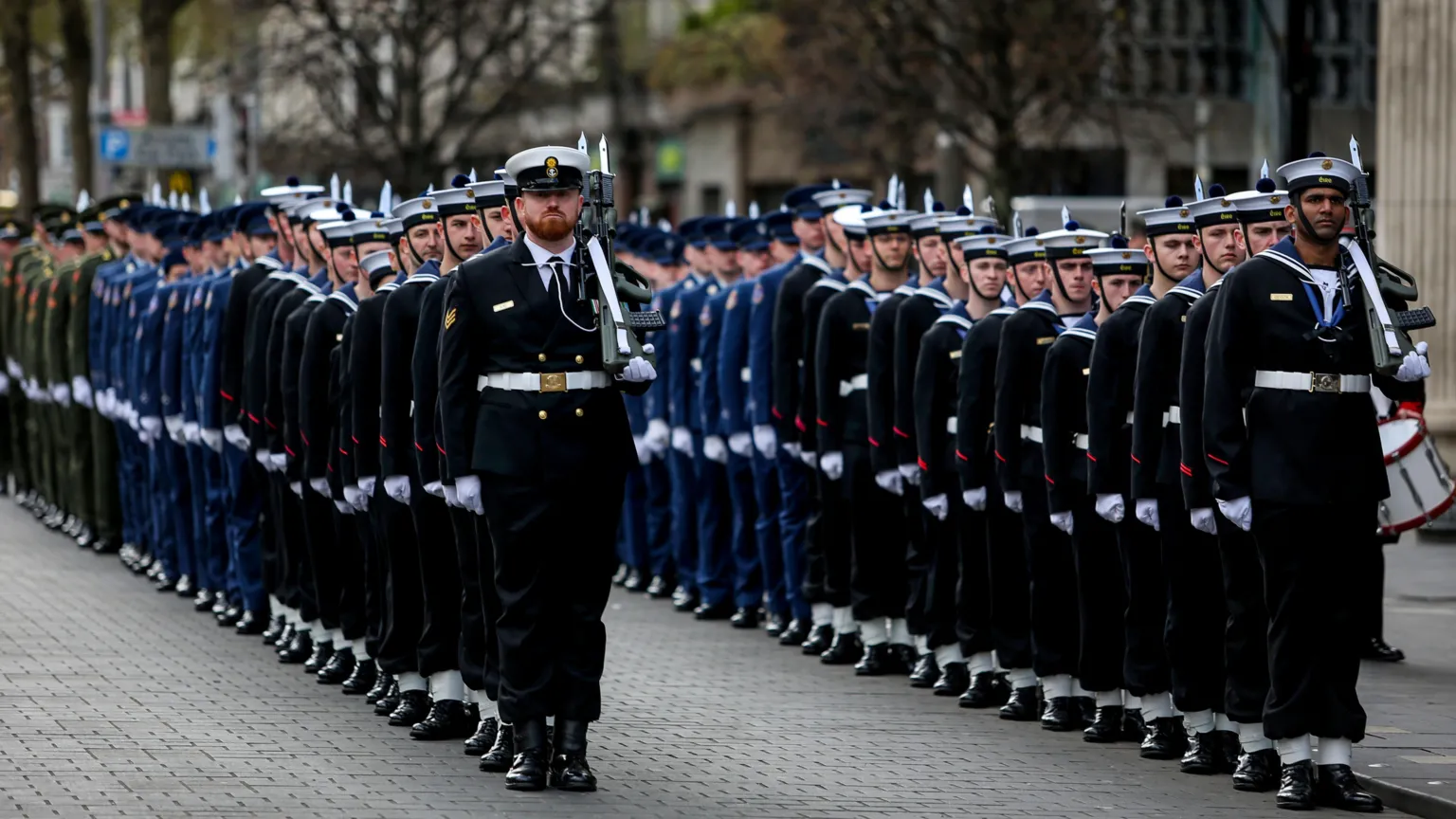
More than 200 members of the Irish Defence Forces participated in the ceremony and the proclamation was read by Capt Eva Houlihan, nearly 110 years after Pádraig Pearse originally read it at the same location.
What was the Easter Rising?
The Easter Rising was a rebellion aimed at overthrowing British rule in Ireland.
It was organised and executed by members of the Irish Republican Brotherhood, the Irish Citizen Army, and Cumann na mBan, also known as the 'League of Women'.

Shortly after noon on Easter Monday in 1916, Pádraig Pearse, accompanied by an armed guard, stood on the steps of the GPO and read a proclamation declaring the establishment of an Irish republic, marking the start of the Easter Rising.
The ensuing conflict was largely confined to Dublin.
The Easter Rising was suppressed within six days by British forces; however, despite its failure, it is regarded as a significant milestone toward the eventual creation of the Republic of Ireland and the partition of the island.
More than 450 people lost their lives and approximately 2,500 were injured during the fighting.
Following their surrender to British troops in 1916, 14 rebel leaders were executed by firing squad in the stonebreakers' yard at Kilmainham Gaol.
Two additional rebel leaders were executed elsewhere: Thomas Kent was shot by firing squad in Cork, and Roger Casement was hanged at Pentonville Gaol in London.
The manner of their deaths is considered by many historians to have played a key role in shifting Irish public opinion in 1916—from initial hostility toward the rebellion to sympathy and support for the republican movement seeking independence.


