
Whale Carcass Towed Ashore on Danish Island
The carcass of a dead humpback whale, whose attempted rescue attracted widespread attention across Germany, has been pulled ashore.
Timelapsed footage published by German news site News5 on Saturday showed the whale being towed slowly onto a beach on the Danish island of Anholt by an industrial winch. Denmark's environment agency plans to conduct a post-mortem examination on Thursday.
Attempts to Rescue the Whale
Several efforts were made to return the whale—nicknamed "Timmy" and "Hope"—to the North Sea after it became stranded in the Baltic Sea in March.
However, the aquatic mammal was already considered ailing and near death when a final, last-ditch attempt was undertaken earlier in May.
Concerns Over Decomposition and Disposal
The whale, originally measuring approximately 12-15 meters (40-50 feet) in length, has increased in size due to gas buildup as the carcass decomposes. There is concern it could explode, as has occurred with other washed-up whale carcasses.
Morten Abildstrøm, a Danish Environmental Agency official on Anholt, told the daily newspaper Jyllands Posten that veterinarians and researchers would travel to the island to take samples before the whale is cut into pieces.
"The whale would be cut into pieces after veterinarians and researchers had travelled there to take samples,"
He added that the pieces would then be transported elsewhere for destruction.
Discovery and Previous Rescue Efforts
The whale was discovered off Anholt's shoreline earlier in May, two weeks after a private mission to save the humpback from stranding on Germany's Baltic Sea coast ended unsuccessfully.
German authorities had approved the rescue attempt despite considering it unlikely to succeed, as the whale was already severely weakened from its ordeal, including skin damage caused by the Baltic Sea's lower salt content.
The mission employed inflatable cushions to lift the whale to the surface before dragging it back to the North Sea on a floating platform.
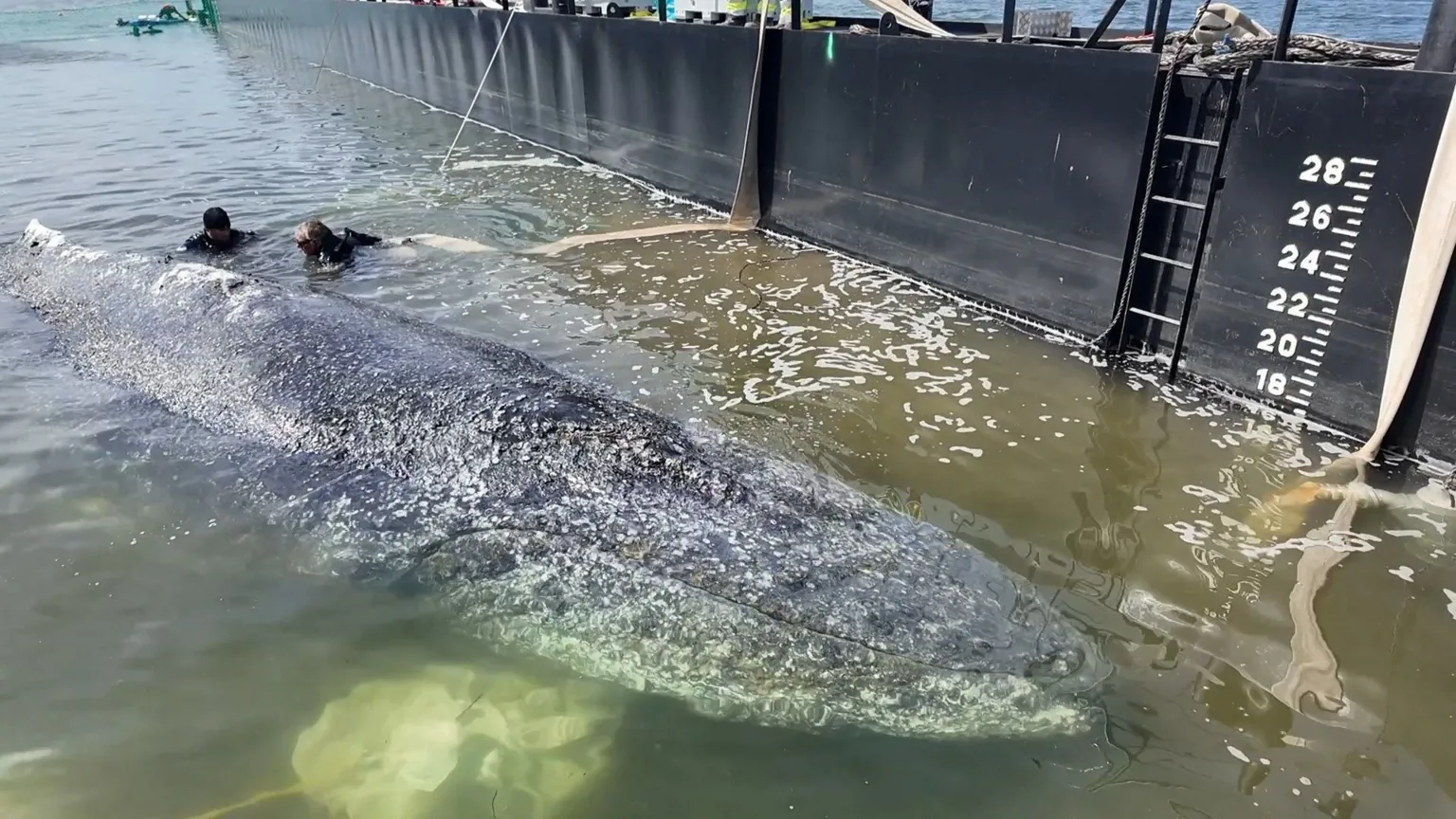
Unclear Circumstances of Whale's Arrival at Anholt
Exactly how the whale arrived near the island off Denmark's East Jutland coast remains unclear. The barge that transported the mammal from Germany released it into the sea approximately 70 kilometers (45 miles) from Denmark's northern tip.
Urgency in Handling the Carcass
The urgency in disposing of the whale's body stems from its location on a popular beach, according to Abildstrøm.
Officials previously attempted to move the carcass from the beach to the port of Grenaa on the Danish mainland, but poor weather conditions prevented success.
Public Interest and Local Reaction
The saga has captivated Germans since it began, while island residents on Anholt have expressed bemusement at the ongoing attention.
Initial Stranding and Subsequent Events
"Timmy" first became stranded in Lübeck Bay on Germany's northern coastline after apparently becoming entangled in netting.
German environmental workers initially freed the whale from a sandbank by digging a channel to allow it to swim away.
However, the whale swam further east and became stuck in shallow waters off the island of Poel.


