

Demographic Shift in Early Irish Free State
One of the most notable demographic changes in the early years of the Irish Free State was a significant decline in the Protestant population, as revealed by newly accessible records from the 1926 census, now available online. The public can explore these records to trace their family histories.
The census data indicates that between 1911, when Ireland was still under British rule, and 1926, the non-Catholic population, predominantly Protestant, decreased by approximately one-third. In contrast, the Catholic population experienced only a 2% decline during the same period.
The interval between the 1911 census and 1926 encompassed some of Ireland's most turbulent years, including the 1916 Easter Rising and the subsequent two-year War of Independence. This conflict culminated in the establishment of the Irish Free State in 1922, which later evolved into the Republic of Ireland, while Northern Ireland remained part of the United Kingdom.
The partition of Ireland was the outcome of prolonged conflict between nationalists advocating for independence and unionists favoring continued union with Britain. Protestants were generally more aligned with unionism, whereas Catholics tended to support nationalism.
The 1926 census reflects the early years of the new state's existence. Census officials estimated that roughly 25% of the Protestant population decline could be attributed to the withdrawal of the British Army and their families.
Protestant communities were unevenly distributed across the state, resulting in regional variations in population decline. Munster experienced the steepest decrease at 42.9%, followed by Connacht at 36.3%, and Leinster at 32.4%. The Ulster border counties of Donegal, Cavan, and Monaghan saw the smallest reduction, at 22.5%.
Despite the overall decline, Protestants remained prominently represented in various professional, commercial, and agricultural sectors in 1926. They constituted 17% of employers, 18.4% of managers and professionals, 46% of chartered accountants, and 39% of barristers. Notably, the number of non-Catholic farmers and their families increased slightly by nearly 4% since 1911.
'Significant Drop'
Protestants continued to be disproportionately represented among larger farms, partly due to benefits from land reforms or retention of demesne lands following estate break-ups, according to historians analyzing the census data at the National Archives.

Orlaith McBride, director of the National Archives, noted the predominance of Protestants among non-Catholic residents in the Free State at the time.
"Between 1911 and 1926, in terms of the 26 counties, we see a drop in the non-Catholic population of 32%. That's very, very significant. There is a drop in the overall population in the 26 counties of about 5%."
"We can see that between 1911 and 1926, that people who were perhaps of the Protestant faith, they moved into the six counties [in Northern Ireland] and then you saw people of the Catholic faith from around the border moving down into the 26 counties [in the Irish Free State]."
'Life Wasn't Bad'
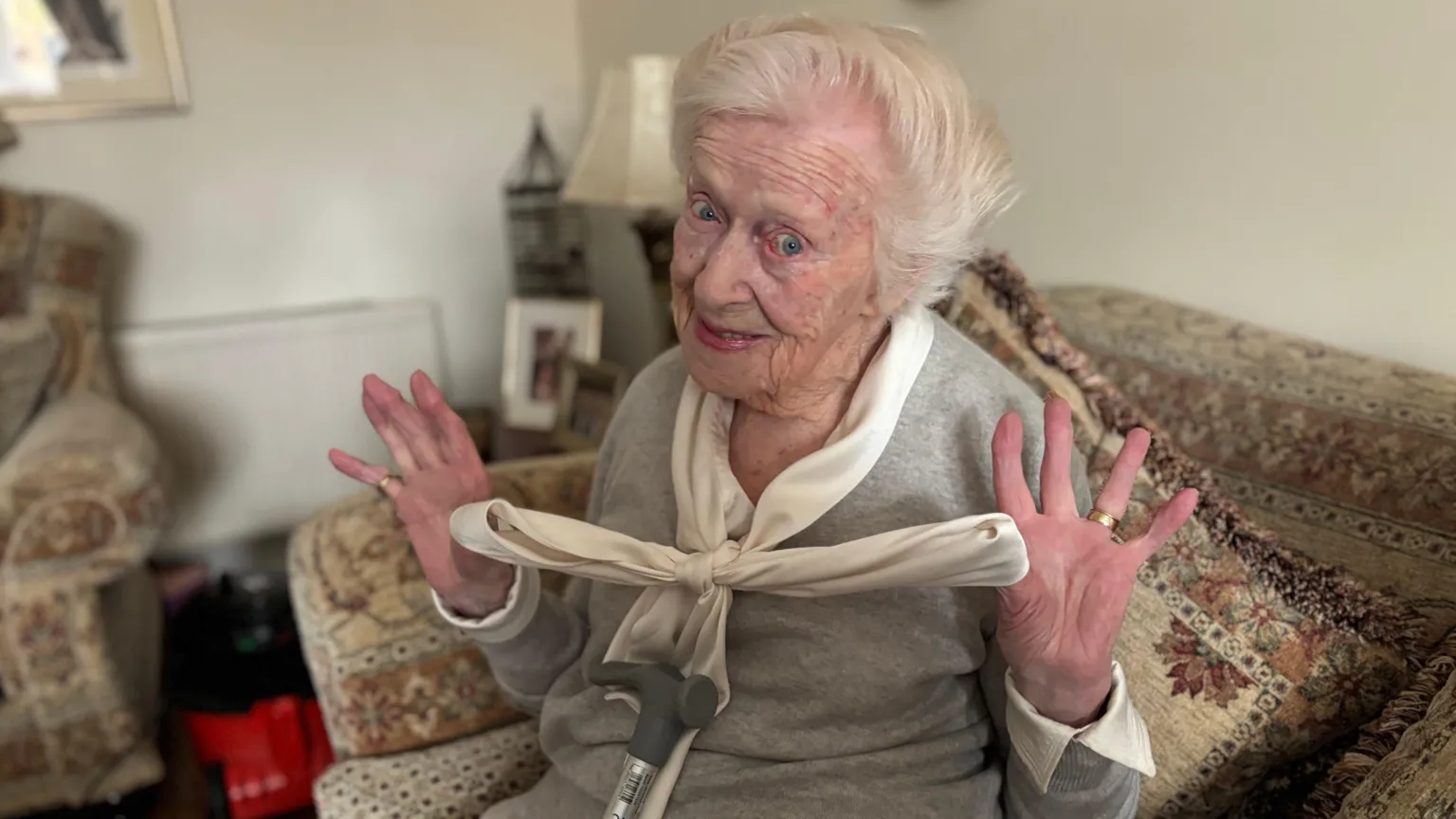
Anne Carey, a resident of County Meath who will turn 102 in November, appears in the 1926 census records. She is among 48 centenarian ambassadors selected from nearly 100 individuals alive during the 1926 census who contacted the National Archives.
Carey has three daughters, six grandchildren, and five great-grandchildren. She worked as a seamstress, making her own clothes and fur coats in Dublin. She lived through both world wars and recalls the German bombing of Dublin in 1941.
"[Life] wasn't bad. I remember the bombing on South Circular Road. My mother woke me up to say we were being bombed. But I said, 'Why did you wake me up?'"
Regarding her longevity, Carey shared her personal philosophy.
"In my bedroom, I have a window and I look out. And I say to myself: 'I'll never see this day again, don't bang it up.'"
Life in the Irish Free State 100 Years Ago
While a 1926 census was also conducted in Northern Ireland, those records have been lost. However, the Irish Free State census provides valuable insights into life a century ago.
The total population recorded was 2,971,992, a decrease from 3,139,688 in 1911. The gender distribution was 49% female and 51% male. Dublin was unique in recording population growth, increasing by nearly 6%, while all other counties experienced declines.
The census showed that 92.6% of the population identified as Catholic, and 18.3% could speak Irish.
Occupational data revealed that 51% of the population were engaged in agricultural work, 4% were fishermen, 14% worked in manufacturing, and 7% were domestic servants.


