

Fatal Light Plane Crash at Long Bay, South Australia
Three individuals lost their lives after a single-engine Cessna light plane crashed into the ocean near Goolwa South, South Australia, on Friday afternoon.
Police received reports of the small aircraft crashing into the water at Long Bay around 4:20 pm, prompting an immediate response from emergency services.
All three men aboard the plane were confirmed deceased. They included the 57-year-old pilot from Morphett Vale, an 18-year-old man from Freeling, and a 19-year-old from Pasadena, according to South Australia Police on Saturday morning.
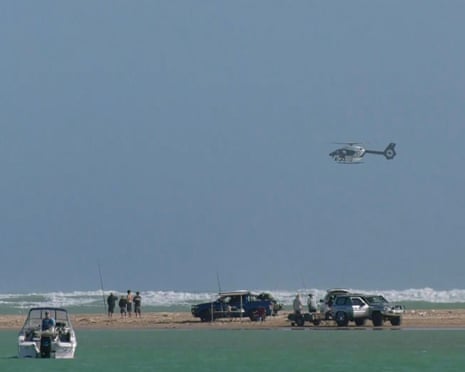
The wreckage of the Cessna was recovered and brought ashore near the Murray Mouth on Saturday. Senior Constable Rebecca Stokes of SA Police informed ABC News Adelaide about the recovery operation.
“Just tragic news for three families in South Australia today,”
Stokes said.
Separate Small Plane Crash in Queensland
In a separate incident on the same day, a second small plane crashed near Normanton, close to the Gulf of Carpentaria in Queensland. Emergency services were dispatched to the crash site approximately 800 meters west of Normanton airport around 8:00 pm.
Queensland Police indicated that access to the crash site has been challenging, and the condition of those onboard remains unknown.
“At this time, emergency services have had difficulty accessing the crash site and injuries of those onboard are unknown,”
Queensland police stated.
Investigations by Australian Transport Safety Bureau
The Australian Transport Safety Bureau (ATSB) is currently investigating both crashes. Regarding the fatal crash in Goolwa South, the ATSB confirmed the involvement of a single-engine Cessna aircraft.

Investigators were scheduled to arrive at the scene on Saturday to examine the wreckage, interview witnesses, and collect any available video footage or recorded flight tracking data.
Footage obtained by Seven News Adelaide appears to show the plane spinning out of control before it nose-dived into the ocean.
ATSB Acting Chief Commissioner Colin McNamara expressed condolences to the families and friends affected by the tragedy.
“We are aware there are a number of video recordings of the accident sequence, some of which have been shown in media,”
he said. “That footage captured the aircraft in a very steep nose-down trajectory a couple of hundred metres offshore.
Analysis of those video recordings will be instrumental to the investigation and we do ask that anyone with video footage of the aircraft at any stage of its flight, and of the accident sequence, to make contact with the ATSB via the witness form on our website at their earliest opportunity.”
Response from Local Surf Life Saving Club
Members of the Goolwa Surf Life Saving Club were among the first responders at the scene, contending with challenging conditions including 2-metre high waves.
Lifesaver Matt Burrage described the initial rescue efforts as extremely difficult.
“It was pretty sketchy out there, it was difficult to operate, trying to pick your way through the surf,”
Burrage said during a news conference.
Details on Normanton Crash and Ongoing Investigation
The ATSB later confirmed that the plane involved in the Normanton crash was a Beechcraft King Air aircraft. Investigators planned to travel to the site to conduct interviews, gather evidence, and examine the wreckage.
The agency also urged anyone with video footage or information related to the accident to come forward.
Goolwa South is located approximately 70 kilometers south of Adelaide, while Normanton is a small outback town in north-western Queensland with a population of about 1,400 people.


