
India Records Driest June in 12 Years
India has experienced its driest June in 12 years and the fifth-driest since nationwide rainfall records began in 1901, according to the India Meteorological Department (IMD). This significant rainfall deficit has raised concerns about the progress of crop sowing during the critical summer season.
Below-Normal Rainfall Forecast for July
The IMD has forecast below-normal rainfall for July, which is typically the wettest month of the monsoon season and crucial for agriculture. The delayed and deficient rains have already impacted sowing activities, with government data indicating a nearly 23% reduction in the area planted with summer crops by the end of June compared to the same period in 2025. Rice sowing has seen an even sharper decline, falling by about 25%.
Millions of farmers in India depend heavily on the seasonal monsoon rains to cultivate summer crops. A shortfall or delay in rainfall significantly affects agricultural output, as many regions lack assured irrigation facilities.
Data from the federal agriculture ministry shows that farmers had sown summer crops across 18.27 million hectares by 30 June, down from 23.65 million hectares during the same period last year.
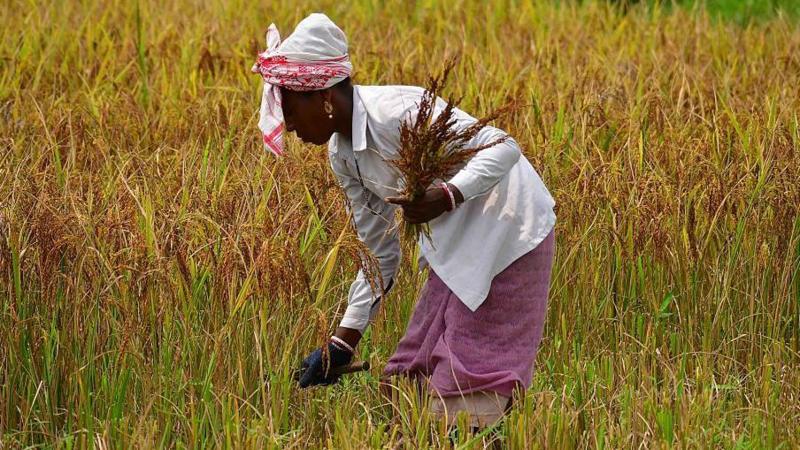
Main Summer Crops and Monsoon Dependence
India's primary summer crops include rice, pulses, coarse cereals, oilseeds, cotton, sugarcane, and jute. These crops rely heavily on the southwest monsoon, which typically provides about 70% of the country's annual rainfall.
Monsoon Onset and Progress Delayed
The monsoon season usually begins around 1 June in the southern state of Kerala and progresses northward across the country. This year, the onset was delayed by three days, and the monsoon's advance slowed for approximately two weeks in parts of western India. This delay affected field preparation and planting in several agricultural regions.
Rice planting has been particularly affected, with farmers sowing the crop on 2.58 million hectares so far this season, compared to 3.44 million hectares a year earlier.
Dependence on Rainfall and Irrigation Challenges
Nearly half of India's net sown farmland lacks assured irrigation and depends primarily on rainfall, making the timing and distribution of the monsoon critical for millions of farmers.
Experts warn that poor monsoon rains will also reduce domestic oilseed production, increasing the country's reliance on imported edible oils.
Uncertain Impact on Harvests
The ultimate impact on harvests remains uncertain as the monsoon season continues until September, allowing time for rainfall to recover and for farmers to compensate for delayed sowing.
India entered the season with record rice stocks in government warehouses, providing a buffer against potential supply disruptions.
Official data showed government rice stocks stood at 39.7 million tonnes on 1 July, nearly three times the official buffer requirement of 13.5 million tonnes. An additional 29.8 million tonnes of rice is expected to be added once paddy already procured from farmers is milled.
Exceptional Dryness in June
The immediate concerns stem from an exceptionally dry June. The IMD had forecast June rainfall at 92% of the long-period average; however, India received 39.8% less than that prediction.
"This was the fifth-driest June for India since 1901, and the driest in 12 years," IMD Director General Mrutyunjay Mohapatra told the BBC.
Although the IMD was established in 1875, rainfall analyses begin in 1901 when India's first continuous, nationally comparable climate records became available. By that measure, only 1905, 1926, 2009, and 2014 had drier Junes.
Focus on July Monsoon and Government Preparations
Attention is now turning to July, which typically contributes about one-third of the rainfall received during the four-month monsoon and coincides with the peak sowing period for most monsoon crops.
The government has intensified preparations for the possibility of a weak monsoon and El Niño conditions—a climate pattern characterized by abnormal warming of surface ocean waters in the eastern tropical Pacific.
Agriculture Minister Shivraj Singh Chouhan stated that authorities have identified 315 districts at risk of below-normal rainfall and have prepared contingency plans. These include promoting short-duration crops, less water-intensive varieties, and enhanced water conservation measures.
"We are preparing in advance, not waiting for a crisis," said Chouhan after chairing a meeting on the issue last week.
To reassure farmers, Chouhan emphasized that there is "no need to panic," noting that buffer stocks of rice and wheat remain comfortable and that there is no immediate threat to the country's food security despite the weak start to the monsoon.
Follow India on Instagram, YouTube, Twitter, and Facebook for ongoing updates.


