
Corruption Verdict Against Nadiem Makarim
Supporters of Nadiem Makarim expressed their discontent outside the Jakarta courthouse as the verdict was announced, booing during the reading.
Nadiem Makarim, the co-founder of the Asian super-app Gojek and former Indonesian education minister, has been sentenced to a prison term of 10 years on charges of corruption. The 41-year-old was found guilty of manipulating a government procurement deal for school laptops during his tenure as education minister, allegedly to enrich himself. He has maintained his innocence throughout the trial.
In addition to the prison sentence, Nadiem was ordered to pay restitution amounting to 809 billion rupiah (approximately $45 million or £34 million), the sum he was found to have illicitly gained. Due to his inability to pay this amount, he faces an additional five years in prison. Furthermore, he must pay a fine of one billion rupiah, with failure to do so resulting in an extra 190 days of incarceration.
Nadiem left his role at Gojek in 2019 to join the government under former President Joko Widodo, serving as education minister until 2024. Critics argue that the evidence against him is insufficient and claim the case is part of a broader government campaign targeting political adversaries.
Details of the Corruption Case
The case centers on the education ministry's procurement of Chromebook laptops for Indonesian schools between 2021 and 2022. Prosecutors alleged that despite a 2018 ministry determination that Chromebooks required internet connectivity—rendering them unsuitable for remote areas with limited access—the purchase proceeded after Nadiem's meeting with Google representatives in 2020.
Prosecutors claimed that Nadiem favored Google, an investor in Gojek, by designing tender specifications that exclusively fit the Chrome system, effectively granting Google control over Indonesia's education technology ecosystem. They asserted that his actions violated anti-corruption laws and caused approximately $125 million in state losses while personally enriching him.
Nadiem denied these allegations, stating that the 809 billion rupiah remained within Gojek's accounts and was never personally accessed by him. He also refuted any connection between Google's investment in Gojek and the procurement decision, arguing that purchasing Chromebooks reduced government expenses.
Support and Reactions During the Trial
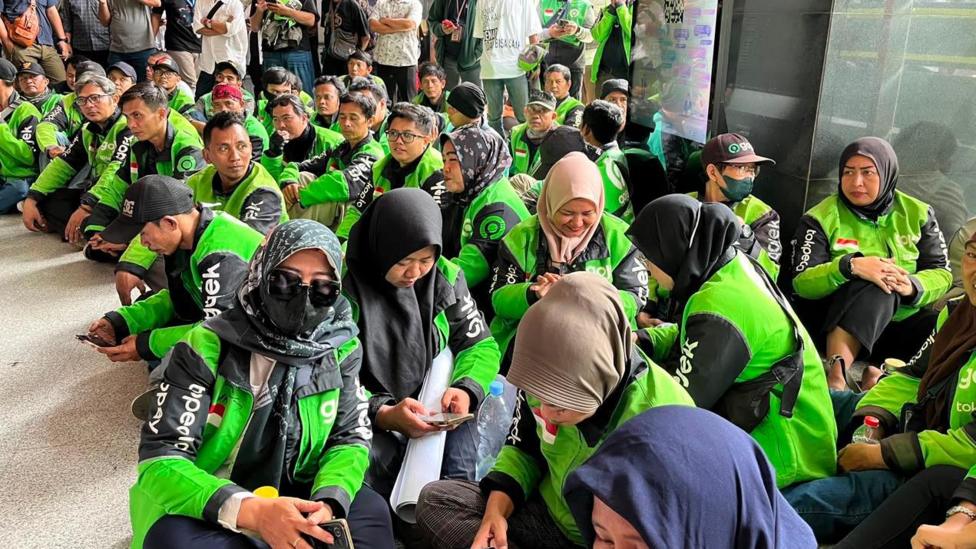
On the morning of the verdict, dozens of supporters, including Gojek drivers, gathered outside the Jakarta courthouse carrying white banners with messages such as "We are with Nadiem" and "Free Nadiem." Upon his arrival, Nadiem greeted his supporters warmly and was visibly emotional when embraced by a Gojek driver.
"It's been difficult for almost 10 months. As a family, we have continued to pray, fight, and stand by him throughout this time,"said Nadiem's mother-in-law, Sania Makki, in an interview with .
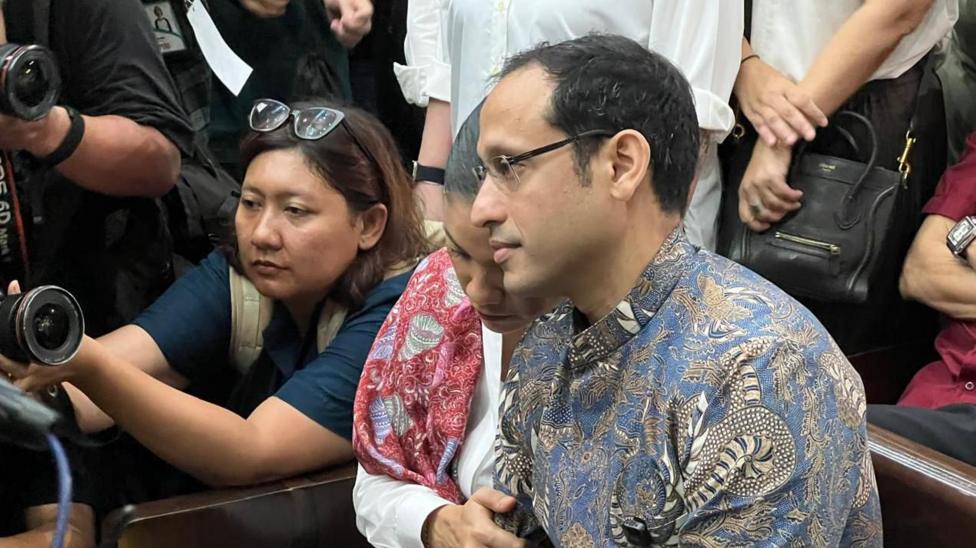
During the hearing, numerous supporters, including drivers wearing Gojek jackets, observed the proceedings in a nearby room where the trial was streamed live. When the judge announced the verdict and sentence, Nadiem appeared visibly emotional and began to cry, while supporters outside the courtroom expressed their displeasure loudly.
Following the verdict, Nadiem addressed the media briefly, announcing his intention to appeal the decision.
"I do not know what words I can use to explain how I feel today,"he stated.
"I do not know whom I should ask for help, or where I can seek justice. My only hope is in the Indonesian people, in those who still believe that truth still exists in this country."
Public and Expert Opinions
Some legal experts and activists have questioned the legitimacy of the case. Lawyer and activist Todung Mulya Lubis told that the anti-corruption campaign is being used to target individuals who are unpopular or critical of those in power.
Observers have also expressed concern that the guilty verdict may discourage young Indonesians from pursuing careers in government service.
Artist and political activist Andovi da Lopez commented to ,
"There's a feeling of fear. It's like, so if someone that's from outside of the government tries to work with the government or tries to do good in their own field in this country, am I going to get criminalised?"
"I can't speak for everybody, but in my circle, there's this fear and people just say, 'just don't work with the government, just don't.' And that fear is real,"
Usman Hamid, executive director of Amnesty International Indonesia, noted that young Indonesians view Nadiem as someone attempting to drive change but constrained by systemic issues within the government.
"Maybe [Nadiem] was perceived as forcing [the government] to innovate policies, and maybe he wanted to do it too fast,"he added.
Political Context and Comparisons
Supporters of Nadiem gathered outside the court to demonstrate their solidarity.
Some observers have drawn parallels between Nadiem's case and those of two other political allies of former President Joko Widodo: former trade minister Tom Lembong and party official Hasto Kristiyanto. Both were convicted of corruption but later pardoned by current President Prabowo Subianto in the interest of national reconciliation.
The verdict arrives amid heightened unrest among Indonesian youth, fueled by rising living costs and the depreciation of the rupiah. Discontent with President Prabowo's administration has manifested in recent weeks through protests across the country opposing policies perceived by activists as pushing Indonesia toward financial instability.
Additional reporting was provided by BBC Indonesia's Riana Afifah.
Related Developments
- Indonesian students protest against state spending and fuel price hikes
- Protests and food poisonings challenge Indonesian president's first year in office


