India's Push for Women's Reservation Bill
India is preparing for a once-in-a-generation redraw of its political map, driven by what the government describes as an initiative to reserve one-third of seats for women in parliament and state assemblies.
To implement this, the government plans to introduce a constitutional amendment—requiring a two-thirds majority—supported by a three-day special parliamentary session starting Thursday.
Currently, women constitute about 14% of India's 543 lower house Members of Parliament (MPs). The proposed reform aims to increase this proportion to roughly one-third, aligning more closely with global standards.
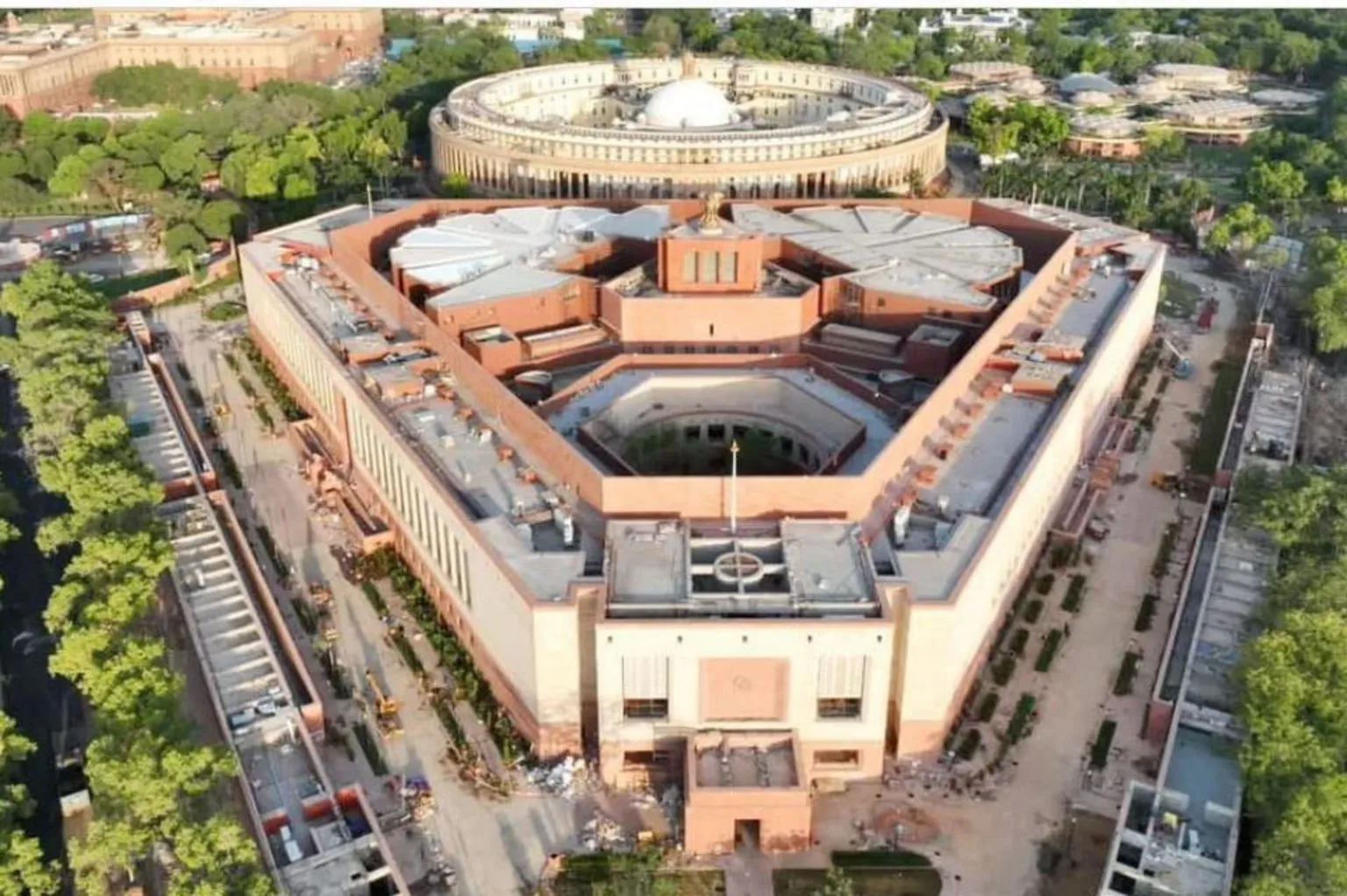
The bill's implementation is linked to a population-based redrawing of constituencies according to the 2011 census, which is expected to expand the lower house from 543 to approximately 850 seats.
Controversy Surrounding the Bill and Seat Redistribution
This initiative has sparked controversy, with opposition parties accusing the government of hastily pushing changes during an election season.
India already reserves 33% of seats for women in village councils and municipal corporations in urban areas.
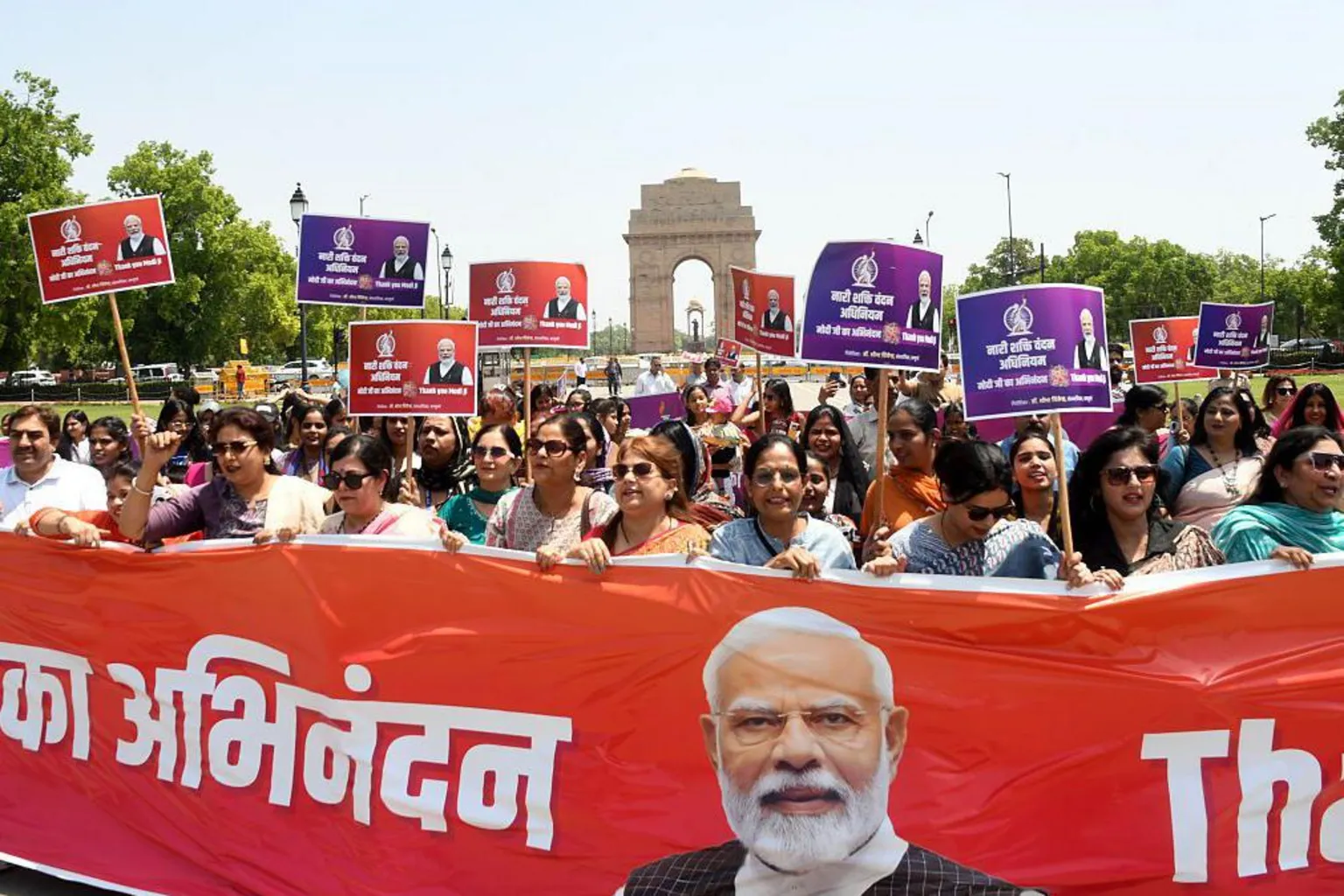
Prime Minister Narendra Modi has described the Nari Shakti Vandan Adhiniyam (loosely translated from Hindi as the Saluting Women Power Act) as a historic advancement—
"among the most significant decisions of our times"—arguing that it honors women's empowerment.
He stated that parliament was on the verge of making one of the century's
"most important decisions", noting the quota enjoys unanimous support and is intended to be implemented by 2029.
Opposition parties contend that the straightforward women's quota is being linked to a contentious redrawing of constituencies, transforming a gender reform into a broader political restructuring.
"We support reserving 33% seats for women based on the current strength of parliament. We also want a further freeze on expanding overall seats in the parliament until population trends stabilise. We object to the haste in convening this session in the middle of an election season,"said John Brittas, MP of the opposition Communist Party of India (Marxist), in an interview with the BBC.
Constitutional Mandates and Historical Context
India's Constitution mandates that seats be allocated to each state based on its population, with constituencies of roughly equal size.
Periodic delimitation—the redrawing and reallocation of seats—is required after each census to reflect updated population figures.
To date, India has redrawn parliamentary seats three times, based on the decennial censuses in 1951, 1961, and 1971. Since then, successive governments have paused this exercise, concerned about potential imbalances in representation due to varying fertility rates across states.
The Modi-led Bharatiya Janata Party (BJP) government has indicated a departure from this caution, proposing a fresh delimitation based on the 2011 census.
Regional Concerns and Opposition from Southern States
This shift has alarmed opposition parties, particularly in southern India, who fear losing seats and influence, effectively penalizing regions with lower population growth and stronger economies.
The five southern states—Tamil Nadu, Andhra Pradesh, Karnataka, Kerala, and Telangana—comprise about 20% of India's 1.4 billion population.
These states outperform much of the country in health, education, and economic indicators. Due to lower population growth rates, a child is less likely to be born in the south than in northern regions.

Their leaders express concern that the more prosperous south may lose parliamentary seats in the future, which they view as a
"punishment"for having fewer children and generating greater wealth.
Tamil Nadu, Kerala, Karnataka, and Telangana had sought to extend the freeze on seat redistribution for 25 years.
Tamil Nadu Chief Minister MK Stalin has described the delimitation plan as a
"massive historic injustice,"and on Thursday staged a protest where he hoisted a black flag and burned a copy of the proposed bill. Stalin also urged party workers and supporters to fly black flags at their homes.
"Is punishment being meted out to Tamil Nadu and the southern states for the crime of striving for India's growth?"he asked earlier.
Expert Analysis and Legal Concerns
The proposed legislation remains surrounded by some confusion, according to experts.
Arghya Sengupta of the Vidhi Centre for Legal Policy, a Delhi-based think tank, told the BBC that although the new bill raises the cap on the lower house of parliament to 850 seats—from 550 earlier—the
"basis for this number is unclear and does not appear to be proportionate to population growth recorded in the 1971 and 2011 census."
Sengupta further noted that there is no corresponding expansion for state assemblies,
"creating a mismatch: fast-growing states could gain more MPs without a corresponding rise in MLAs."
Concerns also exist regarding how seats will be distributed among states.
BJP MP K Laxman told reporters that the government plans to conduct delimitation on a
"pro-rata"basis to ensure no state—especially in the south—is disadvantaged.
This approach means each state's seats would increase in proportion to its current share.
However, experts remain skeptical.
"While no state may lose seats, the absence of a clear proportional formula means outcomes could vary—and favour more populous states. This has significant federal implications,"said Sengupta.
Complexities in Reserving Seats for Women
It is also unclear how seats will be selected for women in the expanded parliament.
Sanjay Kumar of the Delhi-based Centre for the Study of Developing Societies told the BBC,
"What criteria will be used to reserve seats for women? That's the tricky part. How do you decide which constituencies are set aside?"
He added,
"It can't simply be based on population—and identifying seats for disadvantaged scheduled caste and scheduled tribe (SC/ST) women adds another layer of complexity."
In India, constituencies are already reserved for Scheduled Castes (SC) and Scheduled Tribes (ST) based on their population share.
Questions About Census Data and Timing
Critics also question why the delimitation exercise relies on 2011 census data, asking why 15-year-old figures are being used when a new census is imminent.
The government argues that waiting for new census data would delay delimitation—and consequently women's reservation—well beyond 2029, postponing a long-promised reform.