

Retailers Engage with Government to Promote Plug-in Solar Panels
Senior executives from some of the United Kingdom’s leading retail chains are in discussions with government officials to introduce plug-in solar panels to the consumer market. This initiative aims to encourage more households across the UK to generate their own electricity and reduce energy costs.
Representatives from Currys, B&Q, Amazon, and Lidl convened with Martin McCluskey, the minister for energy consumers, on Tuesday to establish guidelines for the sale of “balcony solar panels” to the British public.
Additional retailers including Asda, Screwfix, and Wickes also participated in the meeting, focusing on solutions for individuals living in flats or rented accommodations without access to rooftop solar installations. The goal is to enable these residents to benefit from the government’s solar power strategy and achieve reductions in their energy bills.
Functionality and Benefits of Plug-in Solar Panels
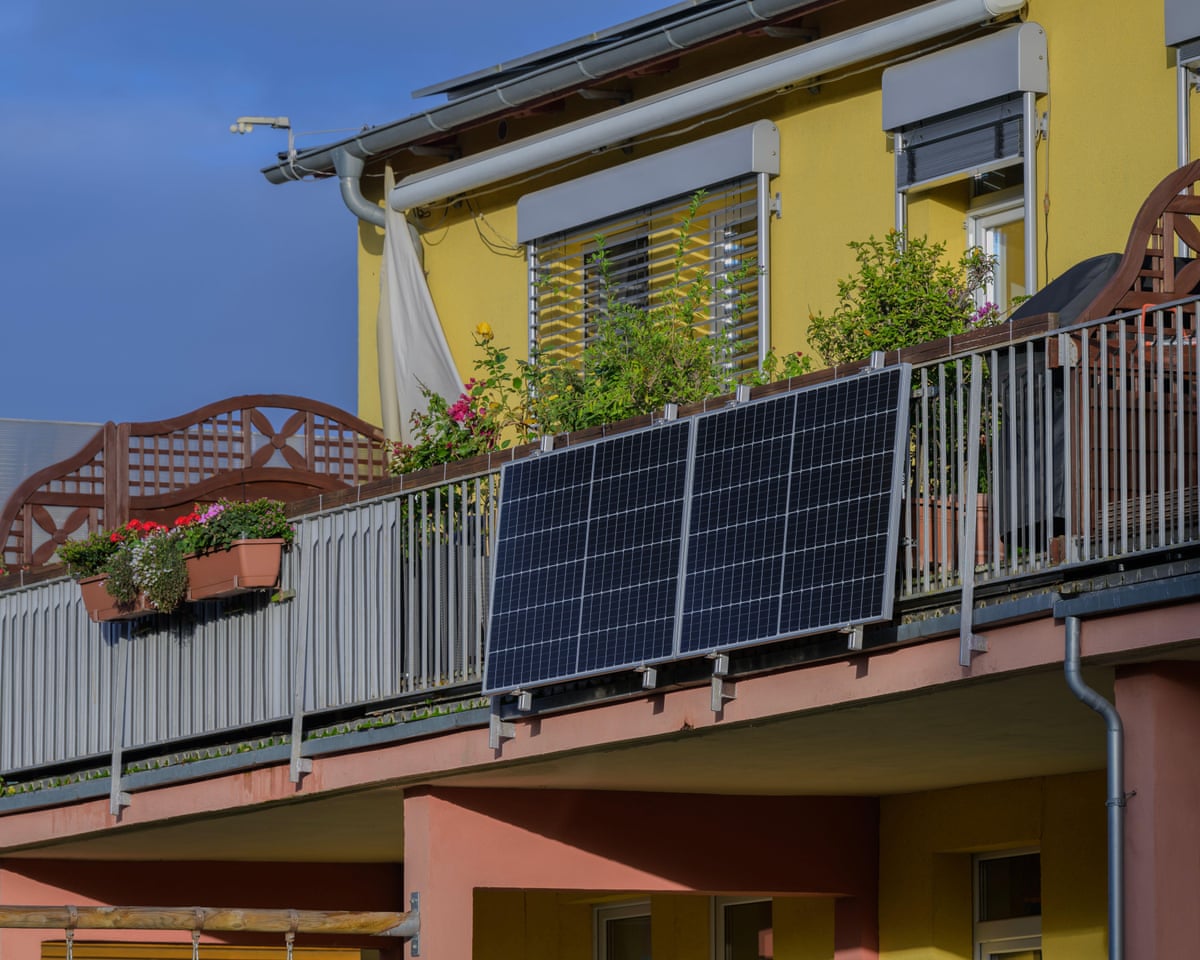
Plug-in solar panels are designed to be installed on balconies, terraces, shed roofs, or other outdoor spaces. They generate electricity that feeds directly into a household’s electrical circuit when connected via a standard three-prong plug. Appliances in the home then prioritize the use of this solar-generated power.
This system allows households to operate electrical devices with less reliance on grid electricity, thereby lowering utility expenses. Typically, plug-in solar panels have a capacity of approximately 800 watts, which is about one-fifth the size of a conventional residential rooftop solar setup. While they cannot fully power a home independently, they contribute to meaningful bill reductions.
Government research indicates that a typical household could save between £70 and £110 annually by installing plug-in solar panels. The initial cost of these systems is expected to start at around £400, suggesting a payback period of four to seven years.
Government Plans and European Context
The UK government has outlined plans to support households in adopting plug-in solar panels, aligning with the millions of European residents who already generate their own electricity through similar devices. The government anticipates that these products will become available in retail stores within the coming months.

Such plug-in panels are already prevalent on balconies in countries like Spain and Germany, where they are connected directly to power sockets to supply solar electricity to homes without requiring professional installation. In Germany, these do-it-yourself systems are referred to as Balkonkraftwerk, or balcony power plants.
Ministerial Support and Potential Impact
"Plug-in panels can be transformative for renters or those on lower incomes, so I welcome the conversation today with household names such as B&Q and Currys showing a huge amount of support for getting the panels in people’s homes."
"This easy-to-install tech can cut people’s bills and help make the UK less reliant on global fossil fuel markets."
Minister McCluskey emphasized the potential benefits of plug-in solar panels, particularly for renters and lower-income households, highlighting the technology’s capacity to reduce energy bills and decrease the UK’s dependence on international fossil fuel supplies.
Rising Interest in Home Energy Technologies
The initiative to promote plug-in solar panels coincides with growing consumer interest in home energy technologies that help reduce costs. In the previous year, the UK saw a record 269,000 solar installations, marking an increase of over one-third compared to the prior year. This equates to a new rooftop solar installation approximately every two minutes.
Amid global energy price volatility, exacerbated by geopolitical tensions such as the conflict in Iran, British households have increasingly adopted technologies like solar panels, electric vehicle chargers, and heat pumps to manage rising energy expenses.
Retailers’ Role and Product Availability
Graham Bell, chief executive of B&Q, which currently retails portable solar devices capable of charging batteries, stated that the company is collaborating closely with government bodies and suppliers to develop guidance ensuring that any products offered are safe, compliant, and easy to install.
"We are working closely with government and suppliers to understand and help shape the guidance, ensuring any products we offer are safe, compliant and straightforward to install."
"Plug-in solar will be available to customers as soon as possible."
Government Renewable Energy Goals
The introduction of plug-in solar panels forms part of the UK government’s broader objective to expand renewable electricity generation and establish a nearly carbon-free power system by the end of the decade. The energy secretary aims to increase the capacity of UK solar farms from the current 18 gigawatts (GW) to between 45GW and 47GW by 2030, sufficient to power approximately 12 million typical UK homes.
Additionally, ministers are pursuing strategies to augment rooftop solar installations on residential buildings as well as on warehouses and factory roofs. The government’s clean power plan estimates that utilizing just 20% of the UK’s largest warehouses for solar panels could yield up to 15GW of solar capacity, representing half of the planned growth target by the decade’s end.


