

Spotting AI Deepfakes: A Challenging Task
Psychologist Dr Clare Sutherland holds two large photographs: one depicts the face of an Australian academic leading an international research study, while the other is an AI-generated deepfake.
Artificial intelligence has advanced to the point where it can create highly realistic images, making it increasingly difficult to distinguish genuine photos from AI fabrications.
Researchers, including Sutherland from the University of Aberdeen and her Australian colleague, have been investigating whether people can be trained to identify AI-generated human images.
Before revealing their findings, readers are invited to try a test and record their score.
If the test proved difficult, you are not alone.
Previously, identifying computer-generated images was easier because AI often made noticeable errors, such as extra fingers or other anomalies.
"Training on visual artifacts, like looking for a sixth finger or odd earrings, has had limited success, partly because the AI is getting too good, and fraudsters may avoid using pictures with obvious flaws anyway," explained Prof Amy Dawel.
Prof Amy Dawel, pictured with shoulder-length hair in one of the photos held by Sutherland, is the director of the Australian National University Emotions and Faces Lab. The male image in the photo is the fake.
Dawel leads a team of researchers from Australia, Canada, and the UK exploring whether people can be trained to detect AI imposters.
The current answer is affirmative, but recognizing AI fakes requires a nuanced approach.
Developing an Intuition for AI Fakes
Sutherland leads the UK-based research at the University of Aberdeen.
She noted that they began to develop a sense of which faces were real or AI-generated just by observation.
"So we thought, OK, it would be really interesting to see if we could teach other people this too," she said.
For their experiments, thousands of AI-generated faces were created using StyleGAN3, one of the most advanced face generators available.
Participants were tested before and after receiving training.
Training Participants: What to Look For
The researchers instructed participants to focus on six perceptual qualities:
- Symmetry – AI often fails to replicate human quirks such as a slightly drooping eyelid or a lop-sided smile.
"If it's too good to be true, it probably isn't."
- Proportionality – AI images rarely feature very large noses or protruding ears, which are uncommon in deepfake images.
- Attractiveness –
"AI faces tend to look more attractive,"
explained Sutherland. This is subjective but AI often produces pleasant-looking faces. - Distinctiveness –
"That could be something like 'what would make a face stand out in a crowd?' AI faces do tend to cluster towards the average. So they look a bit more generic."
- Expressiveness –
"AI faces tend to look less emotionally expressive,"
said Sutherland. They often show less emotion. - Memorability –
"They often look less memorable - they're difficult to remember."
AI also struggles more with accurately recreating non-white, older, or younger faces, as much of its training data involves young white individuals.
Although some of these indicators may seem similar or vague, the goal is to develop an intuitive sense rather than rely on a single definitive clue.
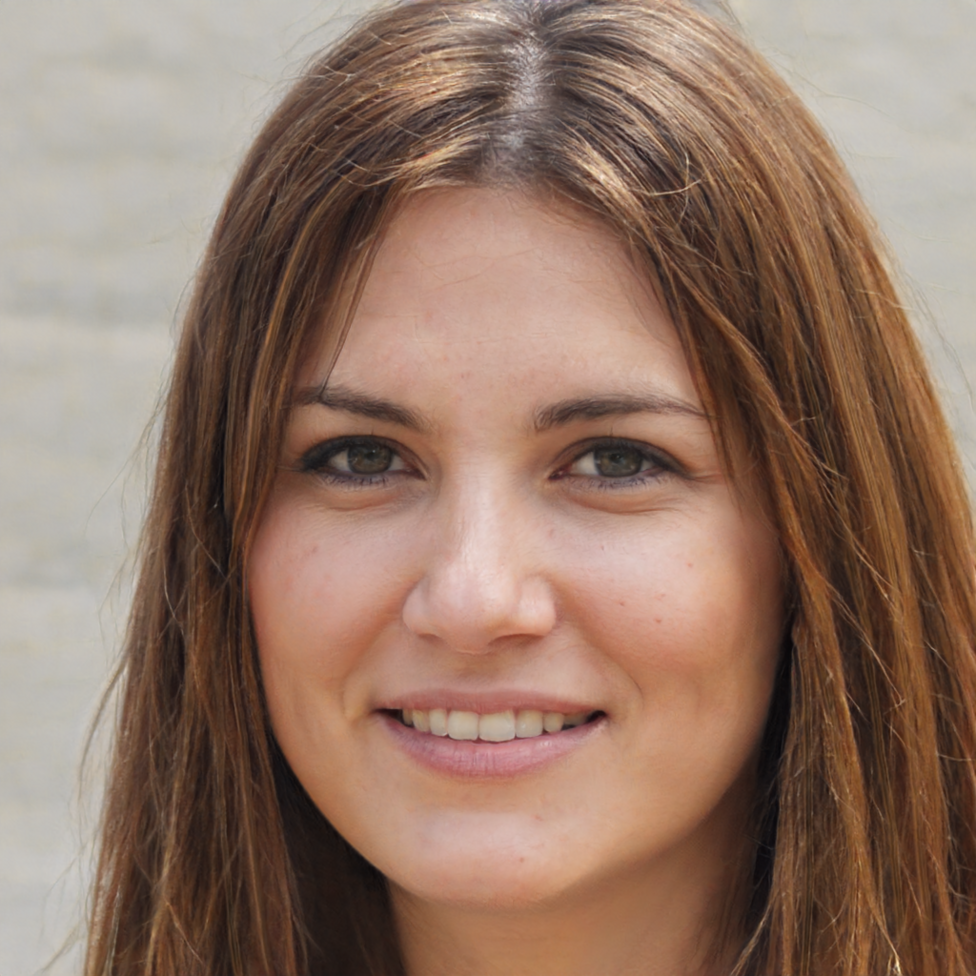
Researchers found that by exposing people to both AI and real images and informing them which was which, participants significantly improved their detection skills, often within about an hour.

Accuracy typically rose from approximately 40% to 80%, with some individuals nearing 100% accuracy.
How Training Enhances Detection
Ironically, the human brain's learning process here resembles that of generative AI models.
Given sufficient training data, both humans and AI improve their accuracy over time, even if the exact mechanisms remain unclear.
The studies also examined participants' confidence in identifying AI images.
Previous research indicated that people were often overconfident, with the most confident individuals making the most errors.
After training, participants not only improved accuracy but also increased their confidence in spotting deepfakes.
"That's helpful right? Because if you don't know when you're correct or not, you can't really do anything with that information," said Sutherland.
Readers are encouraged to take another test to assess their progress.
If confidence remains low, it is important to remember that, as with AI, practice improves performance.
Various websites offer opportunities to hone these skills, and individuals can volunteer to participate in ongoing research.
The Importance of Detecting AI Deepfakes
Global consultancy Deloitte predicts that losses from AI deepfake scams in the US alone could rise to £40 billion next year, up from £12 billion in 2023.
The report cites an incident where an employee at a Hong Kong-based firm transferred £25 million to fraudsters after a video call with a deepfake version of their boss.
Deepfake technology is also used in political espionage.
In 2019, an Associated Press investigation found that a LinkedIn profile, including a photo of a woman named Katie Jones, appeared fictitious.
Jones claimed to be a Russia and Eurasia specialist connected to prominent Washington think tanks and policy circles.
The AP reported that she was a deepfake created by Russian intelligence, who had successfully connected with top US political aides and national security officials.

In Australia, a politician has proposed legislation requiring disclosure and "watermarking" of AI-generated political content.
Sutherland acknowledges positive applications of AI, such as generating images to show how long-missing children might look at different ages.
"If people are engaging with it in good faith and people know that AI has been used, it could potentially be very useful for creative acts," she said.
While we are not yet in a dystopian scenario where distinguishing real from computer-generated images is impossible, AI continues to learn and improve, including by analyzing published academic research.


