

Synthetic Cells Mimic Life Cycle Using Lab-Made DNA
Researchers report significant progress toward creating life from non-living components by developing tiny, quivering spheres that utilize synthetic DNA to feed, grow, and reproduce in a laboratory setting.
These synthetic cells, constructed from chemical compounds, are believed to be the first to exhibit the complete cell cycle, including growth, genetic replication, and division to generate offspring.
The breakthrough opens possibilities for designing artificial organisms capable of producing pharmaceuticals, food, fuels, and other materials. Additionally, it may provide insights into how assemblies of non-living matter transition into living systems.
Dr Kate Adamala, who led the research at the University of Minnesota, stated: "It is not as robust, as fast, or as good at most of its functions as a natural cell, but it is proof of principle that molecules can reconstitute behaviours that up until now we only associated with natural living cells. If we want to be able to engineer biology, we really have to understand exactly the blueprint, every component of it, so we know what we’re changing."
Efforts to create synthetic life have spanned decades. In 2010, the late genetics pioneer Craig Venter synthesized a bacterial genome based on a pathogen causing mastitis in goats. Other researchers have achieved partial successes in this domain.
Unlike approaches that modify existing cells, Adamala’s team constructed SpudCells from the ground up to ensure complete knowledge and control over every component. They began with liposomes—tiny water-filled spheres only a few thousandths of a millimeter wide—and incorporated a small amount of synthetic DNA to enable basic cellular functions. The name SpudCells evokes Sputnik, symbolizing a new frontier, and also reflects Adamala’s Polish heritage, as she remarked, "I’m mostly made of potatoes."
SpudCells operate exclusively in a nutrient-rich liquid containing essential chemicals such as ATP, the primary energy molecule produced by living cells. To grow, SpudCells fuse with minute "feeder" liposomes present in the solution. These feeder liposomes supply molecules, enzymes, and ribosomes—microscopic structures necessary for protein synthesis. The SpudCell genome encodes instructions to replicate its DNA and divide.
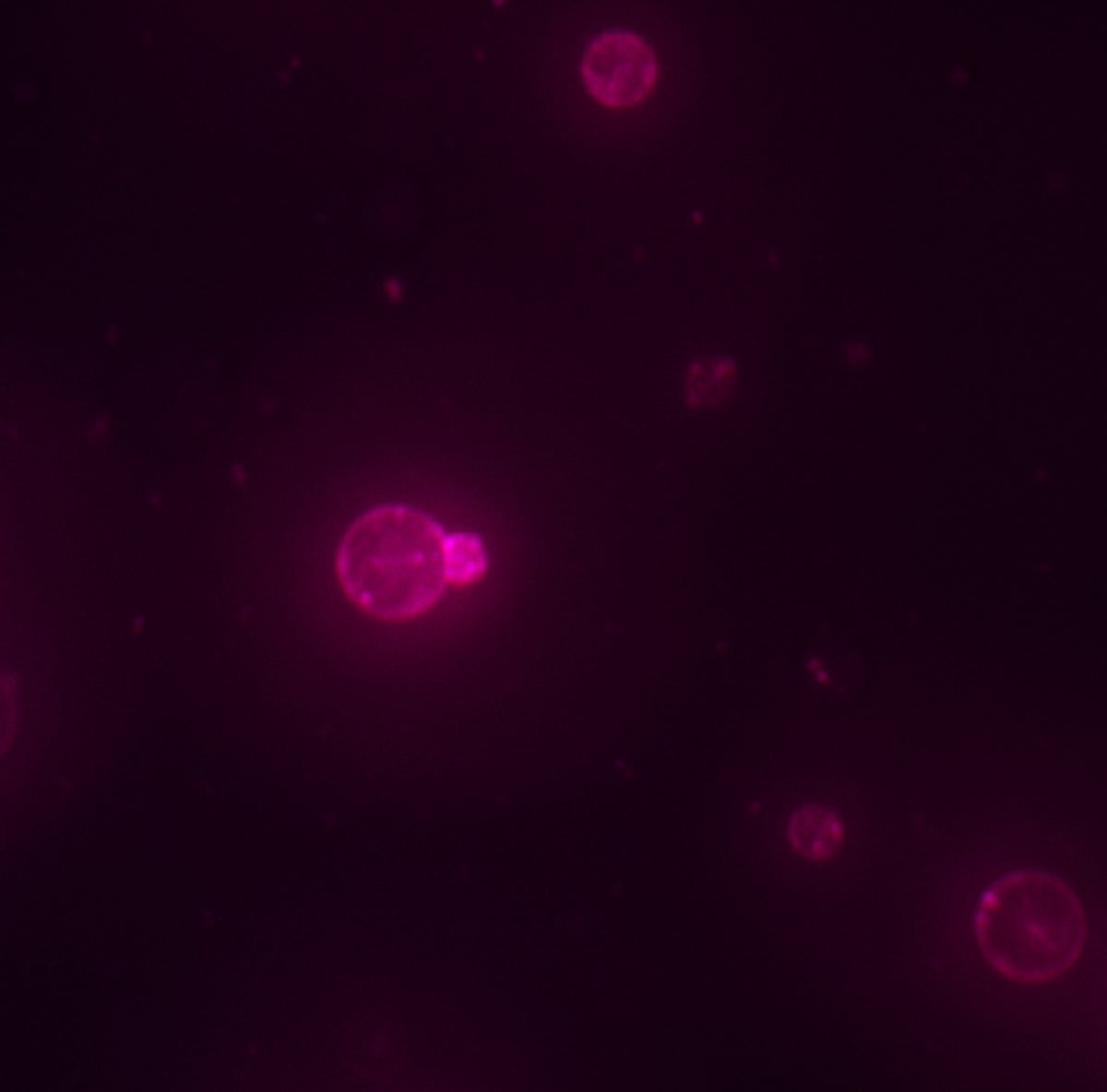

To simulate natural selection, the researchers demonstrated that SpudCells possessing genetic traits conferring growth advantages proliferated more successfully, outcompeting the original population. Professor Tom Ellis of Imperial College London described the work as likely the field’s "biggest breakthrough in recent times."
Ellis commented: "Making a synthetic cell helps us understand the exact minimum requirements for life and how life might have emerged from chemistry. It’s also useful as it provides a fully understood system for testing biological circuits and computer models of cellular life."
Observing SpudCells undergoing division was particularly striking to Adamala.
She said: "They’re among the most beautiful images I’ve seen, but obviously I’m biased. To most people, looking at it under the microscope, it doesn’t look like much … It’s a blob." While SpudCells are not alive, they could serve as a chassis for constructing living systems.
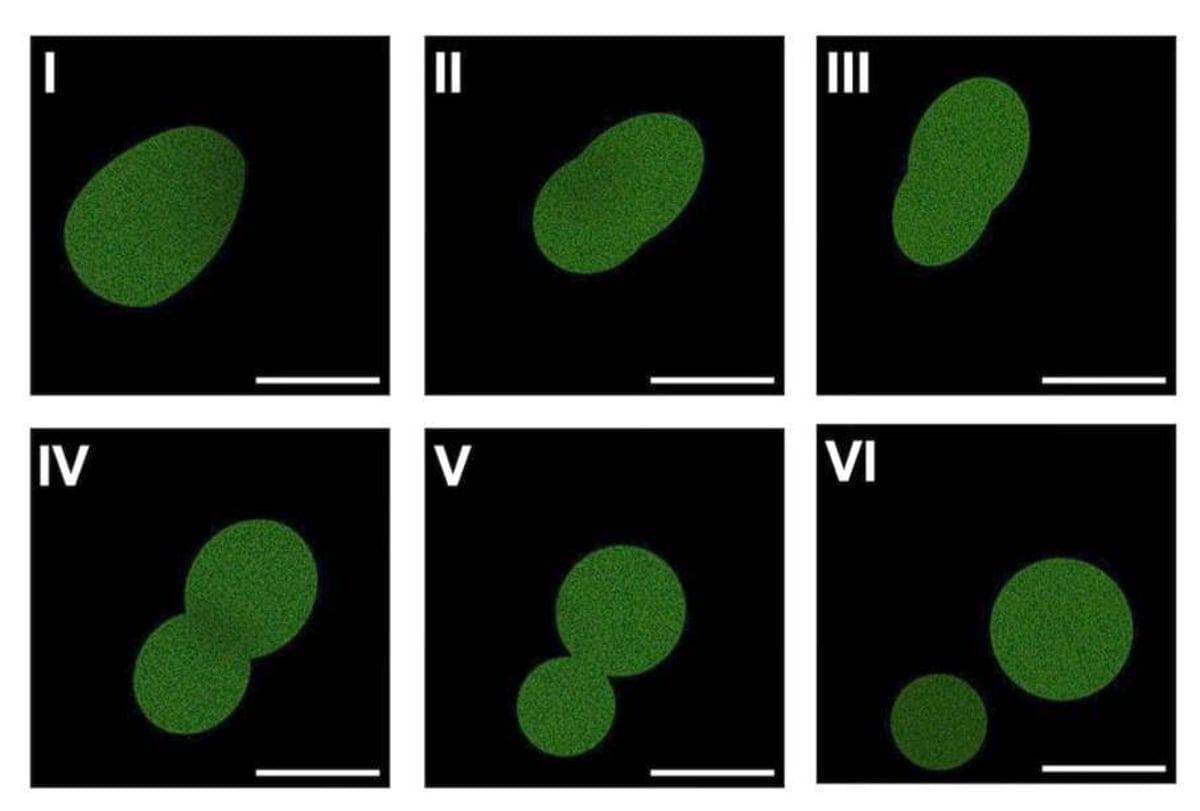
Adamala emphasized that the research serves as proof of concept that synthetic cells can emulate living cell behaviors. However, SpudCells remain far less capable than natural cells. They depend entirely on the surrounding liquid for substances and components, cannot autonomously produce protein-making machinery, regulate metabolism, or eliminate waste. Additionally, DNA distribution during division is often uneven, and the cells cease functioning after a few generations.
To advance this research, Adamala and colleagues are establishing an institution named Biotic to consolidate global expertise and develop SpudCells into more sophisticated entities. According to co-founder Professor Drew Endy, a bioengineer at Stanford University, the objective is to create "an operating system for life" composed of genes and biochemical components. The study has been published as a preprint, allowing immediate scrutiny by other laboratories prior to peer review.
Philosopher Professor John Dupré, founder of the Centre for the Study of Life Sciences at the University of Exeter, expressed skepticism regarding the practical utility of synthetic cells compared to genetically modified bacteria for producing drugs, food, fuel, and materials. He also questioned their capacity to enhance understanding of life.
Dupré stated: "It will, perhaps, provide a compelling argument against those who think there is some immaterial substance in addition to the chemicals that breathes life into material stuff. But almost no scientist now believes this."
He added: "What is missing, I think, is the relational aspect of life which has become clear in the growing realisation that life is almost universally symbiotic. If synthetic cells are used only to produce valuable chemicals this relational aspect might be absent, but so would one of the most interesting aspects of actual living beings."


