

Race to Develop Dexterous Robotic Hands
Human hands, characterized by their nimbleness and intricate nerve networks, represent the most flexible part of the human skeleton and are exceptionally complex. Tasks that many perform almost instinctively, such as tying shoelaces or buttoning a shirt, require a sophisticated set of neurological instructions and precise coordination. Despite thousands of years of technological progress, no machine has yet fully replicated the capabilities of the human hand.
However, with rapid advancements in artificial intelligence (AI), several companies, predominantly in China, believe they are nearing a breakthrough in overcoming this significant challenge in robotics.
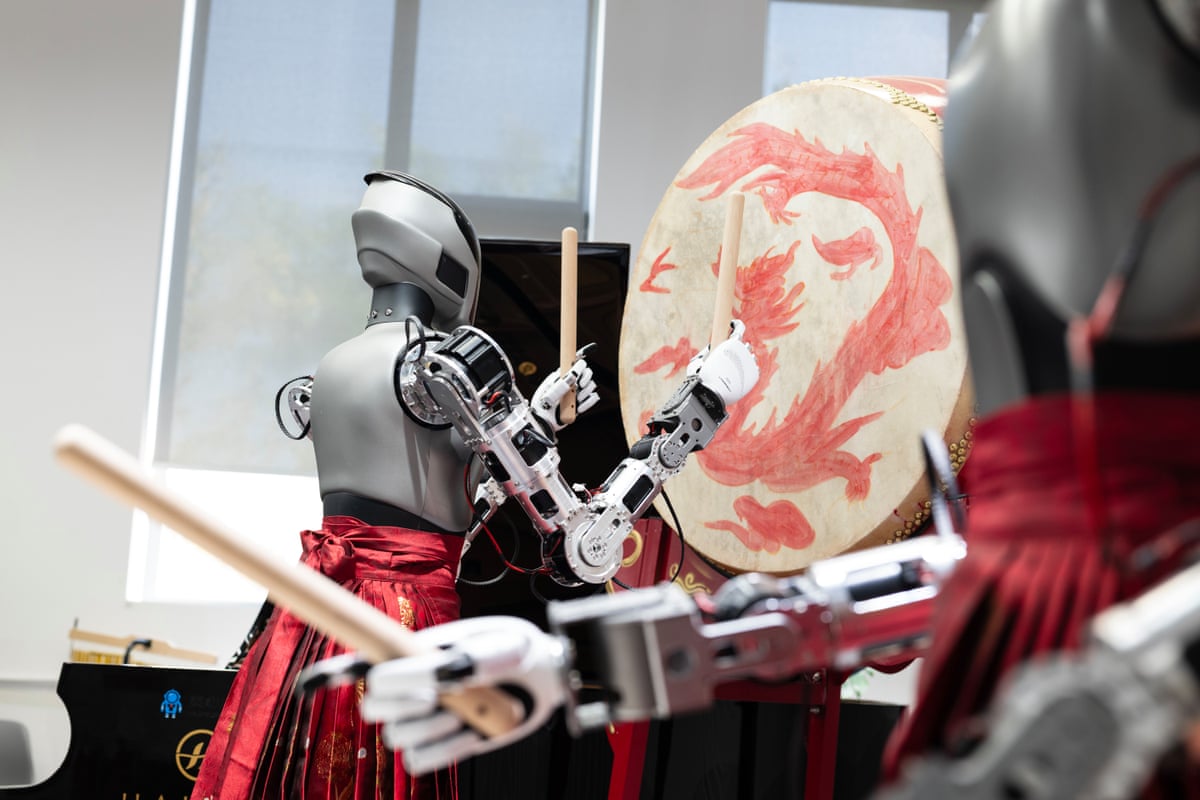
A new wave of Chinese start-ups is capitalizing on the country's manufacturing strengths and government enthusiasm for what is termed “embodied AI” to develop fully dextrous robotic hands. These hands are essential to transition humanoid robots from mere novelties into practical, functional products.
Since Unitree’s group of humanoid robots appeared at the 2025 Spring Gala, an annual variety show broadcast during Lunar New Year, enthusiasm for robots in China has surged.
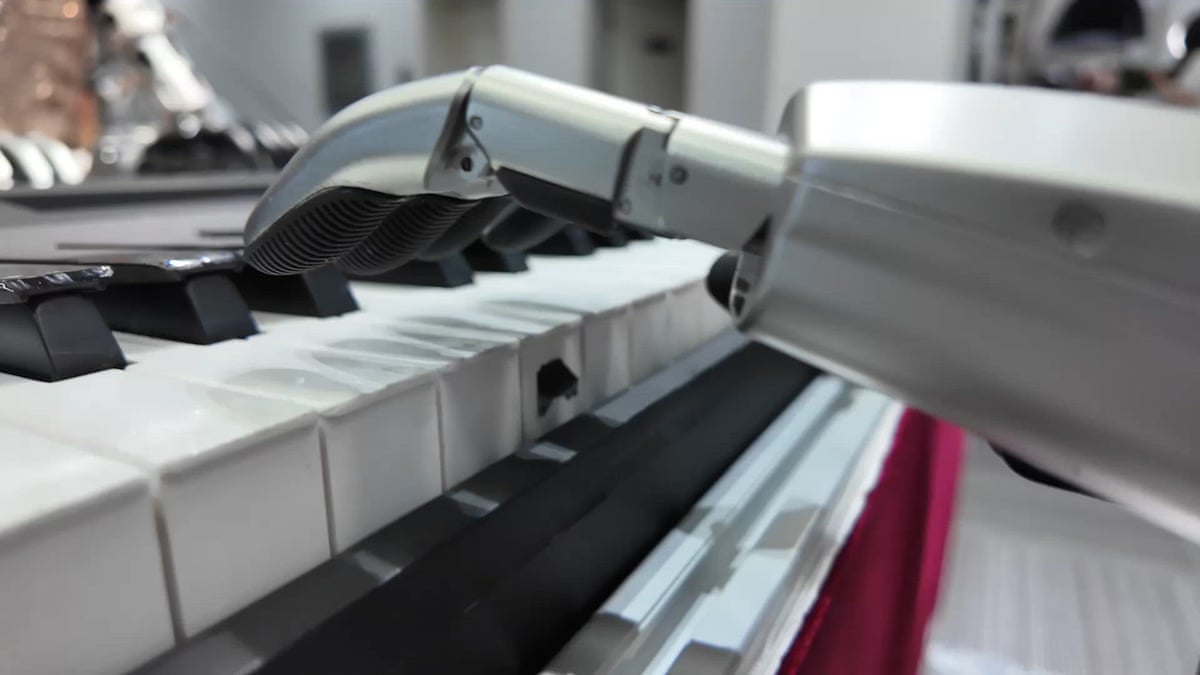
Technologists and policymakers view robotics as a solution to the challenges posed by an aging and shrinking workforce. Promotional materials from robotics companies depict their products performing various tasks that humans might soon be relieved from, including folding laundry, cooking, and cutting hair.
Beijing has consistently emphasized the importance of “embodied AI” in its development strategies. In May, the Chinese Communist Party’s theoretical journal, Qiushi, published a report highlighting “embodied-intelligence robots” as sectors that are “opening up new trillion-yuan markets.”
Despite China’s rapid deployment of automation—with more than half of factory robots installed annually located in China—the practical applications for humanoid robots remain limited. The International Federation of Robotics, in a report from September, concluded that “true multipurpose humanoids are far off yet.”
The primary reason is that many tasks requiring humanoid robots to be useful in everyday environments depend on human-like hands, which are extremely difficult to engineer. Elon Musk, whose company Tesla produces the Optimus humanoid robot, stated last year that hands constitute the “majority of the engineering difficulty of the entire robot.”
‘100 Times More Difficult’
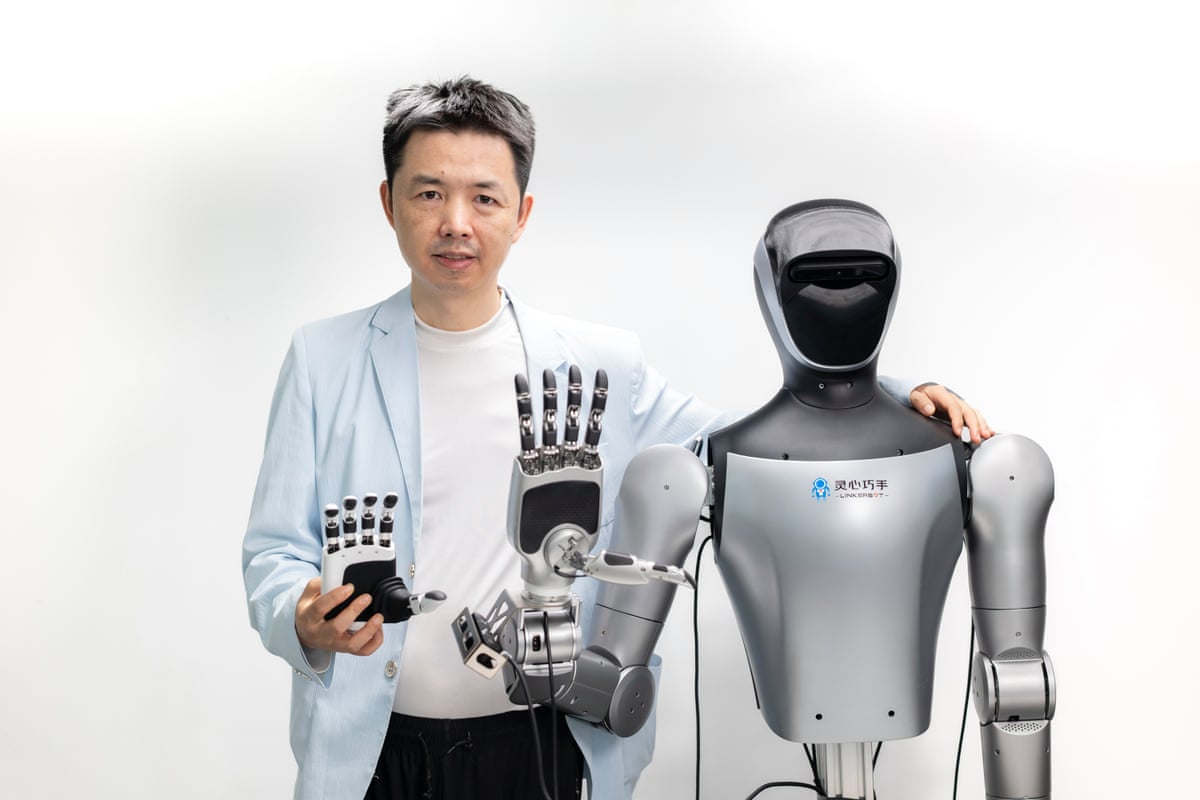
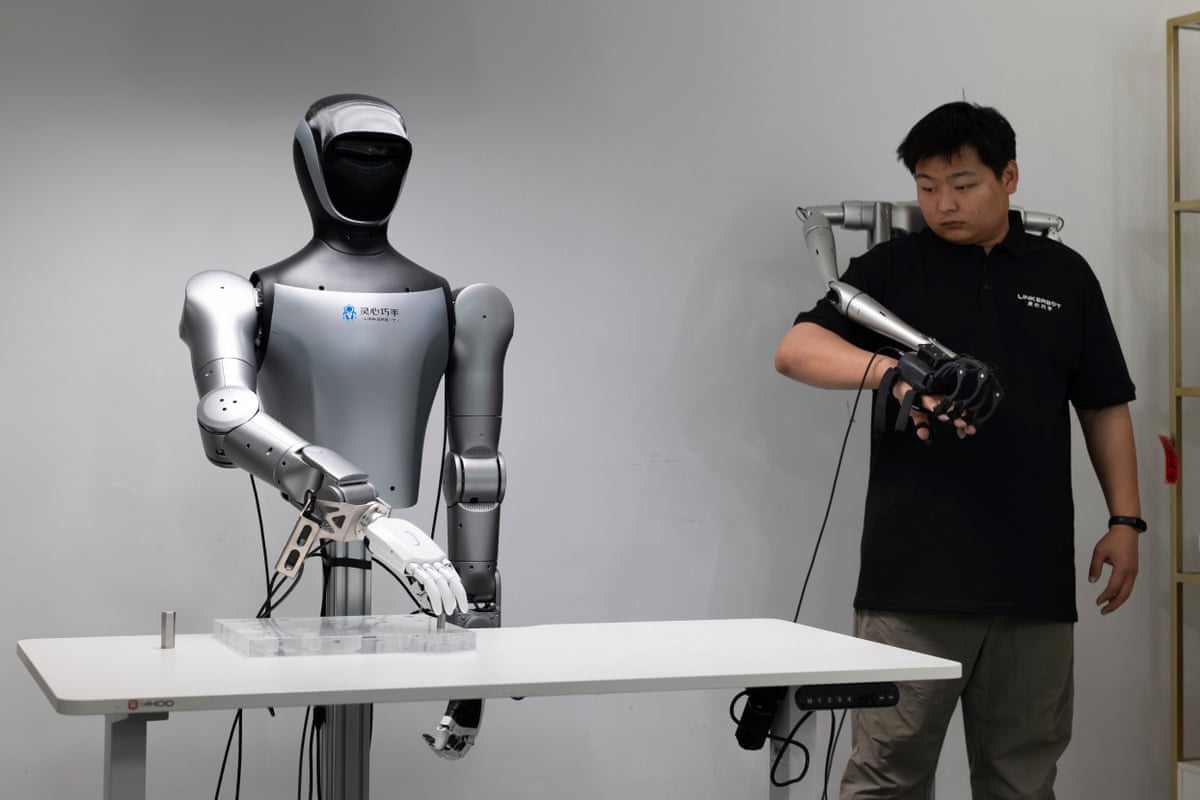
In an office filled with various robotic hands of different weights and sizes, Zhou Yong, founder of LinkerBot—one of China’s leading companies specializing in dextrous robotic hands—explains the complexity of the task.
Making a robotic hand is “one hundred times more difficult” than making a humanoid, Zhou Yong says. “Its dexterity is 10 times that of other body parts. But its volume is only one tenth of other body parts.”
Zhou, like many Chinese entrepreneurs, draws inspiration from American innovators. After graduating from Huazhong University of Science and Technology, one of China’s top institutions, Zhou was initially interested in both app development and robotics. However, influenced by Steve Jobs’ quote on the importance of focus—
“Innovation is saying no to 1,000 things”—he decided to concentrate solely on robotic hands, founding LinkerBot in 2023. The company currently produces approximately 5,000 robotic hands monthly, with plans to double production as it pursues a valuation of $6 billion.
“Human hands are the most important ability of human beings,” Zhou states. “If we focus on this one point, it is easier to realise many human skills.”
Among Zhou’s goals is to manufacture mass-market prosthetic hands for amputees at a significantly reduced cost. Current prosthetics can cost tens of thousands of dollars, but Zhou believes LinkerBot can reduce this to approximately $1,000 per hand.
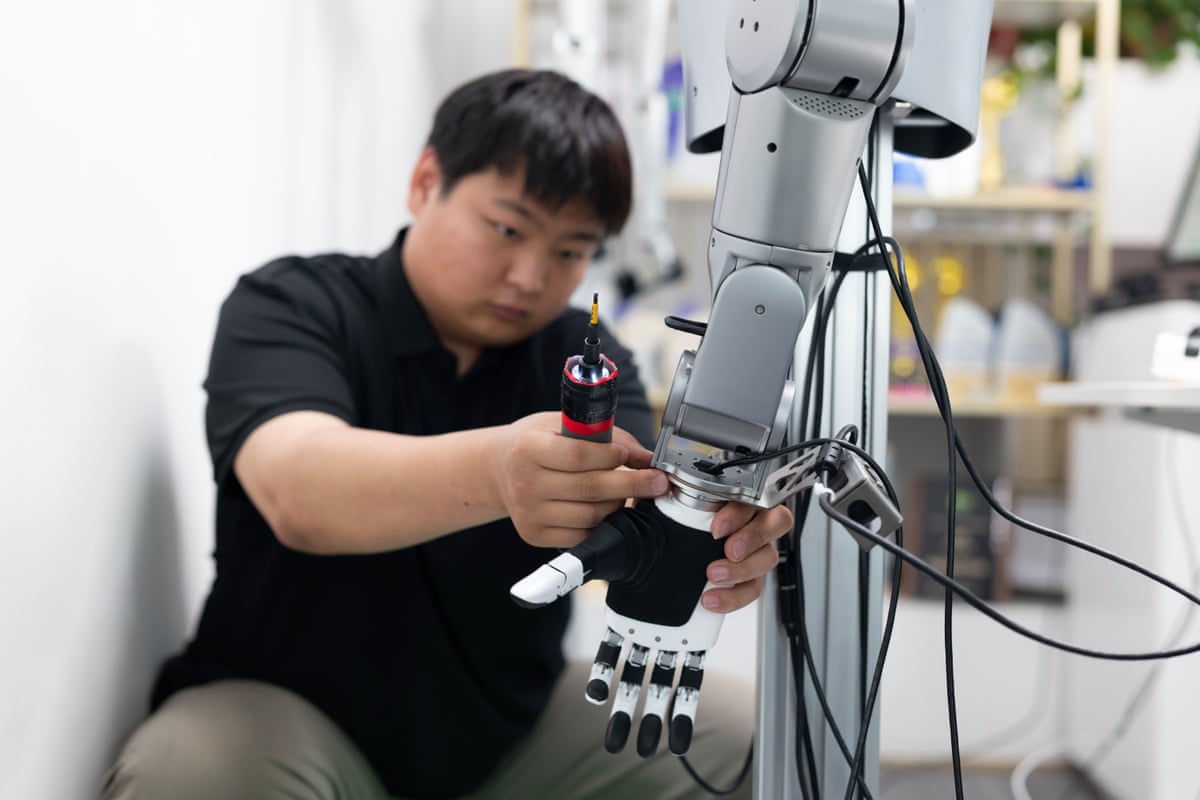
Developing robotic hands involves addressing both hardware and software challenges.
Thanks to an affordable, sophisticated, and agile manufacturing supply chain, Chinese companies are advancing rapidly on the hardware front. The growth of China’s electric vehicle industry has fostered numerous companies capable of producing components essential for robots at scale, including lithium-ion batteries and miniaturized motors.
Pan Yunzhe, founder of Wuji Technology, a Shenzhen-based robotic hands company, explains that the accessibility of components in China motivated him to establish his company there rather than in the United States, where he graduated in 2018.

“It was really impossible to do hardware in the United States because the supply chain problem is just so constraining,” Pan says. “When I tried to start a company in the US, I needed to ask my father to post parts to me. So I decided to return to China to start my company there instead.”
Teaching Hands to Move
Zhou and Pan are among thousands of entrepreneurs investing in China’s robotics sector. China has registered over one million robotic companies, with registrations in 2025 increasing by 40% compared to the previous year. Although companies focusing exclusively on robotic hands constitute a fraction of this market, the segment is expanding rapidly. According to Chinese media, the dextrous hand industry in China surpassed 50 billion yuan ($7.4 billion) last year, up from 13 billion yuan in 2024.
Pan explains his decision to focus on robotic hands:
“The problem of manipulation is much more important than the problem of locomotion.”
While humanoid robots can navigate through space, they remain largely ineffective without the ability to manipulate tools.
The more formidable challenge lies in software—specifically, teaching robotic hands how to perform tasks.
Nathan Lepora, a professor of robotics and AI at the University of Bristol, notes:
“The challenge of making these hands is getting solved now. Controlling them, now that’s a whole different game … nobody knows how to do that.”
Anyone who has attempted to operate a claw machine at a fairground understands the difficulty of controlling a machine remotely, a process known as teleoperation.
Many start-ups are employing teleoperation at scale to collect extensive data necessary for training spatial intelligence models. Unlike large language models, which can be trained on vast amounts of text data available online, sources for three-dimensional data are limited.
In addition to teleoperating robotic hands—which can require hundreds of training hours to teach a robot to complete a simple task such as packing groceries—researchers are exploring more seamless data collection methods. One approach involves humans wearing sensors that gather data as they perform daily activities.
One of Wuji Technology’s flagship products is the Wuji glove, a sensor-equipped wearable device that captures movement data as well as subtle but critical information about pressure and touch. This type of data is intuitive to humans and enables delicate actions, such as cracking an egg on the edge of a frying pan without crushing it, skills that remain challenging for robots.
“The two most fundamental problems in dextrous manipulation in terms of data collection are capturing how a human moves and what humans are touching or feeling,” Pan explains. “Those questions are super complicated and not solved yet.”
Nevertheless, China’s entrepreneurs are confident they will be the ones to resolve these challenges. Zhou envisions a future where a factory of robotic hands produces additional robotic hands, creating a self-sustaining cycle with minimal human intervention. Ultimately, with the appropriate hands, robots could become fully capable household assistants.
“We are not creating robots to replace labour,” Zhou emphasizes. “We are creating robots so that humans can live a better and more prosperous life.”
Additional research by Lillian Yang and Yu-chen Li


