NASA's Lunar Base Initiative
NASA has unveiled comprehensive plans involving robotic landers, hopping drones, and vehicles intended for deployment on the Moon as part of the United States' strategy to establish a permanent lunar base.
Among the companies selected to develop these machines is Blue Origin, the space enterprise founded by Amazon's Jeff Bezos.
The United States aims to return astronauts to the Moon before President Donald Trump's term concludes in 2028.
However, NASA is facing competition from China in the effort to send humans back to the lunar surface, placing pressure on the agency to demonstrate leadership in the renewed space race.
China is advancing its own lunar ambitions, targeting human landings on the Moon by 2030.
On Monday, China launched its Shenzhou-23 spacecraft, transporting astronauts to its Tiangong space station.
In March, NASA announced a $20 billion program to build a permanent base at the Moon's south pole powered by nuclear and solar energy, with a target completion date of 2032.
NASA Administrator Jared Isaacman stated on Tuesday that these initiatives signify that the United States will "never give up the Moon again."
A lunar base would facilitate scientific research, enable potential mining of valuable resources, and serve as a stepping stone for missions to Mars.
Despite these ambitions, most experts consider NASA's timeline to be optimistic.
Following the successful Artemis II mission in April, which sent four astronauts around the Moon, some scientists believe China may be the first country to land humans on the lunar surface next.
"It would not surprise me at all if China gets there first," Dr. Simeon Barber, Lunar Scientist at Open University, told , citing NASA's difficulties in securing a human lunar landing craft.
NASA's Ignition Moon Base Program Phases
NASA's Ignition Moon Base program is structured in three phases.
Prior to crewed missions, the agency plans to deploy robotic landers and hopping drones to explore and map the Moon's challenging terrain.
Additionally, delivery vehicles capable of transporting astronauts across the lunar surface and carrying communications and scientific instruments will be sent.
On Tuesday, NASA announced that companies including Blue Origin, Intuitive Machines, and Astrobotic have been awarded contracts to build these machines.
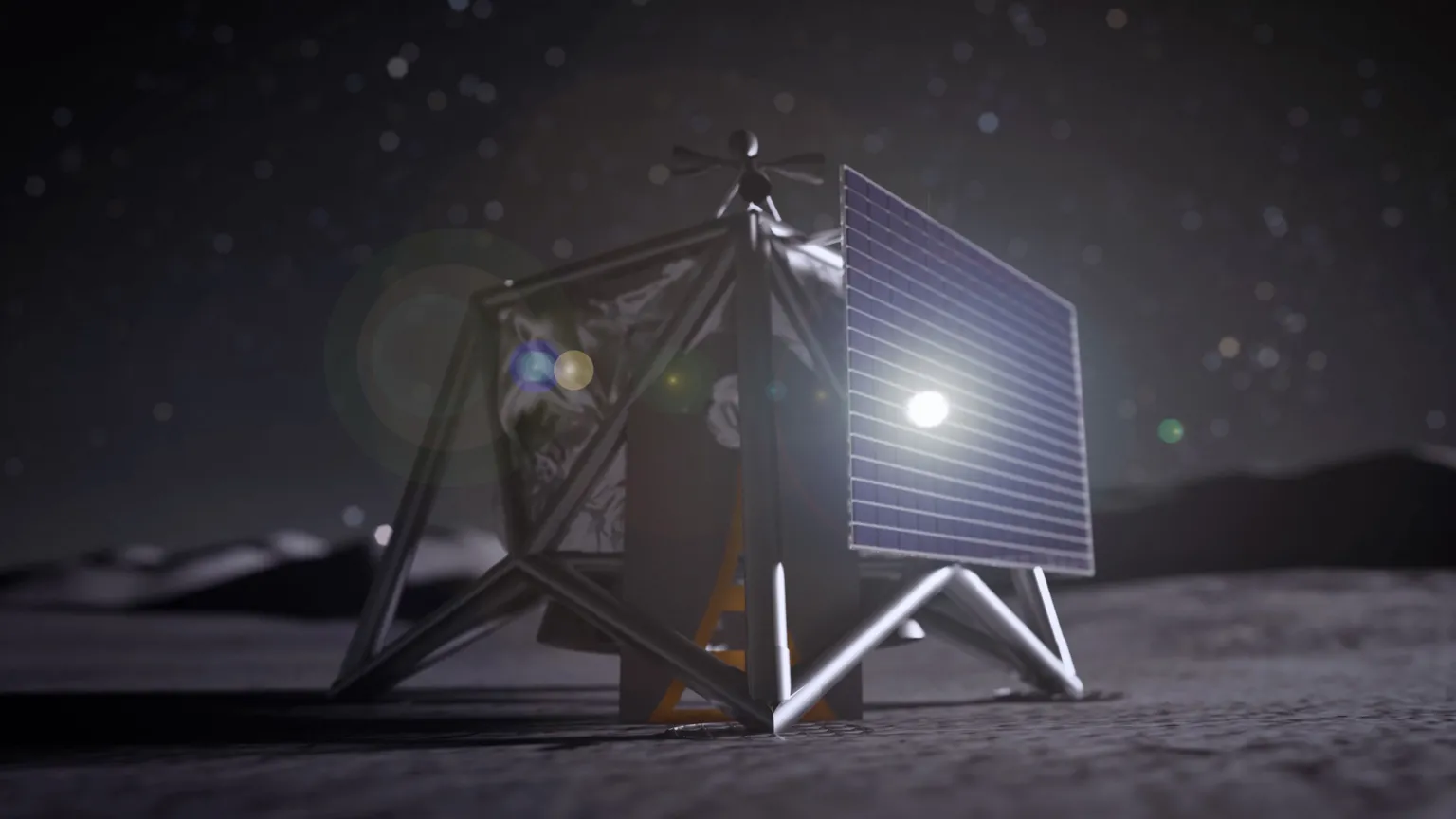
Blue Origin's lunar lander, named Endurance, is designed to perform precise landings and feature autonomous navigation and control.
Astrobotic's Griffin-1 lander is slated to touch down at Nobile Crater near the South Pole.
The robotic vehicles will also deliver scientific instruments for NASA, such as high-resolution cameras and laser-based tools to aid in landing.
This phase of robotic exploration is expected to continue until 2029, involving 25 launches and delivering 4 metric tonnes of cargo to the Moon, according to Carlos García-Galán, Moon Base program executive.
Power Infrastructure and Human Habitation Plans
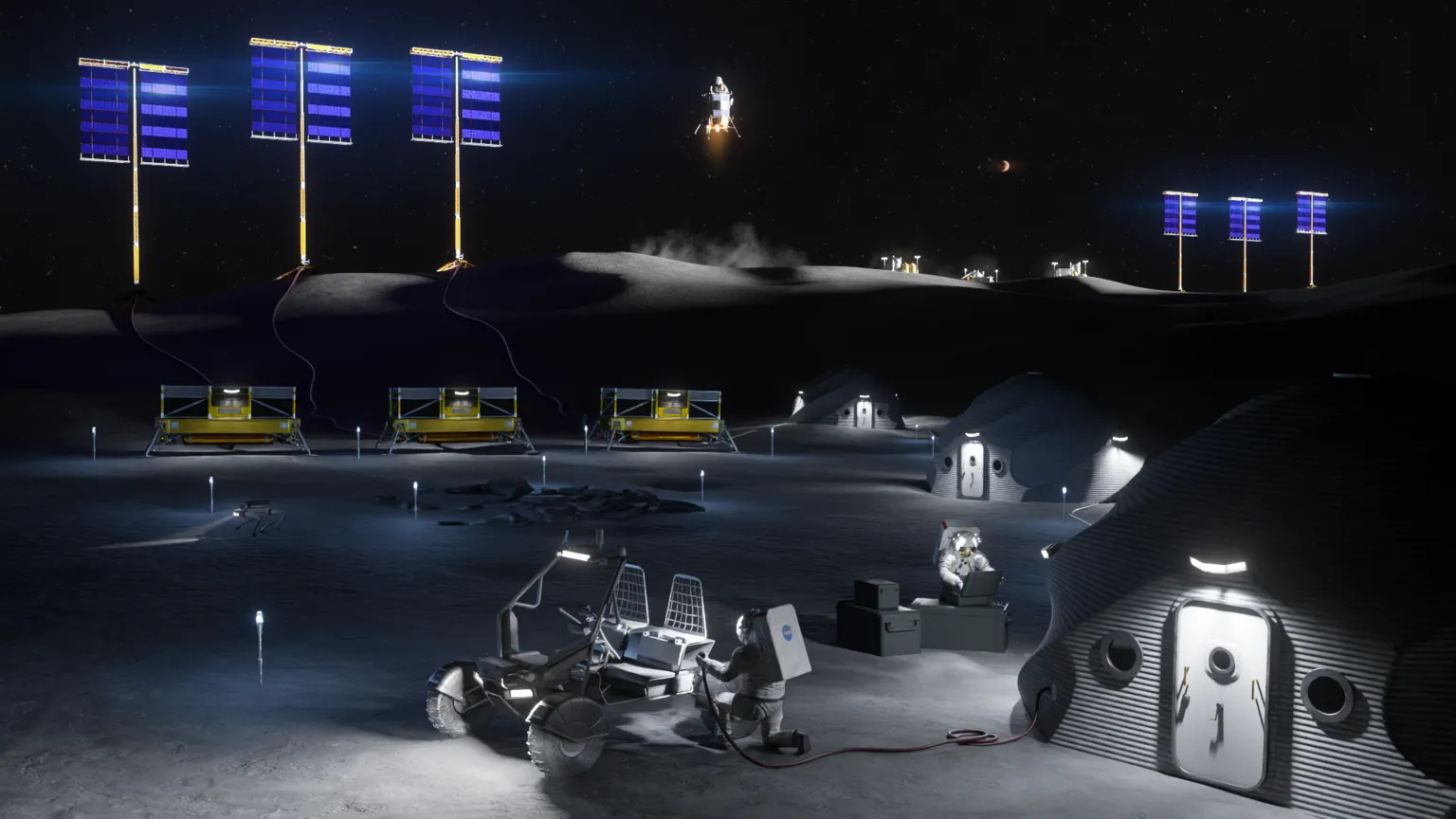
Following robotic exploration, NASA intends to construct nuclear and solar power facilities on the Moon, including fission reactors.
By 2032, the agency aims to establish "semi-permanent" human habitation on the lunar surface.
Rovers will be provided to enable astronauts to traverse long distances across the Moon's rocky terrain.
The Moon's South Pole is particularly attractive due to the presence of frozen water, which could be utilized for drinking and oxygen production.
However, the success of these plans depends on the availability of a spacecraft capable of safely transporting humans to the Moon.
SpaceX, led by Elon Musk, has been contracted to develop the Starship Human Landing System, but the project has encountered multiple setbacks and delays.
"The limiting step is getting the astronauts down onto the surface," explains lunar scientist Simeon Barber.
"It sounds to me like [NASA] feel they're in a position where they have to start saying they've got plans. So I think there's a lot of political drive behind this," he adds.
Robotic Exploration and Surveying
NASA's MoonFall program includes the deployment of drones to survey the South Pole region.