Experiencing Wayve’s Autonomous Ford Mustang
Driverless ‘robotaxis’ are set to begin accepting fares in London by the end of next year. To assess their capability to navigate the city’s complex environment—including medieval roads, numerous pedestrians, and unpredictable ebikers—I took a ride in one of Wayve’s autonomous vehicles.
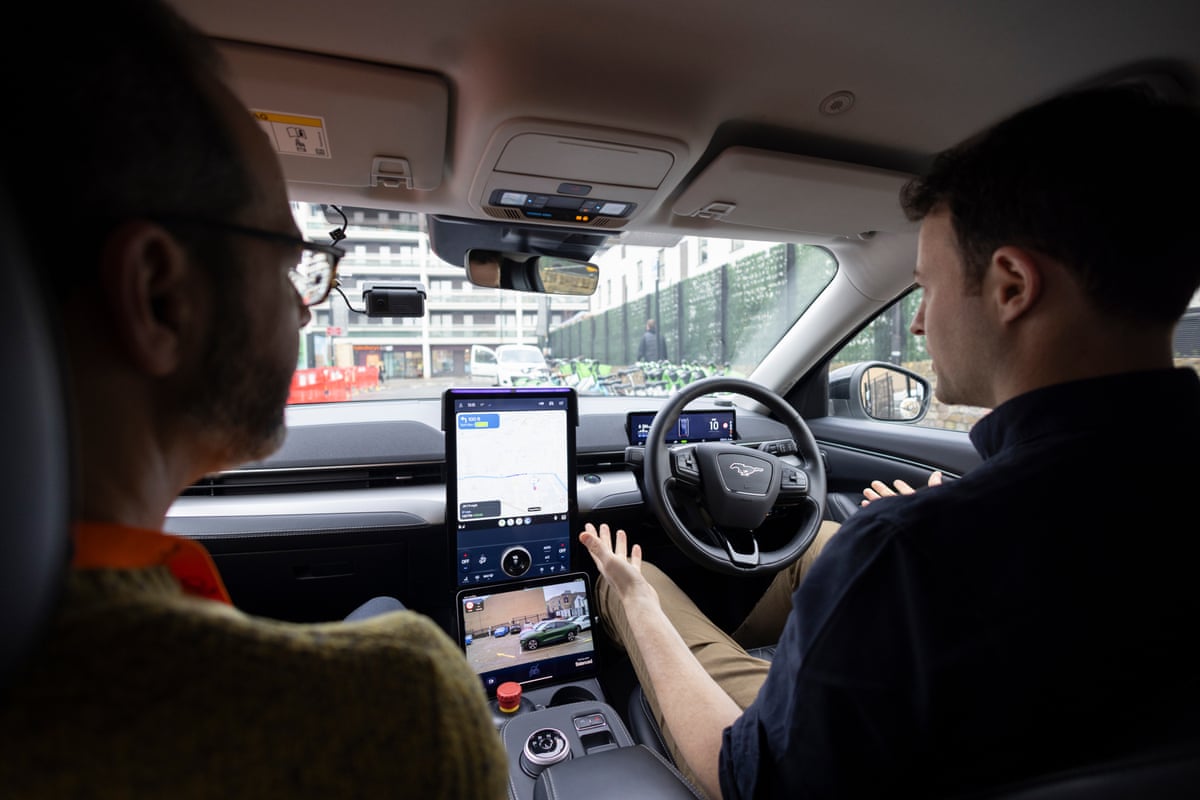
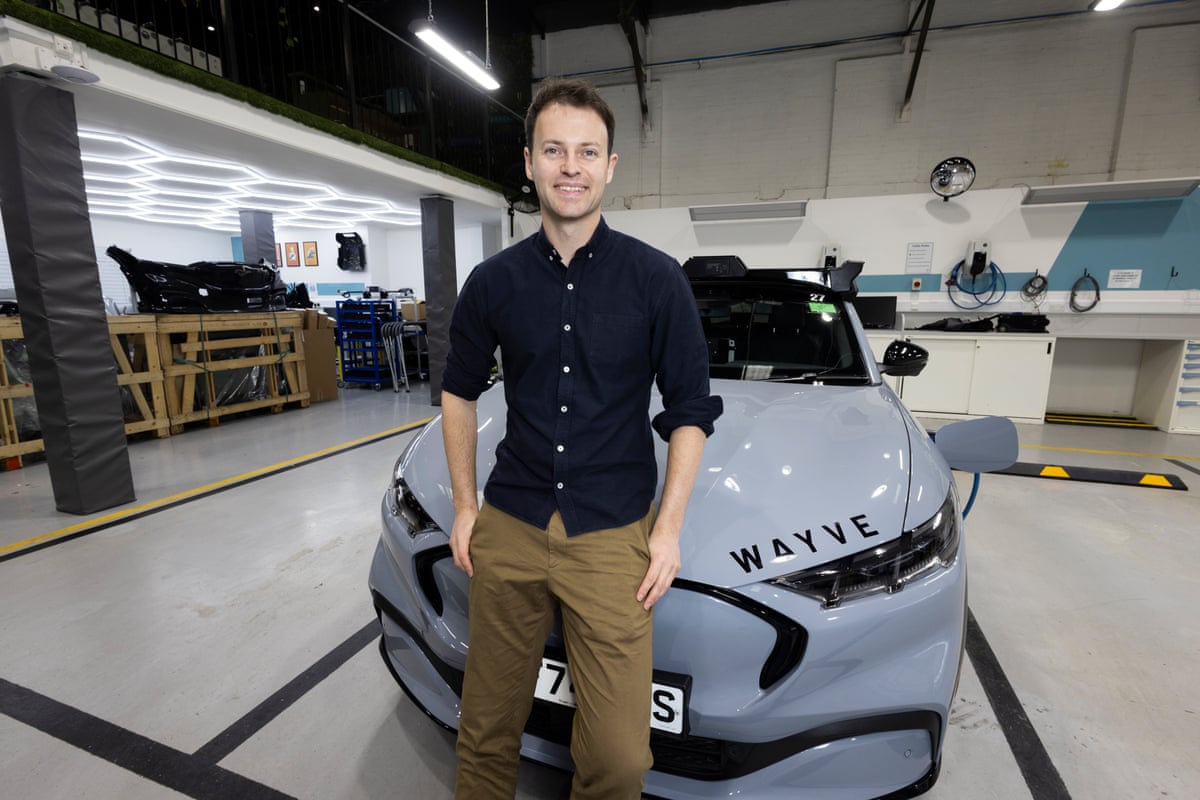
“I’m really excited to show you this,”says Alex Kendall, CEO of Wayve, as he takes the wheel of one of the company’s electric Ford Mustangs. The car approaches a busy junction in King’s Cross, London, autonomously.
“You can see that it’s going to control the speed, steering, brake, indicators,”he explains from the driver’s seat while I sit in the passenger seat.
“It’s making decisions as it goes. Here we’ve got an unprotected turn, where we’ve got to wait for a gap in traffic …”The steering wheel turns on its own and the car pulls out smoothly.
My first experience riding in a self-driving car was initially unsettling, akin to a first airplane flight, but quickly became reassuring. After 20 minutes, I was convinced that Wayve’s AI drives better than most humans, including myself.
Other Londoners will soon have the opportunity to evaluate these robotaxis firsthand. Following the passage of the Automated and Electric Vehicles Act in 2024, the UK government has been working to approve self-driving taxis by the end of next year. Wayve, in partnership with Uber, along with other companies such as Waymo and Baidu, will introduce robotaxi services in London, potentially transforming the city’s transport landscape.
Challenges of London’s Streets
Robotaxis have already been deployed in major cities like San Francisco, Los Angeles, and Shanghai. However, London presents a greater challenge due to its narrow roads, medieval street layout, unpredictable pedestrians, errant ebikers, assertive drivers, and obstructive parked delivery vans.
“Compared with San Francisco, London has about 20 times more roadworks and about 11 times more cyclists and pedestrians on the street, so it’s a much more complex city to drive in,”says Kendall, a 33-year-old with a clean-cut appearance.
Despite these challenges, Wayve’s vehicle performed impressively during our drive. When a man with a walking stick approached a zebra crossing, the car slowed and stopped before he stepped onto it.
“We don’t tell the car what it should do; it learns the body language,”Kendall explains as we observe. Several other pedestrians passed by without crossing, and the car correctly identified that they would not step onto the crossing.
This approach distinguishes Wayve’s AI from other autonomous systems.
“It’s got a sense of being able to predict how the world works, how to predict risk and safety. It’s actually understanding the dynamics of the scene,”Kendall says as we continue driving. London’s roads present various challenges including confusing double roundabouts and narrow streets with oncoming traffic. When another driver flashed their lights to signal yielding, our car recognized the gesture and proceeded accordingly. Kendall did not intervene at any point, although a human driver remains behind the wheel for now.
Wayve’s Development and Technology
Wayve has been training its autonomous vehicles across the UK since 2018. The cars resemble ordinary vehicles except for a bar equipped with cameras and radar mounted on the roof, which is expected to become obsolete as new cars integrate sensors seamlessly.
“Globally, we’ve driven over 7 million miles, all autonomously,”Kendall states.
“Last year, we drove in over 500 cities around Europe, Japan and North America – 340 or so of them we’d never been to before.”Like a human driver, Wayve’s AI can adapt to unfamiliar environments.
Earlier generations of autonomous vehicles, such as those developed by Tesla and Waymo (owned by Alphabet, Google’s parent company), approached driving by breaking it into discrete tasks like traffic-sign detection, pedestrian prediction, and mapping.
“Each component might use some form of machine learning, but a lot of them are rule-based and the way it fits together is all hand-coded,”Kendall explains. In contrast, Wayve’s system is built on end-to-end AI, employing a single neural network that makes decisions holistically. Both Tesla and Waymo now also incorporate forms of end-to-end AI.
Kendall, raised in Christchurch, New Zealand, balanced adventurous outdoor activities with designing robots and video games during his childhood. He earned a scholarship to the University of Cambridge in 2014, completing a PhD in AI and machine learning focused on developing his own autonomous driving system.
“I pitched it to a bunch of people in the industry, who largely laughed it off,”he recalls. Undeterred, he secured funding and founded Wayve in 2017 with fellow student Amar Shah, who departed in 2020. Today, the company employs approximately 1,000 people.
Wayve’s vision extends beyond robotaxis.
“In the future, every vehicle is going to be autonomous,”Kendall says. The company recently announced partnerships with Mercedes, Nissan, and Stellantis (owner of brands including Vauxhall, Fiat, and Peugeot). Investors include Microsoft, Nvidia, and Uber. Valued at £6.4 billion, Wayve is among Britain’s most valuable startups.
Other Autonomous Vehicle Operators in London
Wayve is not the only company testing autonomous vehicles in London. Waymo operates a fleet of modified Jaguar i-Paces, notable for their spinning rooftop Lidar sensors. (Lidar is a laser-based range-finding technology; Wayve’s cars currently do not use Lidar, but Kendall states their AI can adapt to any sensor system.) Baidu, in partnership with ride-sharing company Lyft, plans to introduce its Apollo Go service to London, which currently operates in about 20 Chinese cities and parts of the United Arab Emirates.
Tesla unveiled a futuristic vehicle without a steering wheel or pedals at a London showroom in late 2024 but is facing challenges. It launched robotaxi services in Austin and the San Francisco Bay Area last summer, but its vehicles in California still require a safety driver behind the wheel, termed a “safety operator,” as Tesla has not yet obtained full regulatory approval from the state.
Waymo and Apollo Go are the world’s largest robotaxi operators, completing approximately 450,000 and 250,000 rides per week, respectively. Both companies view London as a gateway to other European markets. Jack Stilgoe, a technology policy academic, suggests that Britain could become
“the place that slowly writes the rules for this technology that isn’t the wild west of Silicon Valley or the wild east of Beijing.”
Impact on London’s Black-Cab Drivers
Are Londoners, particularly black-cab drivers, prepared for the arrival of robotaxis? The implications are significant. Robotaxis can operate nearly 24 hours a day without fatigue, distraction, or breaks, and theoretically without error or wage demands.
Kendall addresses concerns about job displacement:
“What we’re doing is building autonomy technology that I think brings immense safety and accessibility benefits to mobility around the world. That’s what we’re focused on.”
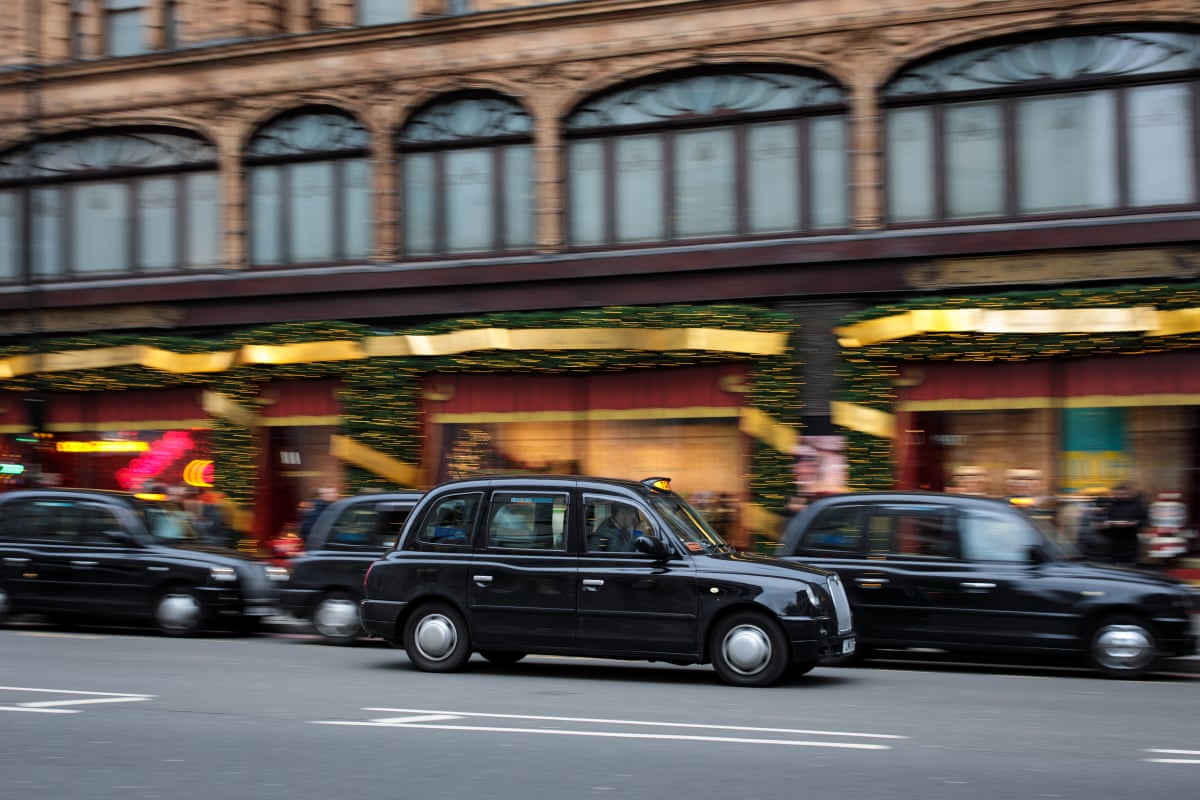
London’s black cabs are iconic, having served as the city’s primary ride-hailing vehicles since the 17th century, originally horse-drawn and now mostly electric. Uber’s emergence has disrupted their dominance, providing economic opportunities especially for immigrants and less-qualified individuals. According to the most recent 2024 statistics, there were 56,400 licensed taxis (hailable on the street) and 256,600 private-hire vehicles (such as minicabs and Ubers, which require booking) on England’s roads. It remains to be seen whether these numbers will decline with robotaxi adoption.

Steve McNamara, head of the Licensed Taxi Drivers’ Association representing London’s black cabs, states he is
“genuinely not worried in the slightest”about robotaxis. He emphasizes that taxi drivers provide services beyond driving:
“They deal with lost property. They deal with popcorn on the seats. They deal with flat tyres and things going wrong and people bumping into it in the traffic. When you get rid of them, who’s going to do all of that?”
He notes that passengers often have unpredictable needs:
“Nobody ever wants to go from A to B. They always want to go via somewhere or drop someone off somewhere. ‘Oh, hang on, can you turn back? I’ve left my phone.’ ‘Oh, hang on, there’s Auntie Flo.’ ‘Oh, sorry, we’re now meeting in this pub.’”He also highlights the high proportion of passengers requiring assistance with disabilities, wheelchairs, pushchairs, or heavy bags. Black-cab drivers, he asserts, provide
“the best service in the world.”
Despite this confidence, black cabs have faced challenges. Uber’s arrival in 2012 initially undercut black cabs by operating at a loss, though prices have since become comparable. The Covid-19 pandemic severely impacted the industry. Although figures have recovered, most growth has come from private-hire vehicles, which increased by 10.5% in England between 2023 and 2024, while taxis declined by 1.4%. McNamara estimates there are about 17,000 to 18,000 black cabs in London, with numbers possibly rebounding.
McNamara expresses several concerns about robotaxis, including their vulnerability to being
“bullied” by drivers and pedestrians:
“If I’m a pedestrian, I’m just going to walk out, because they’re going to stop and let me cross the road. And, more importantly, they’re not going to shout at me out the window or chase me up the street.”He also asserts that black-cab drivers’ extensive knowledge, gained through two years of training known as “the knowledge,” ensures they always know the best routes.
“I’ll be more than happy to run a trial of any shape or form you want, where somebody gets in a Waymo or a Wayve and somebody else gets in a black cab, and we’ll time it or measure the distance to the destination.”
Public Perception and Safety Record
Robotaxis have their supporters. A straw poll among American friends elicited mostly positive feedback about Waymo:
“I like not having to talk to anyone and they are calm.”
“They follow all the rules and do what you expect.”
“I actually worry less about putting my daughter in one, as there is no chance of getting a creepy driver.”
“It’s a bit of a pre-party thing, as you can choose your own music.”However, cyclists found the vehicles unpredictably frustrating. More broadly, many Americans are wary of increased influence by big tech companies. In response, a Waymo spokesperson cited a survey in San Francisco where
“73% feel safe with Waymos on their streets and 68% say the vehicles have a positive impact on road safety.”
The deployment of robotaxis has not been without challenges. While their safety record is strong, incidents have occurred. Waymo reports
“five times fewer injury-causing collisions and 12 times fewer injury-causing collisions with pedestrians compared to humans.”However, a protest group in San Francisco demonstrated that Waymo vehicles could be disabled by placing a traffic cone on the bonnet. One woman reported being trapped inside a Waymo when men on the street blocked the car and asked for her phone number.
In Austin, emergency vehicles responding to a mass shooting were delayed by a Waymo that appeared to block the route. In December, a power outage in San Francisco caused hundreds of Waymos to stop and activate hazard lights at busy intersections, leading to significant traffic congestion because the vehicles could not interpret the traffic light failure. Kendall asserts that a Wayve car would have recognized the situation and removed itself from the road.
Human Oversight and Regulatory Concerns
The degree of autonomy in these vehicles remains under scrutiny. At a recent hearing, Waymo’s chief safety officer, Mauricio Peña, acknowledged that their vehicles communicate with human remote assistance operators during complex scenarios, although these operators do not directly control the vehicles.
Peña declined to specify the number of operators, noting some are based in the US and others in the Philippines. Massachusetts senator Ed Markey criticized this practice, citing safety and cybersecurity concerns:
“That is completely unacceptable,”he said, questioning whether these operators hold US driver’s licenses and suggesting that AV operators are replacing American taxi jobs with cheaper foreign labor.
Waymo told it employs about 70 remote assistants worldwide at any given time for a fleet of 3,000 vehicles. Assistants provide advice when requested, which the vehicle can accept or reject. More complex interactions, such as with emergency responders, are handled by US-based assistants. Wayve and Uber indicated it is too early to clarify their use of remote assistance.
Cost and Public Acceptance
The extent to which robotaxis will replace London’s traditional cabs depends largely on public acceptance, which may be influenced by pricing. A study found that a Waymo ride in San Francisco costs on average 12.7% more than an Uber and 27.3% more than a Lyft. McNamara, who recently visited San Francisco, predicts robotaxis will be more of a tourist attraction than a serious competitor,
“because they’re too slow, they’re not particularly cheap and they’re not great.”
The Future of Autonomous Vehicles and Urban Transport
Kendall envisions a future where all vehicles are autonomous. Although this transition may be gradual, especially given many Britons’ affinity for driving, it could lead to safer roads. Autonomous vehicles are expected to communicate more effectively with each other than with unpredictable human drivers.
However, Kendall acknowledges that cars are not the sole solution for urban transport.
“I think it really needs to coexist with all the other modalities of transport. I cycle to work every day. I think cycling, walking, the tube, these are really important for Londoners.”
Cars have been criticized as detrimental to cities, consuming increasing public space and contributing to noise, pollution, and danger. Roads have divided communities and damaged urban environments. After a century of dominance, there is a growing movement to reclaim civic spaces from cars. If streets become congested with vehicles again, the mode of driving—human or autonomous—may be less significant.
If you have an opinion on the issues raised in this article, you may submit a response of up to 300 words by email to be considered for publication in our letters section.