

WHO Reports No Current Signs of Larger Hantavirus Outbreak
The head of the United Nations health agency has stated there is "no sign" of a larger hantavirus outbreak following the evacuation of the last passengers from a cruise ship affected by the disease.
However, Tedros Adhanom Ghebreyesus, chief of the World Health Organization (WHO), cautioned that "the situation could change" and additional confirmed cases of the virus may emerge.
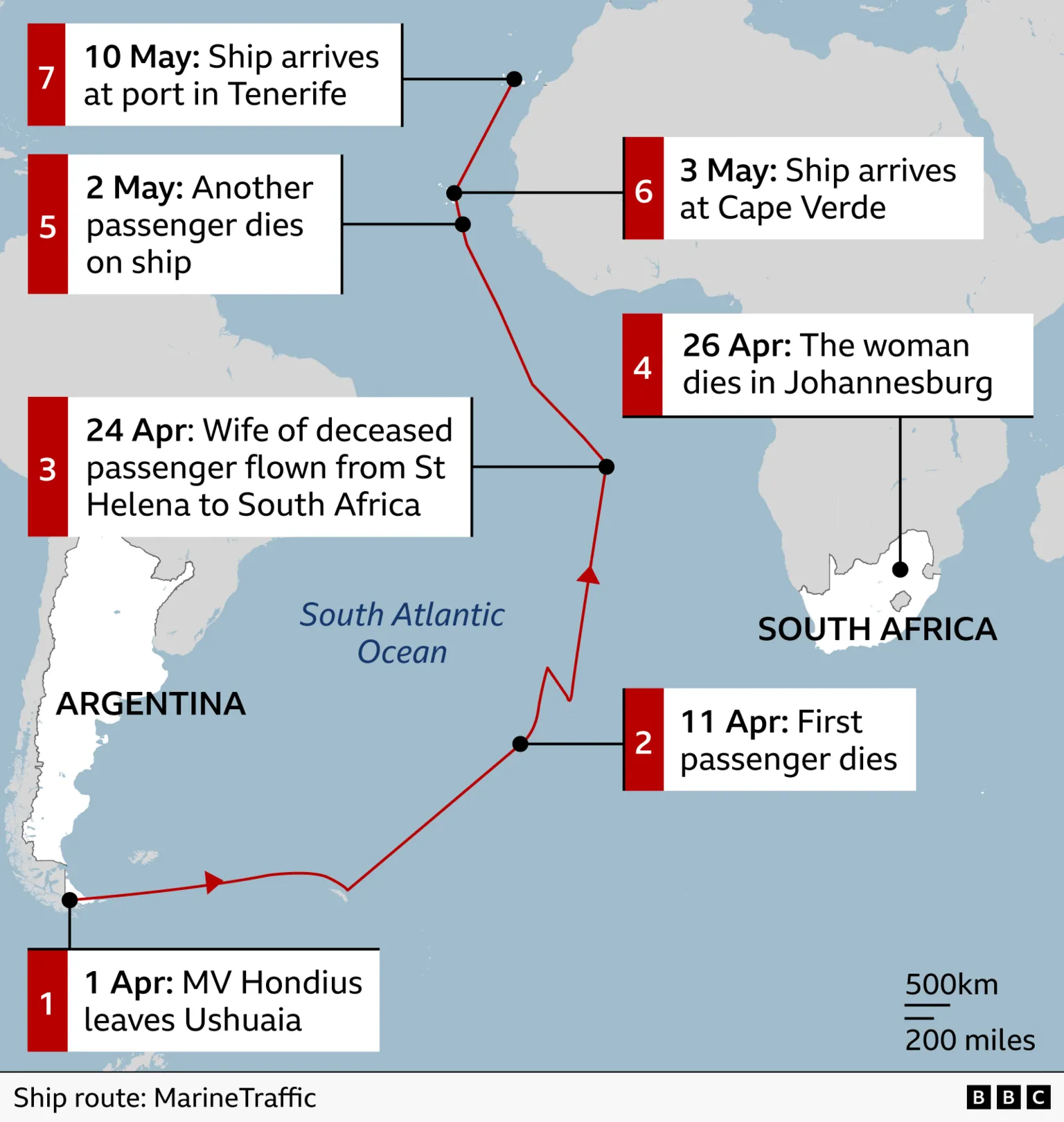
The MV Hondius departed from Tenerife, an island in Spain, on Monday and is en route to the Dutch port of Rotterdam. Two flights carrying the final 28 passengers arrived in Eindhoven on Tuesday.
Three individuals who traveled on the ship have died. A Spaniard and a French national who had already returned home tested positive for hantavirus. The WHO has confirmed nine cases and suspects two more.
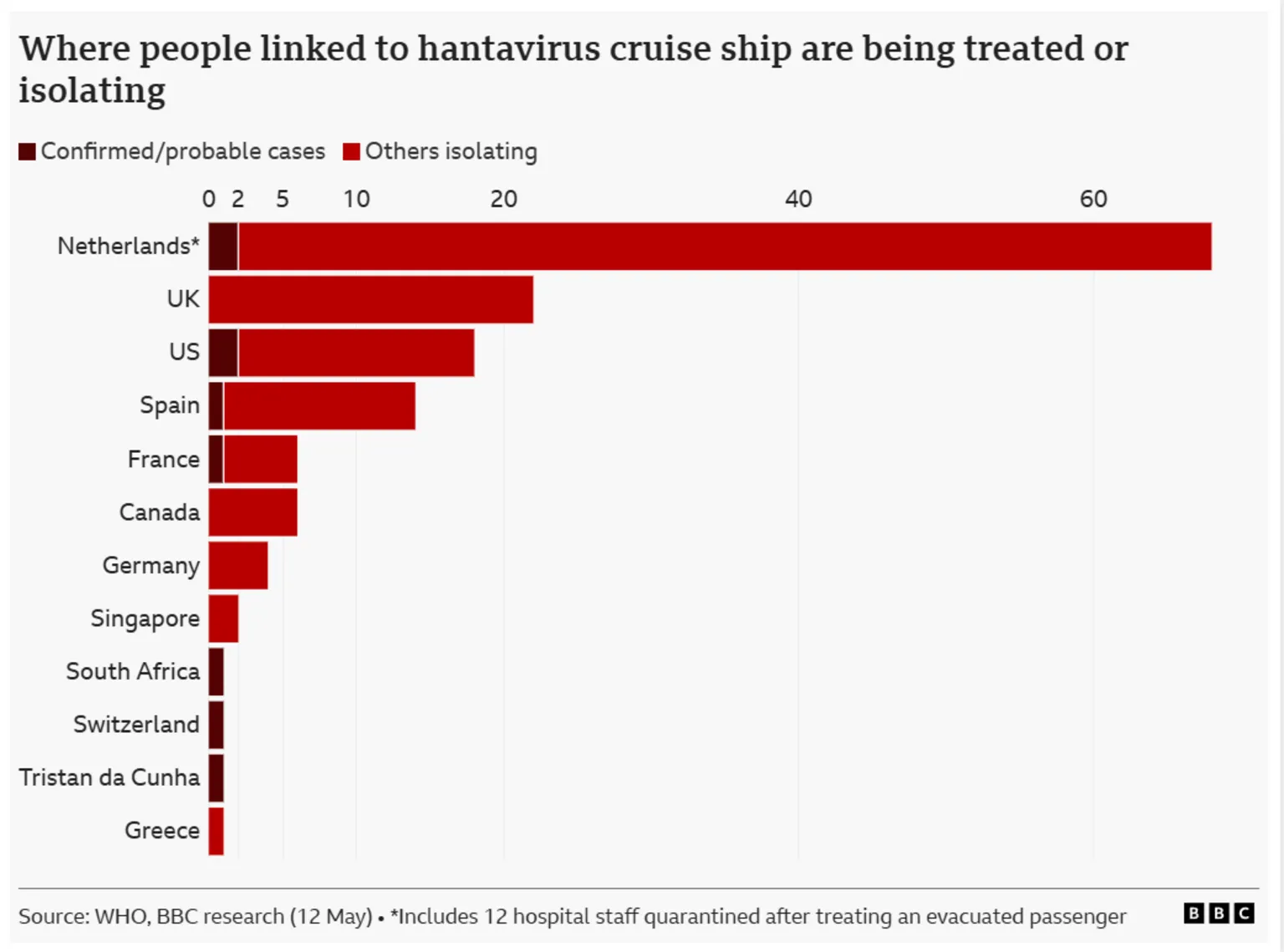
Twelve staff members at a hospital in the Netherlands are currently quarantined due to possible exposure after treating one of the evacuated passengers.
The hospital in Nijmegen announced on Monday that the quarantine is precautionary, as the workers did not adhere to strict protocols when handling the patient's blood and urine samples.
At a press conference held in Madrid on Tuesday, Ghebreyesus stated:
"At the moment, there is no sign that we are seeing the start of a larger outbreak.
But of course the situation could change and, given the long incubation period of the virus, it's possible we might see more cases in the coming weeks."
"Our work is not over" to contain the outbreak from the cruise ship, he emphasized.
Hantavirus Transmission and Symptoms
Hantaviruses are typically carried by rodents, but human-to-human transmission of the Andes strain—which the WHO believes some passengers contracted in South America—is possible.
Symptoms of hantavirus infection may include fever, extreme fatigue, muscle aches, stomach pain, vomiting, diarrhea, and shortness of breath.
WHO officials have previously stated that the risk of a major outbreak remains very low.
Cases and Quarantine Measures in Europe
On Tuesday, Spain's health ministry reported that one of the 14 Spaniards quarantining in Madrid after evacuation tested positive for hantavirus. The patient exhibits a "low-grade fever and mild respiratory symptoms" but remains in stable condition.
In Italy, biological samples are being collected from a man showing symptoms who traveled on the same flight as a woman who later died from the virus. These samples will be sent to the Spallanzani hospital in Rome, the country's main infectious diseases center, according to ANSA news agency.
In France, Health Minister Stéphanie Rist reported that a woman with worsening health is isolating in Paris.
Two British nationals with confirmed hantavirus cases are receiving treatment in the Netherlands and South Africa.
MV Hondius Voyage and Passenger Status
The Dutch-flagged MV Hondius is expected to take six days to reach Rotterdam, with a provisional arrival scheduled for the evening of 17 May. The ship's operator, Oceanwide Expedition, stated that exact procedures upon arrival are still under discussion, but the vessel will undergo sanitation.
On Monday, the final six passengers—four Australians, one Briton, and one New Zealander—along with some crew members disembarked.
In total, 122 passengers and crew have been repatriated to the Netherlands and their home countries via government-chartered flights over recent days.
As of Monday evening, Oceanwide Expeditions reported that 27 individuals remained on board, including 25 crew members and two medical staff.
The remaining personnel consist of 17 from the Philippines, four from the Netherlands (including the two medical staff), four from Ukraine, one from Russia, and one from Poland.
Ukraine's foreign ministry stated that the Ukrainian crew members on board will assist with the ship's transfer to the Netherlands and will quarantine at a medical facility upon arrival. They have shown no signs of illness.
Seventeen Filipino crew members arrived in the Netherlands on Tuesday morning, according to the Philippine Embassy.
Fatalities and Initial Outbreak Details
The first passenger to die was a 70-year-old Dutch man who passed away on board the MV Hondius on 11 April. He had developed symptoms earlier and is believed to have been the initial infected individual in this outbreak, though he died before testing could be conducted.
His 69-year-old wife disembarked on 24 April at St Helena island and flew to South Africa, where she died two days later in a Johannesburg clinic.
A German woman died on the ship on 2 May. Both women were confirmed hantavirus cases.
The MV Hondius had been carrying 147 passengers and crew from 23 countries after departing Ushuaia, Argentina, on 1 April.


