

Patient Struggles with NHS Dentistry Access
A woman from Llangefni on Anglesey, Llinos Hughes, has resorted to gluing her dentures back together as she has "given up" trying to find an NHS dentist despite enduring constant pain.
Hughes explained that her dentist ceased providing NHS services last year, forcing her to rely on emergency dental appointments to manage ongoing dental problems.
This month, changes to the NHS dental contract were implemented, leading some dental practices across Wales to return their NHS contracts and offer only private care.
With the Senedd election scheduled for 7 May, a British Dental Association (BDA) poll identified dentistry as one of the top local concerns for voters.
The Welsh government described these changes as "the most significant in 20 years".
In Wales, individuals over 16 who have not visited an NHS dentist in four years can register with the Dental Access Portal (DAP), a service designed to assign patients to a local dentist for routine care when availability arises.
Hughes, aged 40, reported having two teeth requiring extraction.
"I have to eat on one side," she said. "The bottom tooth is loose and the top tooth is quite painful."
She added that she had attempted to glue her dentures while awaiting an NHS appointment.
"It's uncomfortable to eat and talk without it. I get very self-conscious.
"I said [to the emergency dentist] 'take all my teeth out and give me dentures'.
"I'd rather that than going through the anxiety."
Hughes criticised the Dental Access Portal, stating it "isn't thought through" and lacks a provision to declare disabilities.
"It's hard to get an NHS appointment, but it's a nightmare if you are disabled."
As someone with mobility challenges, she expressed anxiety about potentially being assigned to a practice that is not fully accessible.
She has been contacting dental practices directly to secure a place while awaiting allocation through the DAP.
"I can't afford to go private. Money is really tight as it is," she said.

Declining NHS Dental Access and Treatment Statistics
The number of people able to access NHS dental care has declined since 2020.
Prior to the pandemic, approximately 53% of the adult population in Wales received NHS dental treatment. This figure dropped significantly during Covid but has since recovered to about 40%, a rate similar to that in England.
Public Health Scotland reported that 97% of the adult population were registered with an NHS dentist.
In Wales, 48% of children received NHS dental treatment compared to 57% in England and 90% in Scotland.
NHS dental care is not universally free. The number of free courses of treatment provided to adults has halved over the last decade, decreasing from more than 767,000 in 2014/15 to just under 374,000 in 2024/25.
During the same period, the number of treatment courses for adults who paid for their care also declined, from over one million to about 630,000.
Efforts to increase dental provision have resulted in nearly 112,000 new patients receiving routine treatments in Wales between April 2025 and January 2026, alongside 65,000 urgent treatments.
However, data from Stats Wales indicates that the number of NHS dental contracts issued has fallen by 11% over three years.
The BDA claimed that many practices returned their NHS dental contracts to health boards following the announcement of the new contract details in February, which took effect this month.
Aneurin Bevan health board confirmed that 10 practices in its area have relinquished their NHS contracts specifically due to contract changes.
Additional practices have done so in Powys (eight), Hywel Dda (six), and Swansea Bay Health Board (three).
Betsi Cadwaladr, Cardiff and Vale, and Cwm Taf Morgannwg health boards stated that a Freedom of Information request is required to access similar information.

Case Study: Maternity Leave and Dental Costs
Women who are pregnant or on maternity leave are entitled to free dental care.
Hannah McCluskay, from Taff's Well in Rhondda Cynon Taf, has been waiting to be allocated an NHS dentist via the portal but faces a deadline before returning to work in June.
Her family lost their NHS dentist three years ago after relocating from Pembrokeshire.
In February 2026, a local NHS practice accepted her husband and three children for routine care, but McCluskay was told she needed to wait for allocation through the portal due to her "ongoing problems" requiring treatment.
"That's the whole point of going to a dentist [to deal with problems]," McCluskay said.
Despite being eligible for NHS services, she has chosen to pay for private care due to pain and urgency.
"After the consultation, [with] everything priced up and scans... I think it will be about £6000."
McCluskay expressed that many of her issues could have been avoided.
"I had cracked a tooth during labour and had incomplete treatments from an emergency dentist, while a lack of regular check-ups saw matters escalate.
"If I had seen a dentist earlier, it wouldn't have got to this point."

Concerns Over New NHS Dental Contract
The BDA raised concerns that the contract changes introduced on 1 April were "untested" and poorly communicated with both dental professionals and patients.
They stated that some health boards have recently seen 10% or more of their contract allocations returned by practices quitting the NHS.
The BDA warned that some patients may experience less frequent appointments and that those with healthier teeth might wait 18 to 24 months for routine check-ups.
Additionally, costs for NHS dental work may increase for some patients. Check-up examinations could rise by 22% to £24.50, while fees for patients with poor gums might increase from £60 to £93.50.
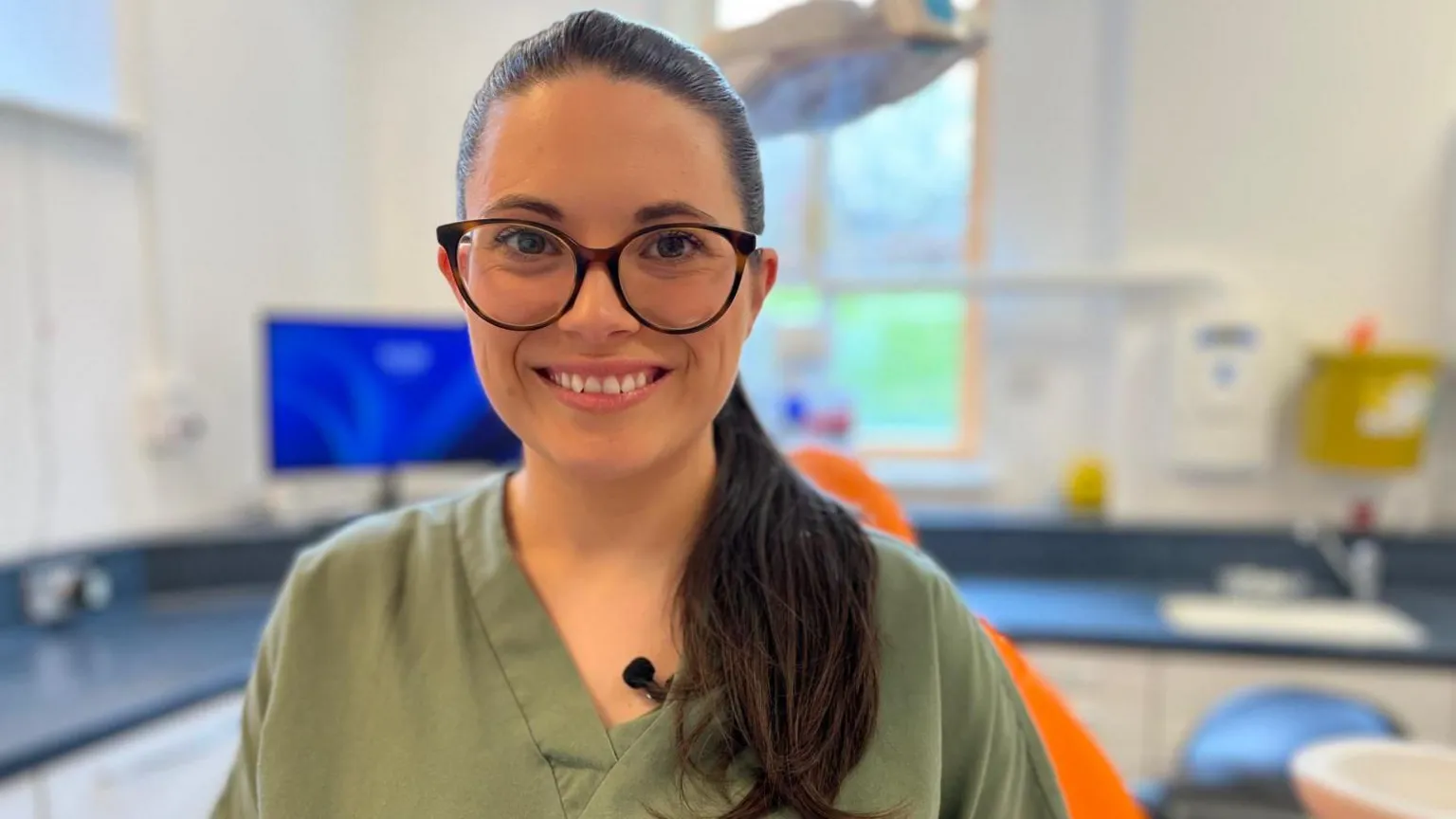
Dr Katie Davis, who works in multiple Swansea practices within both NHS and private clinics, commented on the contract changes.
"I have seen contract changes every year since I graduated.
"While the new contract would offer a fairer remuneration for more complex care like root canals, a lack of consultation has left many feeling it was an 'untried and untested system'.
"Dental practices in Wales are already reporting that they're at capacity and they haven't got space for patients.
"I believe in the NHS. I want to work in it, but I don't know how long I can work in a system that's so busy and ever-changing," she said.
"I'm worried patients will feel they are not going to get an appointment, and may not see dentists if they have any 'lumps or bumps' they are worried about.
"If we're seeing them less often, we're not catching things as early as maybe we would like - maybe the filling is bigger than it would have been, or maybe now they need an extraction."
"It is a difficult decision for many to go private, both financially and morally."
Dr Davis is 29 years old.
Russell Gidney, chairman of the BDA's Welsh General Dental Practice Committee, stated:
"Whoever forms the next administration in Cardiff Bay will inherit a service on the very brink.
"They will need to put together a rescue package if NHS dentistry in Wales is going to have a future."
A Welsh government spokesperson said the April changes were "the most significant change to NHS dentistry in 20 years and realise the ambition to provide NHS dentistry on the basis of individual risk and need".
They added:
"The new contract arrangements ensure there is capacity for a steady flow of new patients, whilst at the same time providing continuity of care for existing patients.
"It is not a leap into the unknown, but a consolidation of what has already been shown to work.
"We are proud to have developed the new contract arrangements in partnership with the BDA, the NHS and the people of Wales."
Political Party Positions on NHS Dentistry
The Welsh Liberal Democrats pledged to "boost funding to bring Wales in line with other parts of the UK, set clear targets to cut waiting lists, and remove barriers so dental professionals can treat more patients".
The Welsh Conservatives committed to "ensuring everyone in Wales can access an annual check-up with an NHS dentist, alongside tackling Labour's long-standing recruitment and retention crisis in the health service by training, retaining and recruiting more dentists and other health professionals".
Reform Wales stated: "Reform UK will redesign and replace the existing NHS dental contract to improve retention, introduce targeted recruitment incentives where access is weakest, and establish a new dental school in Bangor."
The Wales Green Party said they would "expand access to NHS Dentistry with fairer funding that reflects the true cost of treatment".
They also proposed expanding preventative oral health programmes in communities and schools, and better targeting of the most vulnerable patient groups and those with the highest need.
Welsh Labour indicated plans to "improve access to NHS dentistry by making more appointments available through the new contract" and support for a new dental school.
Plaid Cymru expressed a desire to "address the dental crisis in Wales".
A spokesperson said:
"We'll place a duty on health boards to assess dental needs across Wales to improve access to community dentists - particularly for more disadvantaged communities - and support the application for a new dental school in Bangor and Aberystwyth to help make plans for more training opportunities come to fruition."



